RBGPF
1.6000
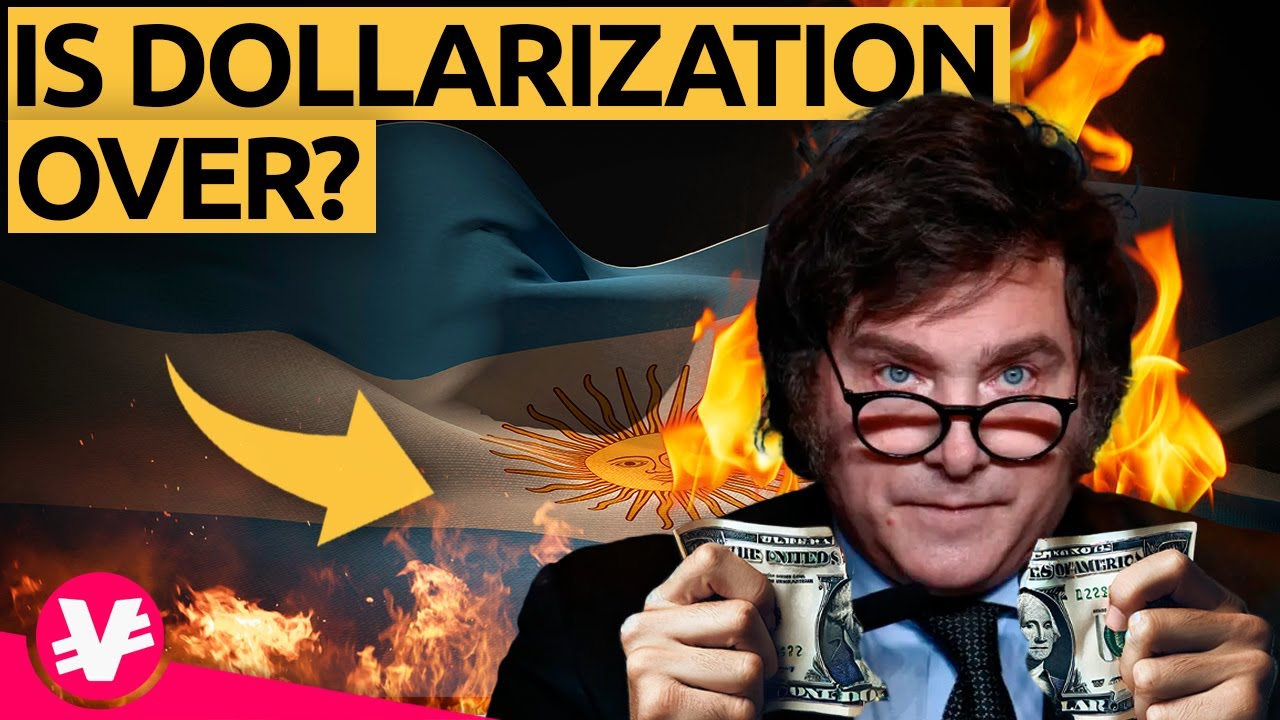
Argentina is in the middle of a historic experiment. When libertarian economist Javier Milei took office on 10 December 2023, he inherited an economy gripped by triple‑digit inflation, a fiscal deficit equal to around 15 % of GDP, negative foreign‑exchange reserves and a country risk premium that made external financing almost impossible. Weekly price jumps were eroding purchasing power and nearly half of Argentines lived in poverty. In the 1990s a reform wave under President Carlos Menem introduced a currency board, privatized state companies and liberalised trade; those changes briefly stabilised prices but unravelled after persistent fiscal deficits led to a sovereign default in 2001. Milei argues that this earlier programme did not go far enough and has promised “the largest structural reform in Argentine history,” which he says is eight times larger than Menem’s and will transform the country into “the freest nation on the planet”.
Shock Therapy and Austerity
Within days of taking office, Milei unleashed a package of policies that he called shock therapy. His finance minister devalued the peso by more than 50 %, set a crawling peg for the currency, halved the number of ministries and announced a fiscal adjustment of around 5 % of GDP. Government ministries were slashed from 18 to nine, thousands of public‑sector contracts were terminated and many public works projects were cancelled. A plan to shrink the state by roughly a third included closing state‑owned news agencies and eliminating subsidies for culture and the arts. Energy and transport subsidies — which had cost the treasury US$12 billion in 2022 — were cut sharply, while a tax amnesty was introduced to lure dollars stashed abroad back into the banking system. Import and export restrictions were lifted, price controls removed and the central bank stopped financing the treasury, ending a practice that economists blame for Argentina’s chronic inflation.
The “chainsaw” approach shocked a society accustomed to state intervention. Public sector workers, construction employees and pensioners were hit hard. Tens of thousands lost their jobs or saw salaries and pensions lag behind prices. Construction activity collapsed after public works were frozen, costing an estimated 200,000 jobs, and austerity measures reduced funding for universities and hospitals. Unemployment and poverty surged in early 2024; some surveys reported poverty peaking at around 53 %. Milei acknowledged the pain but insisted that “there is no money” and that the alternative was hyperinflation.
Early Results and Second‑Year Progress
The shock therapy delivered results faster than many economists expected. After spiking briefly, monthly inflation plunged from roughly 25.5 % in December 2023 to 2.7 % by October 2024. Fiscal austerity and the elimination of money printing produced Argentina’s first budget surplus in more than a decade. By mid‑2024 the economy ran a trade surplus and improved its trade balance by more than US$18 billion, reflecting a decline in imports and an export boom driven by agricultural products and the Vaca Muerta shale field. Country‑risk indicators fell to their lowest levels in years, bonds rallied and the gap between official and parallel exchange rates narrowed sharply. A tax‑amnesty programme drew some US$19 billion back into the banking system, boosting reserves. Monthly inflation continued to fall into 2025, reaching around 2 %, a deceleration described by analysts as unprecedented.
Second‑Year Progress
By the middle of 2025 the government began to point to clear signs of economic turnaround. Output data show that GDP grew by 6.3 percent and investment by 32 percent year‑on‑year in the second quarter of 2025 after contracting early in Milei’s term. International institutions forecast overall growth of 4.7–5.5 percent for 2025. Annual inflation, which had reached 289 percent early in his administration, fell to 34 percent, equivalent to roughly 2 percent per month, and the poverty rate dropped from 53 percent to 32 percent, lifting more than 11 million people above the poverty line. Consumption and exports recovered, and employment started to grow.
The administration attributes these gains to aggressive cuts and deregulation. It claims to have reduced the federal budget by 30 percent, balancing it by Milei’s second month in office. Public debt fell by about 12 percent, and the president vowed never again to run a deficit. A new ministry dedicated to deregulation abolished ten ministries, merged agencies and fired over 53,000 public employees. As of August 2025, the government had enacted 1,246 deregulations, roughly two per day, cutting red tape in energy, agriculture, real estate and health. The programme also repealed 22 taxes and reduced export duties, scrapped import licences and raised the limit on duty‑free purchases. These measures lowered prices for many goods — for example, home appliances fell 35 percent after import licences were abolished — and allowed livestock producers to import vaccines at a third of the previous cost. Rental deregulation tripled housing supply and cut real rents by around 30 percent, and mortgage lending has surged from a handful of loans in 2023 to a tripling of new mortgages in 2024. Together these changes are intended to create the freest economy in Argentina’s history.
Milei used this momentum to claim that his government was “the best in history” and that his fiscal adjustment was the largest ever attempted. In an interview he declared that his administration had already executed a structural reform eight times larger than Menem’s and that his deregulation ministry was scrapping “between one and five regulations every day,” with more than 3,200 reforms still pending. The reforms have propelled Argentina up 90 places in an international economic‑freedom index, the president bragged, and he vowed to keep pushing until the country surpasses Ireland, Switzerland and New Zealand.
Social Costs and Rising Dissent
Despite the improvement in macro indicators, the social consequences of Milei’s programme are severe. Real wages have fallen, and poverty, though down from its peak, still affects almost half of the population. Retirees have seen the real value of pensions eroded, with the average minimum pension hovering around US$300. Cuts to university budgets have left some campuses struggling to pay electricity bills. High interest rates — imposed to defend the peso — have frozen bank lending and provoked a steep drop in economic activity, especially in construction and manufacturing. Critics argue that opening the economy too quickly exposes local industries to cheap imports and risks deindustrialisation. Protests by pensioners, students and public‑sector unions have become more frequent, and opposition politicians warn that the recession will deepen if austerity continues unabated.
Milei dismisses such criticisms as coming from the “political caste” he has vowed to defeat. He believes the temporary pain is a necessary price for eliminating structural distortions. To mitigate hardship, the government doubled the universal child allowance and increased food assistance, but for many households the support has not offset the effects of subsidy cuts and high inflation.
Midterm Mandate and Reform Blitz
Argentina’s October 2025 midterm elections turned into a referendum on Milei’s policies. The libertarian alliance La Libertad Avanza (LLA) captured more than 40 percent of the vote and more than doubled its share of seats in Congress. Preliminary results show the party winning 13 of the 24 Senate seats up for election and 64 of the 127 seats contested in the lower house, while the main Peronist coalition fell to second place. This landslide, combined with a turnout of 67.9 percent — the lowest since Argentina’s return to democracy — handed Milei the political capital he needs to advance reforms. Analysts say the midterm win “raised the prospect of structural change on a scale Argentina has not seen in decades”, and investors see it as a positive sign that a more market‑friendly Congress will back his agenda.
U.S. support played an important role. In the weeks before the vote Washington offered a twenty‑billion‑dollar currency swap line and another twenty‑billion‑dollar loan facility to shore up Argentina’s reserves. After the election, analysts noted that U.S. backing of up to US$40 billion would encourage longer‑term investment in Argentine assets. Investors anticipate that Milei will now pursue sweeping labour and tax reforms that could unlock billions of dollars in foreign investment. Plans under discussion include simplifying the tax system, making labour contracts more flexible and reducing pension costs. A simplified tax regime, flexible labour laws and lower pension obligations are seen as prerequisites for Argentina’s competitiveness and will be key components of Milei’s “Pacto de Mayo” programme.
The election also cemented investor confidence in the government’s Régimen de Incentivos para Grandes Inversiones (RIGI). Under this scheme, companies investing more than US$200 million receive 30‑year guarantees of legal and tax stability and a reduced corporate income tax of 25 percent, down from the standard 35 percent. Observers say the combination of a strengthened Congress and the RIGI regime will attract more foreign capital to mining, energy and infrastructure projects.
International investors have taken note. Improved fiscal accounts and the promise of structural reform have attracted pledges of major investments. Energy companies have committed US$25–30 billion to build a liquefied natural gas terminal at Vaca Muerta, a project expected to create 50,000 jobs and generate US$300 billion in exports over two decades. Mining firms plan a US$15–17 billion copper and gold project in San Juan, described as the largest private investment in Argentine history. A technology consortium led by a U.S. artificial‑intelligence company has announced a US$25 billion data‑centre project in Patagonia. The United States has signalled support with a US$20 billion swap line and potential additional financing. Analysts believe that a simpler tax regime, flexible labour laws and lower pension costs could unlock billions in mining, energy and infrastructure investment.
Yet Milei must still build alliances to turn proposals into law. Even after the midterms his party lacks a majority in both houses, and he needs support from centrist and provincial parties to enact reforms. Some lawmakers remain cautious; one Peronist congressman suggested the government must seek consensus rather than impose a programme unilaterally. Allies warn that fiscal discipline is non‑negotiable, but labour reforms could face resistance from unions and courts. Failure to build durable coalitions could stall the reform blitz and undermine investor confidence.
Comparing with the 1990s
The last time Argentina attempted such sweeping changes was during the early 1990s. Hyperinflation in 1989–90 forced a political consensus for reform, and the government introduced a Convertibility Plan in 1991 that fixed the peso at par with the U.S. dollar and privatised most state enterprises. The package included trade liberalisation, tax reforms, and the replacement of the pay‑as‑you‑go pension system with private capitalisation. For a time the economy boomed and inflation collapsed, but the plan’s rigid exchange‑rate peg and lack of fiscal discipline eventually contributed to the devastating 2001 crisis. Milei argues that those reforms were incomplete and financed with debt. His programme goes further by eliminating monetary financing, balancing the budget, liberalising currency controls and aggressively deregulating markets. By claiming that his reforms are eight times more extensive than Menem’s, he positions his agenda as the largest structural change since the 1990s.
Outlook: Promise and Peril
Milei’s experiment has altered Argentina’s economic narrative. A year of aggressive austerity has stabilised inflation and restored fiscal discipline, leading to cautious optimism among investors. Massive energy, mining and technology projects could transform the export mix and relieve Argentina’s perennial foreign‑exchange constraint. Support from the United States and multilateral lenders provides a financial cushion while reforms take root. If labour, tax and pension bills pass, Argentina could enjoy a more competitive tax code, flexible labour market and sustainable social‑security system, changes that companies say are necessary for long‑term investment.
But risks are substantial. Despite the fiscal surplus and lower inflation, Argentina remains in a deep recession; output fell 3.4 percent in the first half of 2025 and is expected to decline almost 4 percent for the year. Consumer demand has collapsed and unemployment has risen to about 8 percent, while nearly half of workers lack formal contracts and social security. Tens of thousands of public‑sector jobs have been cut, and many households now rely on multiple jobs because wages lag behind inflation. The peso remains overvalued: after an initial devaluation, the government has maintained a 2 percent per month crawling peg, causing the gap between the official and unofficial exchange rates to widen again. Import taxes of 17.5 percent and licensing requirements make trade unpredictable, and the administration plans to reduce the levy to 7.5 percent only gradually. These barriers, together with currency controls that limit citizens to changing US$200 of currency per month, continue to discourage investment and could prolong the recession.
High interest rates and a strong peso threaten to squeeze exporters, while rapid import liberalisation risks deindustrialisation. Poverty remains high and social unrest could erupt if growth fails to materialise or if reforms are seen as benefiting only elites. Analysts warn that the currency remains vulnerable; mismanagement could reignite inflation or force a disorderly devaluation. Politically, Milei must shift from a confrontational approach to consensus‑building. Although the midterm strengthened his hand, he still lacks an outright majority and needs to negotiate with provincial governors and centrist lawmakers to pass labour, tax and pension bills. His ability to convert ambitious reforms into enduring state policy will determine whether Argentina’s new era becomes a sustainable success or another aborted experiment.