RBGPF
1.6000
Relations between Europe and China have changed rapidly in recent years. While China, as the world's second largest economy, has become an indispensable trading partner, concerns about dependencies, human rights issues and technological competitive conditions are also increasing. This raises the question for the European Union: how should it, as a union of states and an economic power, deal with China in the future?
Economic opportunities and dependencies
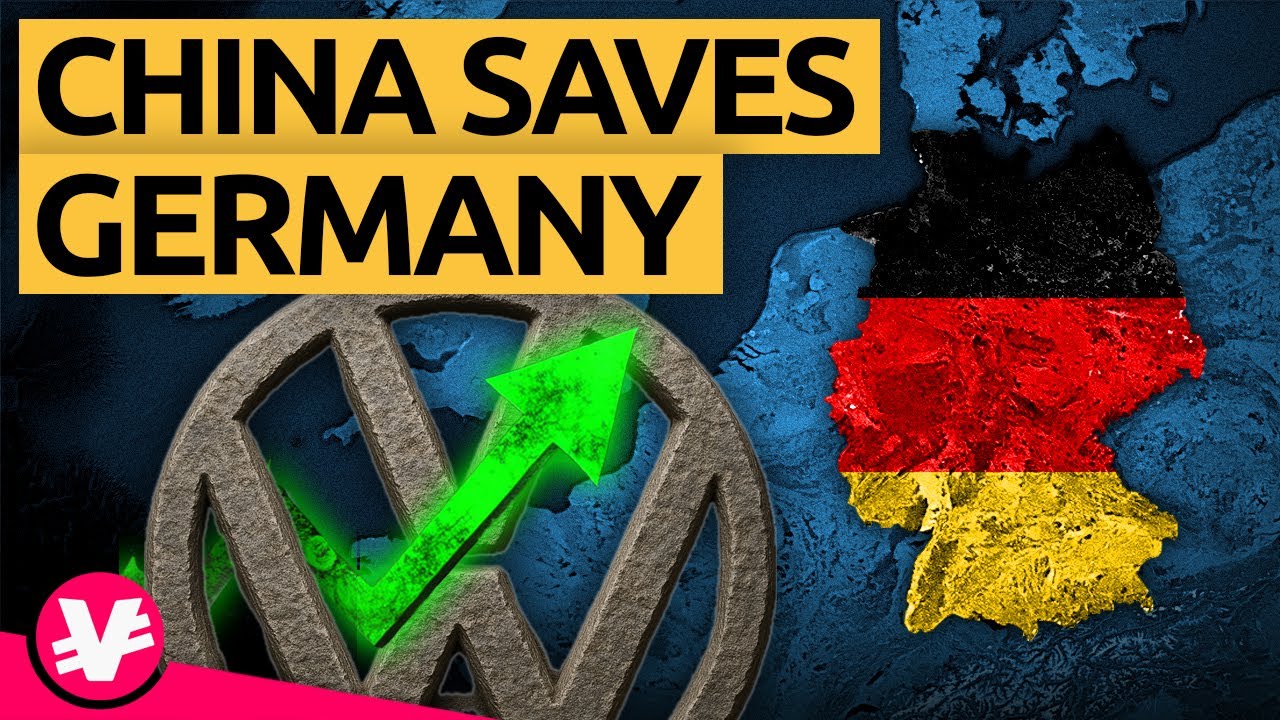
China is now the largest trading partner or at least one of the most important sales markets for numerous European countries. European export companies, particularly in the automotive and mechanical engineering sectors, are benefiting from the rapid development in the Far East. At the same time, there is a growing awareness that over-reliance on Chinese supply chains – for example, for the procurement of critical raw materials or important electronic components – entails economic and geopolitical risks.
The European Union therefore wants to diversify its supply chains and markets. Part of this strategy lies in the targeted promotion of European technology and innovation projects, for example through the ‘European Chips Act’ or the advancement of its own battery cell and semiconductor production. The aim is to become a global engine of innovation and to reduce the one-sided dependence on imports from China.
Value-oriented foreign policy
Europe sees itself not only as an economic union, but also as a community of values that upholds the protection of human rights. In its cooperation with China, however, these principles regularly collide with Beijing's ideas of sovereignty and governance. For example, issues such as the situation in Xinjiang, the situation in Hong Kong or questions about freedom of expression and freedom of the press cause tensions.
This leads to a balancing act: on the one hand, Europe wants to promote trade and investment with China, but on the other hand, it feels it has a duty to criticise human rights violations. At the diplomatic level, this means a combination of dialogue and, where necessary, economic or political pressure. The EU and individual member states are trying to send clear signals by imposing targeted sanctions or suspending certain agreements.
Technology and competition
Europe also faces the challenge of safeguarding its technological sovereignty without losing access to the lucrative Chinese market. Whether it's 5G expansion, artificial intelligence or high-speed trains, China has shifted the innovation focus in many key technologies and is increasingly penetrating areas in which European companies have so far been leading. Conversely, European companies in sensitive sectors are reconsidering their cooperation with Chinese partners.
Conclusion: constructively shaping mutual dependence
In view of global challenges such as climate change or pandemics, pragmatic cooperation between Europe and China is unavoidable. The EU should pursue a multi-pronged approach: it must strengthen its economic and technological independence, represent clear values and assert its interests with confidence. At the same time, cooperation with Beijing is required to combat common problems, for example in climate protection.
The key task for Europe is to find a way to promote trade and innovation without sacrificing important values and standards. The motto is: engagement where it makes sense for both sides – but also drawing clear boundaries when crucial principles are at stake.