Zürcher Nachrichten - Warmer seas, heavier rains drove Asia floods: scientists

EUR -
AED 4.244814
AFN 72.802804
ALL 95.914677
AMD 436.246704
ANG 2.068623
AOA 1059.686486
ARS 1612.008363
AUD 1.638291
AWG 2.082972
AZN 1.962345
BAM 1.969574
BBD 2.328475
BDT 141.855734
BGN 1.97528
BHD 0.436297
BIF 3432.136637
BMD 1.155602
BND 1.483243
BOB 7.989252
BRL 6.063493
BSD 1.156105
BTN 107.709447
BWP 15.776079
BYN 3.574902
BYR 22649.790599
BZD 2.325171
CAD 1.587086
CDF 2628.993471
CHF 0.913988
CLF 0.026713
CLP 1054.763637
CNY 7.97417
CNH 7.960725
COP 4269.832208
CRC 540.913237
CUC 1.155602
CUP 30.623441
CVE 112.151229
CZK 24.481386
DJF 205.373253
DKK 7.47086
DOP 67.978235
DZD 152.576569
EGP 60.372554
ERN 17.334023
ETB 181.657116
FJD 2.588804
FKP 0.867479
GBP 0.862477
GEL 3.13749
GGP 0.867479
GHS 12.593607
GIP 0.867479
GMD 85.514573
GNF 10143.290905
GTQ 8.843733
GYD 241.874076
HKD 9.052001
HNL 30.704397
HRK 7.533481
HTG 151.647087
HUF 392.943851
IDR 19565.490032
ILS 3.613959
IMP 0.867479
INR 107.442864
IQD 1513.838045
IRR 1519760.503236
ISK 143.791825
JEP 0.867479
JMD 181.624669
JOD 0.819309
JPY 182.423841
KES 149.763421
KGS 101.054924
KHR 4633.962204
KMF 494.597345
KPW 1040.027513
KRW 1724.007673
KWD 0.353926
KYD 0.963484
KZT 555.984674
LAK 24816.543481
LBP 103484.119913
LKR 360.370478
LRD 211.937779
LSL 19.449397
LTL 3.412191
LVL 0.699012
LYD 7.372499
MAD 10.814987
MDL 20.260655
MGA 4813.080507
MKD 61.61802
MMK 2426.462186
MNT 4143.804949
MOP 9.328119
MRU 46.350722
MUR 53.741226
MVR 17.853738
MWK 2007.279745
MXN 20.551813
MYR 4.551849
MZN 73.838926
NAD 19.44871
NGN 1568.150995
NIO 42.433955
NOK 10.997704
NPR 172.329658
NZD 1.976252
OMR 0.444335
PAB 1.156145
PEN 3.992022
PGK 4.971446
PHP 69.284099
PKR 322.586743
PLN 4.27635
PYG 7512.308906
QAR 4.211707
RON 5.093891
RSD 117.455653
RUB 99.556773
RWF 1686.022678
SAR 4.338713
SBD 9.300955
SCR 17.161078
SDG 694.516441
SEK 10.775205
SGD 1.478315
SHP 0.867
SLE 28.485234
SLL 24232.399446
SOS 660.428353
SRD 43.337431
STD 23918.619165
STN 24.845434
SVC 10.116052
SYP 127.727213
SZL 19.448949
THB 37.709593
TJS 11.069987
TMT 4.044605
TND 3.364245
TOP 2.782411
TRY 51.186048
TTD 7.836174
TWD 36.808226
TZS 3001.680884
UAH 50.840265
UGX 4369.74838
USD 1.155602
UYU 46.828911
UZS 14092.560843
VES 525.435424
VND 30380.765043
VUV 137.988555
WST 3.157358
XAF 660.611205
XAG 0.01622
XAU 0.000251
XCD 3.123071
XCG 2.083589
XDR 0.821585
XOF 660.428833
XPF 119.331742
YER 275.668443
ZAR 19.4876
ZMK 10401.796193
ZMW 22.631445
ZWL 372.103231
  • RBGPF

    -13.5000

    69

    -19.57%

  • CMSC

    0.0300

    22.86

    +0.13%

  • RYCEF

    -0.5900

    16.01

    -3.69%

  • NGG

    -1.8870

    85.513

    -2.21%

  • BCE

    -0.0250

    25.725

    -0.1%

  • VOD

    0.0500

    14.42

    +0.35%

  • RELX

    -0.0400

    33.82

    -0.12%

  • CMSD

    0.0360

    22.926

    +0.16%

  • GSK

    0.3250

    52.385

    +0.62%

  • RIO

    -2.0650

    85.655

    -2.41%

  • AZN

    0.4970

    188.917

    +0.26%

  • BCC

    -1.9430

    69.897

    -2.78%

  • BTI

    0.6250

    58.715

    +1.06%

  • JRI

    -0.1330

    12.19

    -1.09%

  • BP

    1.2600

    45.87

    +2.75%

Warmer seas, heavier rains drove Asia floods: scientists
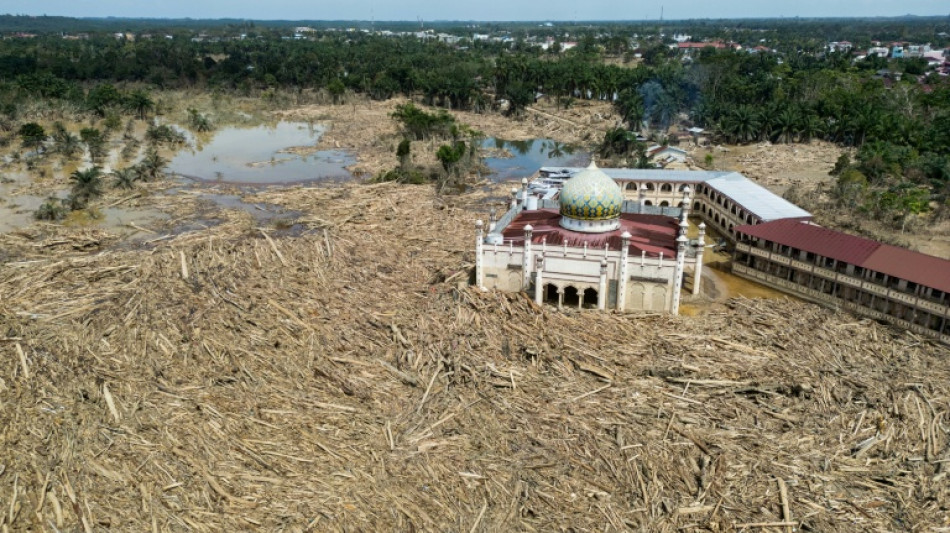
Warmer seas, heavier rains drove Asia floods: scientists / Photo: Aditya Aji - AFP

Warmer seas, heavier rains drove Asia floods: scientists

Warmer seas and heavier rains linked to climate change, along with Indonesia and Sri Lanka's unique geographies and vulnerabilities, combined to produce deadly flooding that killed hundreds, scientists said Thursday.

Text size:

Two tropical storms dumped massive amounts of rain on the countries last month, prompting landslides and flooding that killed more than 600 people in Sri Lanka and nearly 1,000 in Indonesia.

A rapid analysis of the two weather systems carried out by an international group of scientists found a confluence of factors drove the disaster.

They include heavier rainfall and warmer seas linked to climate change, as well as weather patterns such as La Nina and the Indian Ocean Dipole.

The research could not quantify the precise influence of climate change because models do not fully capture some of the seasonal and regional weather patterns, the scientists said.

Still, they found climate change has made heavy rain events in both regions more intense in recent decades, and that sea surface temperatures are also higher due to climate change.

Warmer oceans can strengthen weather systems and increase the amount of moisture in them.

"Climate change is at least one contributing driver of the observed increase in extreme rainfall," said Mariam Zachariah, one of the study's authors and a research associate at Imperial College London.

The analysis, known as an attribution study, uses peer-reviewed methodologies to assess how a warmer climate may impact different weather events.

The scientists found extreme rainfall events in the Malacca Strait region betwen Malaysia and Indonesia had "increased by an estimated 9-50 percent as a result of rising global temperatures," said Zachariah.

"Over Sri Lanka, the trends are even stronger, with heavy rainfall events now about 28-160 percent more intense due to the warming we have already experienced," she told reporters.

While the datasets "showed a wide range," Zachariah added, "they all point in the same direction, that extreme rainfall events are becoming more intense in both study regions."

The scientists said other factors were also at play, including deforestation and natural geography that channeled heavy rain into populated flood plains.

The two tropical storms coincided with the monsoon rains across much of Asia, which often brings some flooding.

But the scale of the disaster in the two countries is virtually unprecedented.

"Monsoon rains are normal in this part of the world," said Sarah Kew, climate researcher at the Royal Netherlands Meteorological Institute, and study lead author.

"What is not normal is the growing intensity of these storms and how they are affecting millions of people and claiming hundreds of lives."

O.Hofer--NZN