Japan's prices are finally rising, but will it last?
From rice balls to nappies, prices are rising in Japan. But unlike inflation seen in many other places, the increases are long-sought but also unlikely to last, analysts say.
Since the 1990s, the country has swung between periods of sluggish inflation and deflation, where prices are falling -- both considered bad for growth.
The central bank has tried an array of policies including pushing interest rates to rock-bottom to encourage spending and reach a two-percent inflation target, seen as key to boosting prosperity in the world's third-largest economy.
It hasn't worked: in 2021, the price of goods, not including volatile fresh food, inched down by an average of 0.2 percent.
But pandemic recovery demand, as well as a surge in oil and other commodities linked to the Ukraine war, may finally be achieving what the Bank of Japan couldn't.
Major Japanese companies have started raising the price of goods in a previously unthinkable, and sometimes controversial, fashion.
The maker of beloved children's corn snack Umaibo was even forced to apologise for the "commotion" caused by rumours ahead of a price rise amounting to two US cents, the first increase since its 1979 debut.
Other hikes have also made headlines in a country where wages and prices have long been stagnant.
The increases have been tough to make, according to Shigeto Nagai of Oxford Economics.
The so-called lost decades that followed Japan's 1980s boom have "cemented a deflationary mindset" among consumers, he told AFP.
"People believe that wages and prices will not grow," and so companies fear losing ground to competitors if they price items higher, he explained.
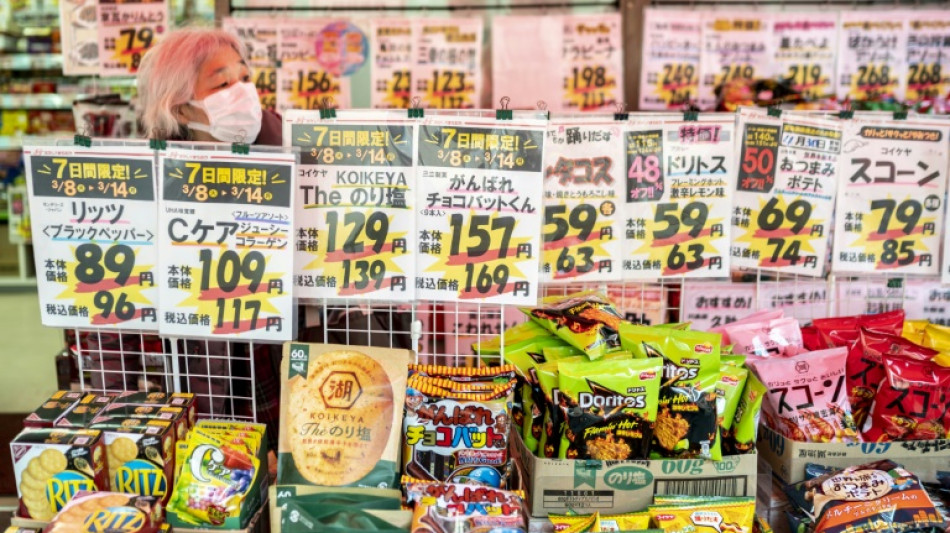
On a narrow, bustling street in eastern Tokyo, shopkeepers said they felt squeezed by a pandemic downturn and higher costs for essentials such as cooking oil, flour and fuel.
But many prefer to absorb extra costs rather than pass them on.
"We have been in business for over 70 years... we are extremely close to our customers," said Satoshi Okubo, whose family shop sells sweets and chewy udon noodles.
"For now, I am swallowing the increased costs," he told AFP. "We will only decide to increase our prices when it becomes absolutely necessary."
- Shrinkflation -
Some companies have instead opted to reduce the size of products while leaving the price unchanged, a move dubbed "shrinkflation".
But this risks irritating customers like Masayuki Iwasa, 45, who since 2020 has documented shrinking goods and price increases on his website "Neage", which means "price hikes" in Japanese.
"Some companies clearly say what they are doing, and others don't. If they announce what they are doing, I think customers would understand," he told AFP.
Despite the challenges, prices have been climbing in Japan since the autumn, albeit at nowhere near the blistering pace seen in Europe or the United States, where inflation recently hit a 40-year high of 7.9 percent.
Core consumer prices, excluding fresh food, increased by 0.6 percent on-year in February, according to data released Friday, and some economists predict Japan could reach its two-percent inflation target in the coming months.
That level is "not sustainable" though, Nagai said, because it is driven by external factors and intensified by a weaker yen.
One key to achieving longer-lasting price rises is wage increases, which for decades companies have kept low in part to avoid hiking the cost of products for consumers.
Jobs once for life and laden with benefits have been swapped for cheaper part-time roles, often occupied by women, and even those with lifetime jobs have seen paltry pay rises.
Prime Minister Fumio Kishida has made wage increases a central plank of his economic policy, calling for companies to lift salaries by three percent in annual spring wage negotiations.
Recent years have produced only marginal increases as trade unions prioritise job protection, however, and this year's first negotiations have been disappointing for Kishida and the unions.
Nagai also warns that unexpected events such as the wave of the Omicron coronavirus variant could impact efforts to hike inflation.
"We have been hoping for 'revenge consumption' by consumers (after pandemic restrictions), but many households have really experienced a sharp deterioration in real disposable income," he said.
T.Gerber--NZN