Zürcher Nachrichten - AI could impact 40 percent of jobs worldwide: UN

EUR -
AED 4.290606
AFN 75.353131
ALL 95.69147
AMD 437.312615
ANG 2.091506
AOA 1071.336666
ARS 1601.3866
AUD 1.66074
AWG 2.10295
AZN 1.98787
BAM 1.953185
BBD 2.352051
BDT 143.617098
BGN 1.95518
BHD 0.440946
BIF 3473.035128
BMD 1.168306
BND 1.489499
BOB 8.069162
BRL 5.876692
BSD 1.167836
BTN 108.925694
BWP 15.741856
BYN 3.332624
BYR 22898.793058
BZD 2.348645
CAD 1.617677
CDF 2687.10322
CHF 0.924016
CLF 0.026674
CLP 1049.828245
CNY 7.977187
CNH 7.98277
COP 4261.231727
CRC 539.575259
CUC 1.168306
CUP 30.960103
CVE 110.117094
CZK 24.37666
DJF 207.950687
DKK 7.472612
DOP 70.215989
DZD 154.634622
EGP 62.087046
ERN 17.524587
ETB 183.245071
FJD 2.588851
FKP 0.868311
GBP 0.870616
GEL 3.142484
GGP 0.868311
GHS 12.874652
GIP 0.868311
GMD 85.870135
GNF 10247.236233
GTQ 8.934038
GYD 244.321835
HKD 9.149995
HNL 31.019468
HRK 7.532058
HTG 152.924596
HUF 366.917405
IDR 20074.998016
ILS 3.58025
IMP 0.868311
INR 109.038561
IQD 1529.851698
IRR 1537636.429519
ISK 143.210707
JEP 0.868311
JMD 184.353172
JOD 0.828343
JPY 186.720377
KES 151.295264
KGS 102.168535
KHR 4676.718378
KMF 490.688835
KPW 1051.474745
KRW 1740.711322
KWD 0.361077
KYD 0.973193
KZT 555.004535
LAK 25753.408827
LBP 104575.936875
LKR 368.515022
LRD 214.871391
LSL 19.301457
LTL 3.449703
LVL 0.706696
LYD 7.419035
MAD 10.848828
MDL 19.957194
MGA 4847.489005
MKD 61.568627
MMK 2453.79048
MNT 4174.794268
MOP 9.419648
MRU 46.600408
MUR 54.361744
MVR 18.061669
MWK 2024.98011
MXN 20.319197
MYR 4.643943
MZN 74.724681
NAD 19.301457
NGN 1588.218485
NIO 42.972465
NOK 11.099548
NPR 174.280911
NZD 2.007897
OMR 0.449217
PAB 1.167831
PEN 3.959499
PGK 5.132129
PHP 70.386879
PKR 325.726894
PLN 4.25424
PYG 7486.975771
QAR 4.2573
RON 5.091946
RSD 117.376158
RUB 88.996853
RWF 1710.202909
SAR 4.384394
SBD 9.414381
SCR 16.276991
SDG 702.151746
SEK 10.890187
SGD 1.491068
SHP 0.872258
SLE 28.769518
SLL 24498.788378
SOS 667.403564
SRD 43.751837
STD 24181.570603
STN 24.467241
SVC 10.218275
SYP 129.131123
SZL 19.287094
THB 37.731652
TJS 11.07073
TMT 4.094912
TND 3.407937
TOP 2.813
TRY 52.249847
TTD 7.930348
TWD 37.156211
TZS 3030.648273
UAH 50.734472
UGX 4362.159553
USD 1.168306
UYU 47.126902
UZS 14164.97405
VES 555.924051
VND 30776.678853
VUV 139.389829
WST 3.19472
XAF 655.077121
XAG 0.015749
XAU 0.000248
XCD 3.157405
XCG 2.104673
XDR 0.815263
XOF 655.077121
XPF 119.331742
YER 277.063503
ZAR 19.382314
ZMK 10516.126215
ZMW 22.217159
ZWL 376.193981
  • CMSC

    -0.0200

    22.41

    -0.09%

  • BP

    0.3000

    46.74

    +0.64%

  • RIO

    0.5100

    98.77

    +0.52%

  • AZN

    -1.8700

    202.16

    -0.93%

  • RYCEF

    0.0100

    17.01

    +0.06%

  • NGG

    -0.9200

    89.37

    -1.03%

  • RBGPF

    -13.5000

    69

    -19.57%

  • BTI

    0.3600

    59.17

    +0.61%

  • GSK

    0.2850

    58.495

    +0.49%

  • BCE

    -0.0600

    23.29

    -0.26%

  • RELX

    0.2450

    33.545

    +0.73%

  • CMSD

    -0.0050

    22.625

    -0.02%

  • BCC

    -1.1370

    79.033

    -1.44%

  • VOD

    -0.0550

    15.635

    -0.35%

  • JRI

    -0.0100

    13.01

    -0.08%

AI could impact 40 percent of jobs worldwide: UN
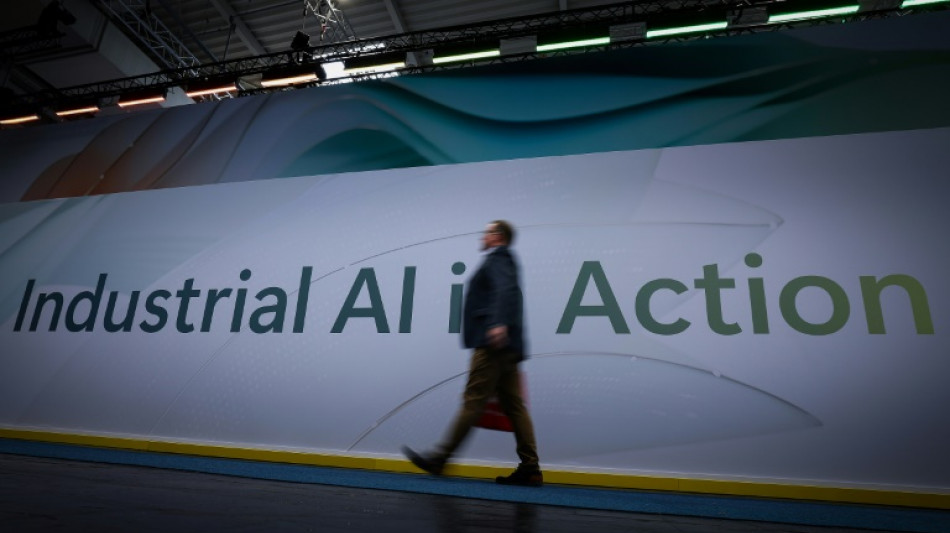
AI could impact 40 percent of jobs worldwide: UN / Photo: RONNY HARTMANN - AFP

AI could impact 40 percent of jobs worldwide: UN

The global artificial intelligence market is projected to reach $4.8 trillion -- roughly the size of Germany's economy -- by 2033, the UN said Thursday, warning nearly half of jobs worldwide could be affected.

Text size:

While AI is transforming economies and creating vast opportunities, the technology also risks deepening existing inequalities, the UN trade and development agency UNCTAD warned in a report.

In particular, the report cautioned that "AI could impact 40 percent of jobs worldwide, offering productivity gains but also raising concerns about automation and job displacement".

While previous waves of technology mainly impacted blue-collar jobs, UNCTAD highlighted that knowledge-intensive sectors would be left most exposed by AI.

This means advanced economies will surely be hardest-hit, it said, adding though that these economies were better positioned to harness the benefits of AI than developing economies.

"The benefits of AI-driven automation often favour capital over labour, which could widen inequality and reduce the competitive advantage of low-cost labour in developing economies," UNCTAD said.

In a statement, the agency chief Rebeca Grynspan underlined the importance of ensuring people are at the centre of AI development, urging stronger international cooperation to "shift the focus from technology to people, enabling countries to co-create a global artificial intelligence framework".

"History has shown that while technological progress drives economic growth, it does not on its own ensure equitable income distribution or promote inclusive human development," she warned in the report.

- $4.8 trillion -

In 2023, so-called frontier technologies like the internet, blockchain, 5G, 3D printing and AI, represented a $2.5-trillion market, with that number expected to increase sixfold in the next decade to $16.4 trillion, the report said.

And by 2033, AI will be the leading technology in this sector, with an expected value of $4.8 trillion, it showed.

But UNCTAD cautioned that access to AI infrastructure and expertise remained concentrated in just a few economies, with only 100 firms, mainly in the US and China, currently accounting for 40 percent of global corporate research and development spending.

"Countries should act now," the agency said, insisting that "by investing in digital infrastructure, building capabilities, and strengthening AI governance", they could "harness the AI potential for sustainable development".

"AI is not just about replacing jobs," it said, insisting the technology could "also create new industries and empower workers".

"Investing in reskilling, upskilling, and workforce adaptation is essential to ensure AI enhances employment opportunities rather than eliminating them."

The UN agency stressed the need for all countries to take part in discussions around how to govern AI.

"AI is shaping the world's economic future, yet 118 countries - mostly in the Global South - are absent from major AI governance discussions," it said.

"As AI regulation and ethical frameworks take shape, developing nations must have a seat at the table to ensure AI serves global progress, not just the interests of a few."

G.Kuhn--NZN