Lesotho hardest hit as new US tariffs rattle Africa / Photo: Roberta Ciuccio - AFP/File
The small African kingdom of Lesotho feared the worst for its textile industry Thursday after US President Donald Trump imposed 50-percent tariffs on its imports, the highest for a single nation.
Other African countries hit with Trump's "reciprocal tariffs" above the new baseline rate of 10 percent include Madagascar (47 percent), Mauritius (40 percent), Botswana (37 percent), Equatorial Guinea (30 percent) and South Africa (30 percent).
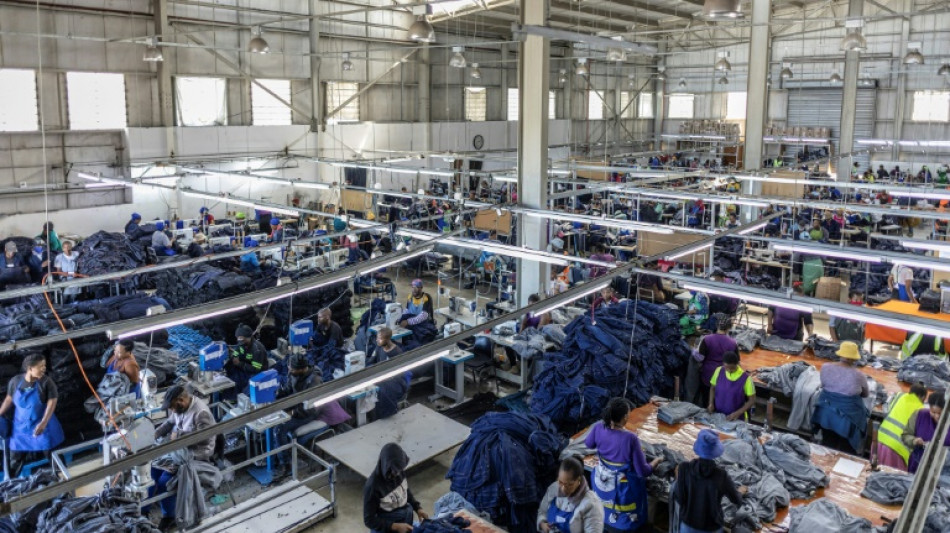
But the mountain kingdom, which the US administration says is among "the worst offenders" with high tariffs on US imports, will be particularly hard hit as it is reliant on exports of mostly textiles, including jeans.
While its government did not immediately react to the new tariffs, Lesotho Private Sector Foundation CEO Thabo Qhesi told AFP Thursday they meant that "the textile and apparel industry is going to die."
The clothing industry is the largest employer in the tiny kingdom of around 2.3 million people, providing more than 35,000 workers, according to official data.
"Before the introduction of the reciprocal tariffs, investors enjoyed exporting goods to the US market duty-free," Qhesi said.
"With the introduction of the 50-percent tariffs, Lesotho is no longer going to be lucrative for investors," he said, adding the transport, retail and residential property sectors would also suffer.
At 47 percent, the tariffs are also high for Madagascar, which said Thursday it had approached the US embassy to "seek clarification and explore possibilities for adjusting these new tariff barriers".
The government will "mobilise all diplomatic and commercial levers to obtain a review of these measures", it said.
South African President Cyril Ramaphosa said Thursday the tariffs were "a barrier to trade and shared prosperity".
They underscore the urgent need for "a new bilateral and mutually beneficial trade agreement", he said. The United States is South Africa's second-largest trading partner.
The country's automotive sector will be among the hardest hit, with separate tariffs of 25 percent on foreign-made cars going into effect shortly after Trump's late Wednesday proclamation.
Motor vehicles account for 22 percent of South Africa's exports to the United States, worth $1.88 billion, according to government statistics.
- Diversifying trade -
South African Minister of Trade Parks Tau said the new global trade war would affect poorer countries most and "literally devastate" Lesotho.
"We now have to look amongst ourselves and say, within the customs union in Southern Africa, within the Southern African Development Community, and within the region of Africa, how we're going to respond to these issues," he told journalists.
"Diversifying our trade is going to be important... enhancing our work on the African continent and collaborating," he said.
The new US tariffs will be "disruptive of global value chains, invite retaliation, ignite inflation, dampen world economic growth and prompt repricing of risks in financial markets", said South Africa-based economics professor Raymond Parsons.
South Africa "must see what trade adjustments might be made to win concessions to ameliorate the situation", Parsons said, adding Pretoria should "prudently seize the moment" to find alternative trading partners.
However, "everybody is going to look for new trading partners," said South African economist Dawie Roodt. "Of course, we must try. But it's going to be tough."
Y.Keller--NZN