Despite US tariffs pause, southern African economies under threat / Photo: Roberta Ciuccio - AFP/File
Washington's 90-day pause on higher tariffs is of little comfort to southern African economies facing the collapse of a preferential trade deal and a 25-percent hike on car imports, analysts say.
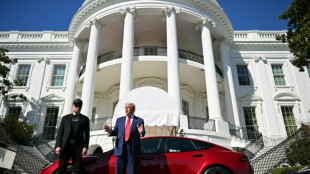
The African Growth and Opportunity Act (AGOA) -- which provided duty-free access to the US market for some African products -- had enabled certain sectors to flourish, for example allowing seven large automakers in South Africa to export tax-free to the United States.
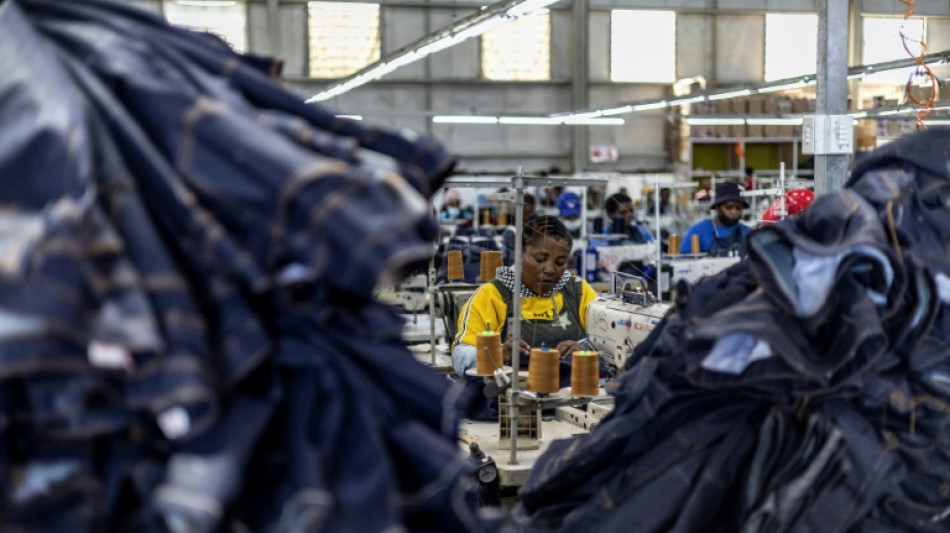
The region's citrus industry and textiles manufacturers, notably Lesotho's jeans factories, were also beneficiaries.
They all expect to suffer under the 10-percent tariffs applied on imports to the United States by President Donald Trump, even though he announced a pause Wednesday of higher hikes announced for several countries.
"Mauritius, Madagascar, Lesotho, South Africa in particular will be impacted," director of the Africa programme at the Chatham House think-tank, Alex Vines, told AFP.
"Textile exports will be massively hurt and the 25-percent tariff on car exports is very problematic for South Africa," he said.
Washington has not officially cancelled the AGOA, which is up for review in September, and there is "no clarity currently" on its status, Vines said.
In the confusion, Madagascar's Trade Minister David Ralambofiringa has told journalists he considered the trade deal still applied "for the time being".
But his South African counterpart, Parks Tau, said the 10-percent baseline tariffs essentially "nullify AGOA benefits".
- 'Devastating' for auto -
The United States is the third-largest market for South African-made cars, importing 25,000 vehicles annually for about 35 billion rand ($1.8bn), according to the Automotive Business Council known as Naamsa.
About 86,000 jobs in the automobile industry directly depend on the AGOA, rising to 125,000 when subcontractors are included, Naamsa says.
"With the broader impact (of the tariffs) on the global industry, it’s unlikely South Africa could find an alternative market," Vines said.
"It would be devastating to South Africa, which already suffers from exceptionally high unemployment," of 32 percent, he said
Mercedes-Benz South Africa told AFP it was "assessing the impact of the recently announced US-tariff lines". It refused to disclose vehicle sales volumes for "competitive reasons".
"Mercedes-Benz supports free and fair trade that ensure prosperity, growth and innovation," the company said. "It is now important that the affected countries and the US enter into a constructive dialogue."
- 'Disastrous' for Lesotho -
The new US tariffs regime will hit the small kingdom of Lesotho particularly hard, said Richard Morrow, analyst at the Brenthurst Foundation.
Its textile industry, supplying jeans to the United States, was long described as an AGOA "success story".
The United States "is only South Africa's third-largest export market in terms of automobiles, so there is a buffer," he said.
But Lesotho is "one of those small economies which have relied almost exclusively on AGOA as a means of sustaining their economies," he told AFP.
"The clothes and textiles industry contribute as much as 10 percent of Lesotho's gross national income," he said.
"In those economies where you have a low- or semi-skilled workforce, which has been largely built around one or two particular industries, it could have a disastrous effect."
The success of Lesotho's jeans-for-export industry gave the impoverished country a large trade surplus with the United States. This was used to calculate Trump's now-suspended "reciprocal tariffs" of 50 percent on Lesotho -- the highest for any individual nation.
The country stood to lose up to 40,000 jobs if the AGOA was terminated, Lesotho's King Letsie III told AFP last month.
Botswana, South Africa, Namibia and Zimbabwe -- all citrus-producing countries under the AGOA -- were also among countries designated by Trump as the "worst offenders" and hit with high import taxes, which could return after the 90-day pause.
In South Africa alone, "should the reciprocal tariff be applied, 35,000 jobs will be threatened," said Citrus Growers' Association CEO Boitshoko Ntshabele.
Y.Keller--NZN