Zürcher Nachrichten - Nvidia chief says H20 chip shipments to China not a security concern

EUR -
AED 4.341785
AFN 78.028377
ALL 96.794245
AMD 447.408056
ANG 2.11631
AOA 1084.117105
ARS 1708.386003
AUD 1.685211
AWG 2.128038
AZN 2.017355
BAM 1.960748
BBD 2.380056
BDT 144.414407
BGN 1.985424
BHD 0.445611
BIF 3501.479859
BMD 1.182243
BND 1.50209
BOB 8.16557
BRL 6.182655
BSD 1.181707
BTN 106.765406
BWP 16.322186
BYN 3.385743
BYR 23171.966812
BZD 2.376587
CAD 1.612887
CDF 2547.733818
CHF 0.915763
CLF 0.025819
CLP 1019.496041
CNY 8.212449
CNH 8.198939
COP 4294.001899
CRC 586.875925
CUC 1.182243
CUP 31.329445
CVE 110.54394
CZK 24.342628
DJF 210.108732
DKK 7.469998
DOP 74.407756
DZD 153.532609
EGP 55.578023
ERN 17.733648
ETB 183.298149
FJD 2.600108
FKP 0.865982
GBP 0.862996
GEL 3.186157
GGP 0.865982
GHS 12.945611
GIP 0.865982
GMD 86.89204
GNF 10367.159897
GTQ 9.063871
GYD 247.231168
HKD 9.235725
HNL 31.220781
HRK 7.537507
HTG 155.001121
HUF 380.895706
IDR 19811.736064
ILS 3.643691
IMP 0.865982
INR 106.96706
IQD 1548.00615
IRR 49801.995185
ISK 145.03801
JEP 0.865982
JMD 185.187291
JOD 0.83826
JPY 184.069945
KES 152.509252
KGS 103.387394
KHR 4768.031377
KMF 494.17727
KPW 1064.003808
KRW 1713.939315
KWD 0.363061
KYD 0.984785
KZT 592.444942
LAK 25418.030902
LBP 105820.273269
LKR 365.762945
LRD 219.792753
LSL 18.92716
LTL 3.490857
LVL 0.715127
LYD 7.470852
MAD 10.839652
MDL 20.011496
MGA 5237.193083
MKD 61.635428
MMK 2482.852516
MNT 4218.751034
MOP 9.509455
MRU 47.173034
MUR 54.253261
MVR 18.265934
MWK 2049.131324
MXN 20.399027
MYR 4.649168
MZN 75.368338
NAD 18.92716
NGN 1640.268227
NIO 43.48974
NOK 11.392335
NPR 170.82505
NZD 1.95491
OMR 0.454565
PAB 1.181677
PEN 3.978138
PGK 5.062775
PHP 69.823313
PKR 330.49034
PLN 4.223948
PYG 7839.782457
QAR 4.296943
RON 5.096056
RSD 117.429818
RUB 90.880676
RWF 1724.637263
SAR 4.433506
SBD 9.526636
SCR 16.235881
SDG 711.191278
SEK 10.530098
SGD 1.501277
SHP 0.886989
SLE 28.93537
SLL 24791.048015
SOS 674.201241
SRD 45.060612
STD 24470.047398
STN 24.561978
SVC 10.340092
SYP 13075.107266
SZL 18.934017
THB 37.422757
TJS 11.043059
TMT 4.149674
TND 3.417123
TOP 2.846558
TRY 51.402393
TTD 8.004163
TWD 37.347027
TZS 3054.963258
UAH 51.139442
UGX 4212.629909
USD 1.182243
UYU 45.51485
UZS 14466.503946
VES 439.369533
VND 30740.687809
VUV 141.322495
WST 3.223169
XAF 657.616391
XAG 0.013968
XAU 0.000239
XCD 3.195071
XCG 2.129674
XDR 0.817015
XOF 657.616391
XPF 119.331742
YER 281.817205
ZAR 18.869668
ZMK 10641.599935
ZMW 23.190419
ZWL 380.68183
  • SCS

    0.0200

    16.14

    +0.12%

  • RYCEF

    0.3300

    17

    +1.94%

  • BCC

    2.2800

    84.03

    +2.71%

  • RIO

    2.4200

    94.94

    +2.55%

  • JRI

    -0.0250

    13.125

    -0.19%

  • BCE

    0.2810

    26.111

    +1.08%

  • RELX

    -5.4000

    30.13

    -17.92%

  • VOD

    0.2550

    15.165

    +1.68%

  • CMSD

    -0.1700

    23.91

    -0.71%

  • GSK

    0.5250

    52.995

    +0.99%

  • RBGPF

    0.1000

    82.5

    +0.12%

  • NGG

    1.3550

    85.965

    +1.58%

  • BP

    0.5350

    38.235

    +1.4%

  • AZN

    -3.0650

    185.345

    -1.65%

  • CMSC

    -0.0900

    23.66

    -0.38%

  • BTI

    0.7950

    61.785

    +1.29%

Nvidia chief says H20 chip shipments to China not a security concern
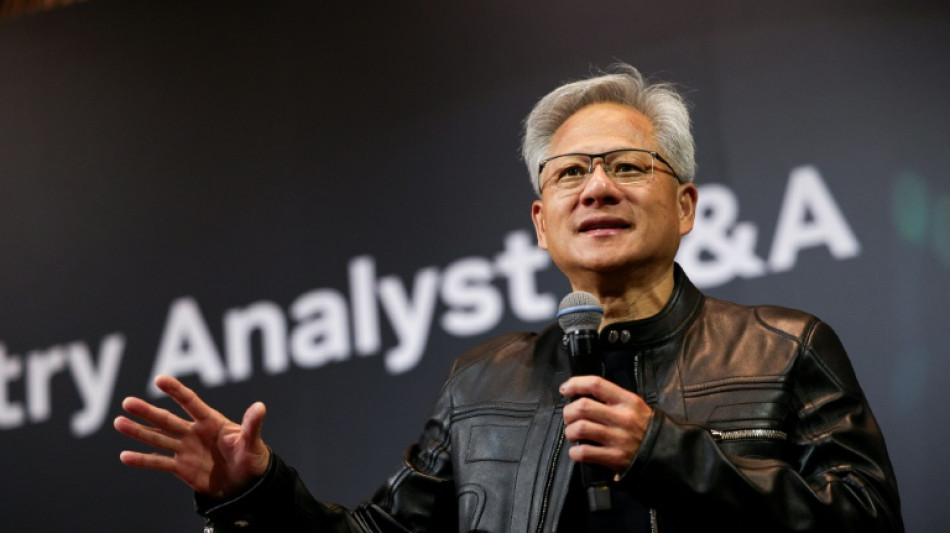
Nvidia chief says H20 chip shipments to China not a security concern / Photo: I-Hwa Cheng - AFP/File

Nvidia chief says H20 chip shipments to China not a security concern

Shipping Nvidia's H20 chips to China was "great" for Beijing and Washington and not a security threat, the tech giant's chief said Friday.

Text size:

The California-based company produces some of the world's most advanced semiconductors but cannot ship its most cutting-edge chips to China due to concerns from Washington that Beijing could use them to enhance military capabilities.

Nvidia developed the H20 -- a less powerful version of its AI processing units -- specifically for export to China.

That plan stalled when the Trump administration tightened export licensing requirements in April.

The H20 was "not a national security concern", Jensen Huang told reporters in Taipei, describing the chip as "great for America" and "great for the Chinese market".

Huang insisted there were "no security backdoors" in the H20 chip allowing remote access, after China summoned company representatives to discuss security issues.

"We have made very clear and put to rest that H20 has no security backdoors, there are no such things, there never has, and so hopefully the response that we've given to the Chinese government will be sufficient," Huang said.

He sidestepped a question about reports that Nvidia would pay the United States 15 percent of its revenues from the sale of H20 chips to China, which US President Donald Trump confirmed last week.

Instead, Huang expressed gratitude to the Trump administration for allowing the chips to be shipped to the Chinese market.

"The demand I believe is quite great and so the ability to ship products to, H20s to China, is very much appreciated," the CEO said.

Huang also said Nvidia is in talks with the US government about a new chip for China.

"Offering a new product to China for the data center, AI data centers, the follow on to H20, that's not our decision to make. It's up to of course the United States government, and we're in dialogue with them but it's too soon to know," he said.

Huang met with Trump at the White House this month and agreed to give the federal government the cut from its revenues, a highly unusual arrangement in the international tech trade, according to reports in the Financial Times, Bloomberg and The New York Times.

Investors are betting that AI will transform the global economy, and last month Nvidia -- the world's most valuable company and a leading designer of high-end AI chips -- became the first company ever to hit $4 trillion in market value.

The firm has, however, become entangled in trade tensions between China and the United States, which are waging a heated battle for dominance to produce the chips that power AI.

It comes as the Trump administration has been imposing stiff tariffs, with goals varying from addressing US trade imbalances, wanting to reshore manufacturing and pressuring foreign governments to change policies.

A 100 percent tariff on many semiconductor imports came into effect this month, with exceptions for tech companies that announce major investments in the United States.

U.Ammann--NZN