Libyan filmmaker fights for cinema revival / Photo: Mahmud TURKIA - AFP
Mouayed Zabtia shoots most scenes for his latest movie in a studio he built at his Tripoli home. For the filmmaker, it is one way to overcome the obstacles he faces in a country where cinema once nearly vanished.
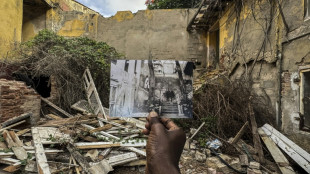
Before a 1969 coup that brought Moamer Kadhafi to power, Libya's capital Tripoli was home to more than 20 movie theatres.
"Today we have none," Zabtia told AFP.
Kadhafi was overthrown and killed in 2011, and though the censorship of his era has declined, its effects are still deeply felt through underinvestment and public disinterest.
"You have to go abroad to see films in a movie theatre," said Mohammed Rizk, an actor in Zabtia's current project, which is set in 1980s Libya when a younger generation yearned for freedom under Kadhafi.
Under the longtime ruler, cinema was viewed as a tool of foreign cultural invasion, and only movies aligned with the state were funded and promoted.
Movie theatres were seen as spaces for gatherings that were difficult to control.
- 'Disinterest' -
Many like 47-year-old Zabtia believed that after Kadhafi's fall, cinema would be resurrected, but the instability that ensued has delayed any revival.
"The problem is disinterest from all governments since 2011," Zabtia said. "We were expecting that they would help."
The filmmaker said he had funded all his productions from his own pocket, mainly with revenue from a production company he founded in 2001 to create television series and wedding videos.
It was only after the 2011 revolution that he decided to take on cinema, a goal since childhood.
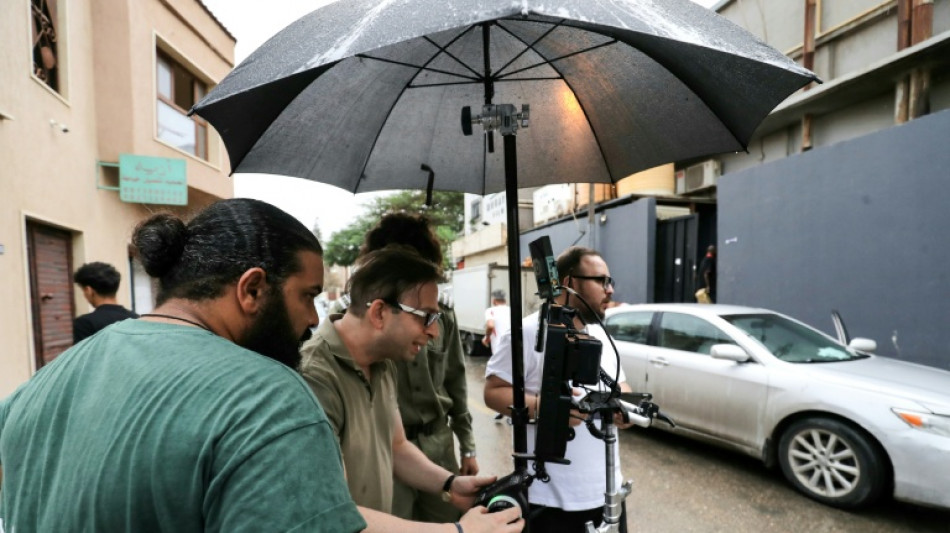
In his dim-lit studio, Zabtia oversees everything -- from lighting and sound to costumes -- as a small crew bustles about making his latest picture, "1986".
Zabtia said the film is inspired by true events, including the estrangement from Libya of pioneering singer Ahmed Fakroun after Kadhafi cracked down on Western-influenced music.
Today, Zabtia said, it is no longer censorship that stifles filmmaking in Libya, but an array of other challenges compounded by a lack of public support.
Authorities have in recent years attempted to revive the artform through festivals and the creation of the Libyan Film Institute in 2021.
- No story without women -
Zabtia said most of his work is filmed in the studio as "filming outside in Libya is very tiring".
"We lack logistic support. You need big crews, food, drinks, help with the police for outdoor sets."
"We don't have that experience, and people are not used to seeing these kinds of cameras in the street."
Added to that, some Libyans feel cinema clashes with their moral values, he added.
Portraying women on screen is particularly difficult, Zabtia said, although he insisted it was "impossible to make a film without women when it comes to telling a story."
"We have many hidden female talents who are afraid to come forward."
Yet the director believes one solution to these social obstacles is cinema itself: "The role of cinema -- our role -- is to pinpoint issues and try to address them."
Despite the obstacles, a handful of Libyan films have crossed borders.
"Freedom Fields", a documentary by Libyan-British director Naziha Arebi about three women footballers, was screened at the Toronto International Film Festival in 2018.
In 2023, "Donga", a film by Muhannad Lamin about the 2011 uprising, was shown at the International Documentary Film Festival Amsterdam.
While "cinema doesn't really have a market in Libya", Zabtia hopes the lack of interest will translate into an opportunity to stand out and establish a niche -- particularly with platforms like Netflix and Amazon Prime.
"We want to develop and highlight Libyan work, talent and skills," he said.
"And we want to reach audiences overseas. It's important that they hear about Libyan stories and culture, and get to know us as a people."
O.Pereira--NZN