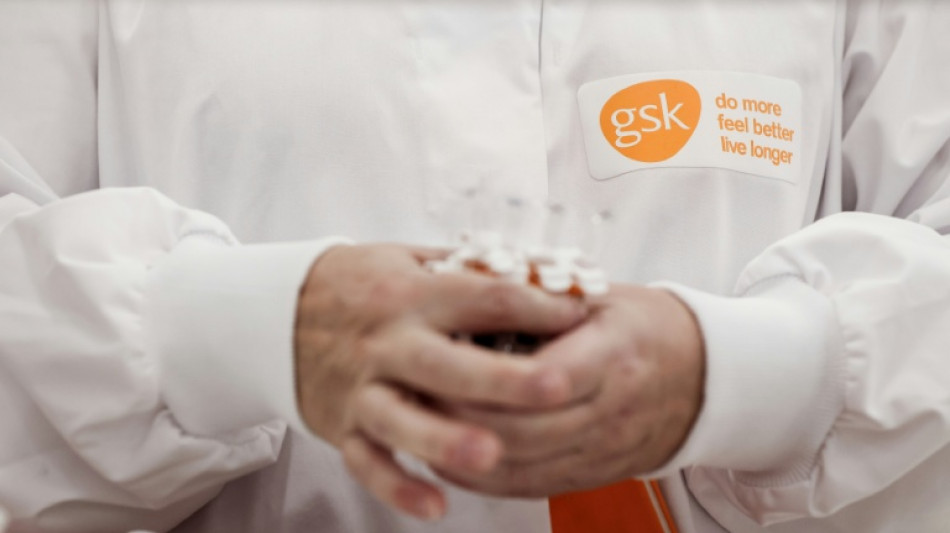
GSK boosted by specialty drugs, end to Zantac fallout / Photo: Kenzo TRIBOUILLARD - AFP
British pharmaceutical group GSK reported Wednesday a sharp rise in annual net profit, boosted by strong sales of HIV, respiratory and cancer treatments as it recovered from costly US lawsuits over its Zantac heartburn treatment.
Profit after tax more than doubled to £5.7 billion ($7.8 billion) compared with £2.6 billion in 2024, GSK said, as revenue rose four percent to £32.7 billion.
"GSK delivered another strong performance in 2025, driven mainly by specialty medicines," said chief executive Luke Miels, who took over from Emma Walmsley at the start of the year.
"We expect this positive momentum to continue in 2026," added Miels, who was chief commercial officer before Walmsley stepped down after nearly nine years at the helm.
Addressing journalists in an online call later, Miels said the company was in "very good shape", adding that he would look to speed up simplification of the group.
"We're going to also have an increased focus on the practical use of AI and technology," he said.
Soon after taking over as CEO, Miels announced last month that GSK was buying the US biotech company RAPT Therapeutics, which is developing a food allergy drug, in a deal valued at $2.2 billion.
GSK forecast a low double-digit increase in revenue for its specialty medicines this year, but it expects revenue from vaccines and general medicines to decline.
- 'Exciting space' -
Shares in GSK climbed near six percent around midday on the London Stock Exchange, where the top-tier FTSE 100 index was up one percent.
"There is little doubt that the sector is an exciting space, not only in terms of the leaps being made by technology but also by the major financial rewards which the larger players are chasing," said Richard Hunter, head of markets at Interactive Investor.
"The rapid evolution of AI, for example, is decreasing both discovery and development time to market and GSK is firmly in the mix with the shares having risen by 39 percent over the last year," he added.
The company's 2025 earnings rose significantly from the previous year, when it agreed to pay $2.3 billion to end lawsuits alleging that Zantac caused cancer, though the group did not admit any liability.
- US focus -
The pharmaceutical industry has faced turbulence from US President Donald Trump's tariff threats last year, aimed at encouraging investment in the United States and reducing drug prices.
GSK, along with several other pharmaceutical giants, agreed in December to lower the cost of its prescription medicines for American patients, in exchange for tariff exemptions for three years.
Ahead of the deal, GSK announced plans to invest $30 billion in the United States over five years.
The US accounted for more than half of GSK's total revenues last year, and Miels said Wednesday that the group's 2026 guidance took into account the agreed price cuts to certain treatments.
While investment is crossing the Atlantic, Miels also emphasised GSK's commitment to the UK.
"We've got 10,000 employees in the UK and we spend around £1.5 billion per year in R&D," Miels said.
"So we're heavily committed to the UK," where the company has five manufacturing sites, he said.
N.Zaugg--NZN