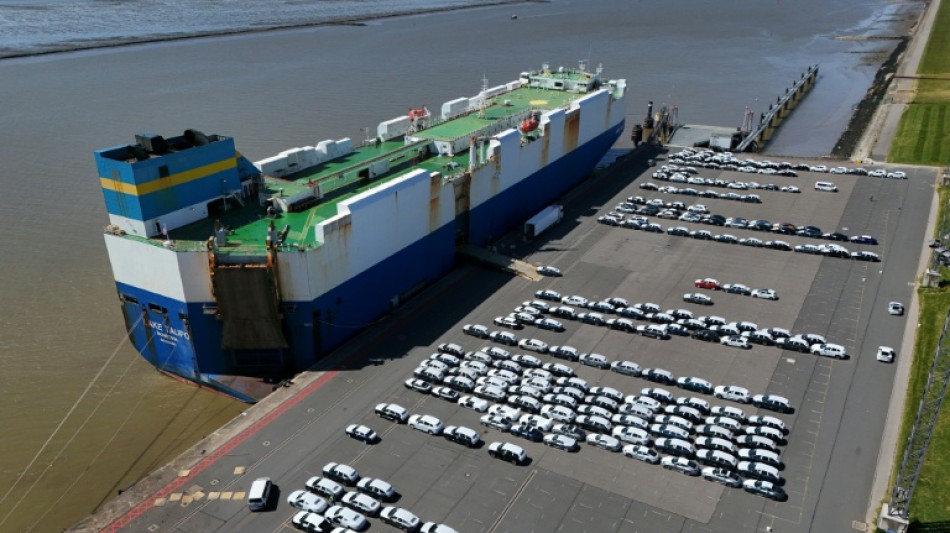
German auto exports to China plunged a third in 2025: study / Photo: Ina FASSBENDER - AFP
German auto industry exports to China plunged by a third last year as the country's manufacturers face fierce local competition, a study showed Friday, underscoring the sector's deepening crisis.
As well as problems in key market China, German carmakers such as Volkswagen, BMW and Mercedes are battling weak demand in Europe and a troubled transition to electric vehicles.
According to the study by consultancy EY, exports to China dropped by 33 percent in 2025 to a value of 13.6 billion euros ($15.7 billion) compared to the previous year.
This meant China fell from second spot down to sixth in the ranking of the German auto industry's biggest export markets, it showed.
The United States remained the top market, with exports worth 28.5 billion euros -- but the figure was down 18 percent from 2024 amid President Donald Trump's tariff blitz.
The fall in exports to both China and the United States "is causing massive overcapacity across the entire German automotive industry," said EY auto industry expert Constantin M. Gall.
"The automotive sector is under more pressure than ever before."
German auto sector exports were down around four percent overall last year, the study showed.
Long a reliable market for German cars, China has become much more challenging due to the emergence of homegrown rivals, particularly for sales of EVs, such as BYD.
Demand has also been weaker in China due to a prolonged slowdown in the world's number two economy.
China's new generation of carmakers are also increasingly making inroads into Europe.
In 2025, the value of cars and auto parts imported from China into the European Union exceeded the value of auto sector exports from the EU to China, according to the EU study.
This is despite the EU's decision to slap hefty tariffs on imports of Chinese-made EVs in a bid to protect its domestic manufacturers.
The study also showed that the German auto industry as a whole shed nearly 50,000 jobs last year, with the total number of workers reaching its lowest level in 14 years.
Bankruptcies filings in the sector also hit a 14-year high.
A.P.Huber--NZN