Zürcher Nachrichten - UAE pulls out of OPEC oil cartels citing 'national interests'

EUR -
AED 4.1668
AFN 73.738181
ALL 92.077671
AMD 412.002285
ANG 2.031044
AOA 1040.271856
ARS 1729.192773
AUD 1.624094
AWG 2.041974
AZN 1.923465
BAM 1.955343
BBD 2.285366
BDT 139.509858
BGN 1.909746
BHD 0.427646
BIF 3398.75197
BMD 1.13443
BND 1.449661
BOB 13.678683
BRL 5.906966
BSD 1.134635
BTN 108.851563
BWP 15.493243
BYN 3.425
BYR 22234.825971
BZD 2.282067
CAD 1.609359
CDF 2620.533412
CHF 0.946125
CLF 0.027969
CLP 1104.390454
CNY 7.60448
CNH 7.60582
COP 3783.516558
CRC 516.979188
CUC 1.13443
CUP 27.231636
CVE 110.239238
CZK 24.436069
DJF 201.610705
DKK 7.477143
DOP 67.474232
DZD 151.855625
EGP 59.058081
ERN 17.016448
ETB 185.336655
FJD 2.560863
FKP 0.855745
GBP 0.857459
GEL 2.943881
GGP 0.855745
GHS 13.267182
GIP 0.855745
GMD 83.947598
GNF 9979.667864
GTQ 8.663128
GYD 237.414519
HKD 8.901134
HNL 30.460882
HRK 7.537831
HTG 148.495298
HUF 367.146685
IDR 20340.55493
ILS 3.479364
IMP 0.855745
INR 108.766472
IQD 1486.452633
IRR 1559670.94326
ISK 136.823092
JEP 0.855745
JMD 179.628023
JOD 0.804313
JPY 178.473111
KES 147.181353
KGS 99.20397
KHR 4604.883298
KMF 491.208391
KPW 1020.987267
KRW 1534.758847
KWD 0.35021
KYD 0.945571
KZT 498.123594
LAK 25459.050506
LBP 101607.85971
LKR 375.582231
LRD 194.592811
LSL 18.588956
LTL 3.349677
LVL 0.686205
LYD 7.258176
MAD 10.989432
MDL 20.134117
MGA 4996.832296
MKD 61.565613
MMK 2381.589908
MNT 4080.796097
MOP 9.170138
MRU 45.432383
MUR 54.010014
MVR 17.537601
MWK 1967.540208
MXN 20.46602
MYR 4.631533
MZN 72.489303
NAD 18.588628
NGN 1503.141985
NIO 41.760977
NOK 10.842614
NPR 174.160765
NZD 2.008837
OMR 0.436183
PAB 1.134635
PEN 3.903057
PGK 5.1338
PHP 71.055591
PKR 314.329145
PLN 4.370436
PYG 6665.442361
QAR 4.135933
RON 5.279072
RSD 117.606949
RUB 94.980118
RWF 1675.293735
SAR 4.261501
SBD 9.10516
SCR 15.88611
SDG 682.356622
SEK 11.326363
SGD 1.44945
SHP 0.855818
SLE 27.907231
SLL 23788.418503
SOS 648.44275
SRD 42.828086
STD 23480.408452
STN 24.494276
SVC 9.92868
SYP 14749.857802
SZL 18.584657
THB 38.05329
TJS 10.444559
TMT 3.970505
TND 3.368213
TOP 2.731435
TRY 55.575036
TTD 7.697201
TWD 36.155873
TZS 2989.226152
UAH 50.894009
UGX 4447.960562
USD 1.13443
UYU 45.48937
UZS 13411.865797
VES 971.883393
VND 29463.980486
VUV 134.902482
WST 3.141588
XAF 655.957
XAG 0.018453
XAU 0.00027127465
XCD 3.065854
XCG 2.044922
XDR 0.802101
XOF 655.957
XPF 119.331742
YER 268.434506
ZAR 18.605669
ZMK 10211.230429
ZMW 22.210614
ZWL 365.285964
SSP 6480.535037
MXV 2.317217
  • RIO

    -0.2500

    94.16

    -0.27%

  • CMSC

    -0.2800

    20.12

    -1.39%

  • RBGPF

    0.5300

    65

    +0.82%

  • BCC

    -0.6200

    75.97

    -0.82%

  • GSK

    -0.3500

    49.35

    -0.71%

  • BCE

    -0.4200

    20.14

    -2.09%

  • BTI

    -1.2000

    54.85

    -2.19%

  • NGG

    -0.3000

    74.94

    -0.4%

  • RELX

    0.1700

    33.24

    +0.51%

  • RYCEF

    0.4000

    19.71

    +2.03%

  • CMSD

    -0.3400

    19.93

    -1.71%

  • VOD

    -0.2500

    16.33

    -1.53%

  • AZN

    -1.9400

    164.21

    -1.18%

  • BP

    -0.9100

    43.52

    -2.09%

  • JRI

    0.0000

    10.77

    0%

UAE pulls out of OPEC oil cartels citing 'national interests'
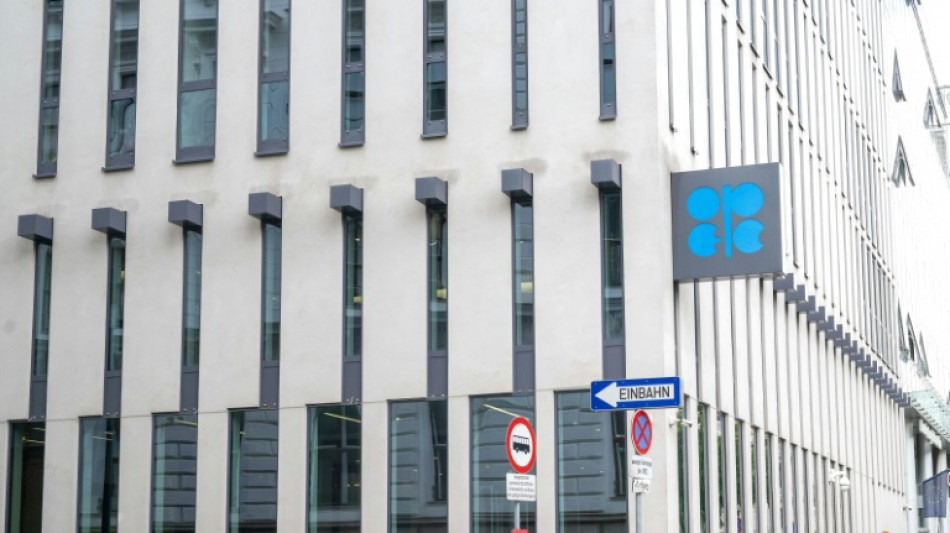
UAE pulls out of OPEC oil cartels citing 'national interests' / Photo: JOE KLAMAR - AFP/File

UAE pulls out of OPEC oil cartels citing 'national interests'

The United Arab Emirates will withdraw from the OPEC and OPEC+ oil cartels to focus on "national interests", it announced on Tuesday, causing fresh shockwaves as energy prices soar over the Middle East war.

Text size:

The UAE, one of the world's top oil producers, which has previously chafed at OPEC production quotas, will pull out on Friday, a statement carried by the official WAM news agency said.

The UAE has been an OPEC member through the emirate of Abu Dhabi since 1967, four years before the former British protectorate became a country.

The last OPEC member to withdraw from the cartel was Angola in 2024.

"This decision reflects the UAE's long-term strategic and economic vision and evolving energy profile," the UAE statement said.

"During our time in the organisation, we made significant contributions and even greater sacrifices for the benefit of all," it added.

"However, the time has come to focus our efforts on what our national interest dictates."

The decision, in the midst of the biggest oil shock since the 1970s, is likely to weaken OPEC, dominated by the UAE's neighbour and rival Saudi Arabia, indicating further turbulence for markets, analysts said.

Gulf oil shipments are currently being strangled by Iran's blockade of the Strait of Hormuz, which flows past the UAE and normally carries one-fifth of the world's oil.

The UAE, hard-hit by Iranian attacks, has also faced trouble in its relationship with Saudi Arabia, the world's top oil exporter, after a stand-off between rival forces backed by the two countries in Yemen.

- 'More volatile oil market' -

Pre-war, the UAE was the fourth biggest producer in the 22-member OPEC+, behind Saudi Arabia, Russia and Iraq.

Jorge Leon, an analyst at Rystad Energy, said its withdrawal may not immediately impact oil markets while Hormuz shipments remain on hold.

But the UAE will now be free to raise production, "raising broader questions about the sustainability of Saudi Arabia's role as the market's central stabiliser -- and pointing to a potentially more volatile oil market as OPEC's capacity to smooth supply imbalances diminishes".

Jamie Ingram, managing editor for the Middle East Economic Survey, posted that OPEC is losing 13 percent of its production capacity with the UAE's departure, citing the International Energy Agency.

Founded in 1960, the 12-member OPEC cartel in 2016 partnered up with 10 other producers to form OPEC+ to gain more clout.

The Vienna-based group drew international attention in 1973, when it imposed an oil embargo against Israel's allies in the midst of the Yom Kippur War, triggering the first oil crisis.

Within just a few months, prices quadrupled, highlighting the cartel's dominance.

Faced with rising competitors in the 1980s, it introduced its famous quota system that enabled it to exert more control over the market.

This strategy meant the group fared relatively well during the 2008 financial crisis and the price shock in the wake of the Covid pandemic, despite increased internal tensions.

W.O.Ludwig--NZN