Zürcher Nachrichten - As OPEC+ meets, Iran war hobbles power to shape oil market

EUR -
AED 4.196947
AFN 75.425149
ALL 93.727408
AMD 417.699316
ANG 2.045914
AOA 1049.094839
ARS 1689.637308
AUD 1.630736
AWG 2.057048
AZN 1.943038
BAM 1.955294
BBD 2.301705
BDT 140.975048
BGN 1.962776
BHD 0.430996
BIF 3398.18089
BMD 1.142805
BND 1.475044
BOB 7.912588
BRL 5.836535
BSD 1.142805
BTN 110.168445
BWP 16.350059
BYN 3.303304
BYR 22398.968873
BZD 2.298446
CAD 1.603468
CDF 2582.738553
CHF 0.92346
CLF 0.027094
CLP 1066.202372
CNY 7.740501
CNH 7.736964
COP 3731.0511
CRC 518.475025
CUC 1.142805
CUP 30.28432
CVE 110.236499
CZK 24.188772
DJF 203.510945
DKK 7.47573
DOP 66.87388
DZD 152.115064
EGP 58.359256
ERN 17.142068
ETB 184.459937
FJD 2.537367
FKP 0.849573
GBP 0.848858
GEL 2.999846
GGP 0.849573
GHS 13.216814
GIP 0.849573
GMD 84.567635
GNF 10027.40747
GTQ 8.719898
GYD 239.102366
HKD 8.960559
HNL 30.605623
HRK 7.532108
HTG 149.344002
HUF 361.2708
IDR 20511.055782
ILS 3.481788
IMP 0.849573
INR 110.152243
IQD 1497.139124
IRR 1571356.234424
ISK 143.193543
JEP 0.849573
JMD 181.143166
JOD 0.810234
JPY 185.570313
KES 147.71913
KGS 99.938014
KHR 4616.887129
KMF 490.262808
KPW 1028.524159
KRW 1692.893695
KWD 0.354063
KYD 0.95237
KZT 537.690393
LAK 25813.777755
LBP 102341.031352
LKR 384.337358
LRD 206.85014
LSL 18.83656
LTL 3.374405
LVL 0.691271
LYD 7.322107
MAD 10.677799
MDL 20.108153
MGA 4901.818448
MKD 61.554238
MMK 2400.12125
MNT 4097.413511
MOP 9.229775
MRU 45.622003
MUR 53.860086
MVR 17.667962
MWK 1981.722319
MXN 19.984023
MYR 4.676587
MZN 73.03663
NAD 18.83656
NGN 1577.161707
NIO 42.053607
NOK 11.044154
NPR 176.269511
NZD 1.951899
OMR 0.439404
PAB 1.142825
PEN 3.87489
PGK 5.110612
PHP 70.489293
PKR 317.565853
PLN 4.332509
PYG 6925.330694
QAR 4.165823
RON 5.241018
RSD 117.371717
RUB 89.563812
RWF 1681.694638
SAR 4.291684
SBD 9.223989
SCR 15.395947
SDG 686.258817
SEK 11.044057
SGD 1.475046
SHP 0.853219
SLE 27.855847
SLL 23964.048077
SOS 653.142564
SRD 42.981992
STD 23653.746547
STN 24.493667
SVC 9.999415
SYP 126.316582
SZL 18.838459
THB 38.430807
TJS 10.565553
TMT 4.011244
TND 3.376257
TOP 2.751599
TRY 53.91975
TTD 7.75813
TWD 36.924696
TZS 3011.293326
UAH 51.098389
UGX 4233.905348
USD 1.142805
UYU 45.98811
UZS 13662.706692
VES 828.35021
VND 30050.04523
VUV 135.426657
WST 3.134387
XAF 655.798924
XAG 0.020133
XAU 0.000285
XCD 3.088487
XCG 2.059686
XDR 0.815404
XOF 655.78745
XPF 119.331742
YER 272.675482
ZAR 18.837098
ZMK 10286.619906
ZMW 20.82798
ZWL 367.982594
  • RYCEF

    0.1000

    18.3

    +0.55%

  • NGG

    -1.2750

    82.715

    -1.54%

  • RELX

    0.1750

    33.875

    +0.52%

  • RBGPF

    0.0000

    67.35

    0%

  • CMSC

    0.0400

    22.07

    +0.18%

  • VOD

    -0.3330

    15.407

    -2.16%

  • BCE

    -0.0500

    21.79

    -0.23%

  • GSK

    -1.1800

    50.58

    -2.33%

  • BCC

    -0.2000

    76.99

    -0.26%

  • RIO

    -1.1150

    89.035

    -1.25%

  • BTI

    -0.2800

    62.56

    -0.45%

  • CMSD

    0.0300

    22.29

    +0.13%

  • JRI

    0.0100

    12.95

    +0.08%

  • AZN

    -2.6400

    166.26

    -1.59%

  • BP

    0.0550

    41.955

    +0.13%

As OPEC+ meets, Iran war hobbles power to shape oil market
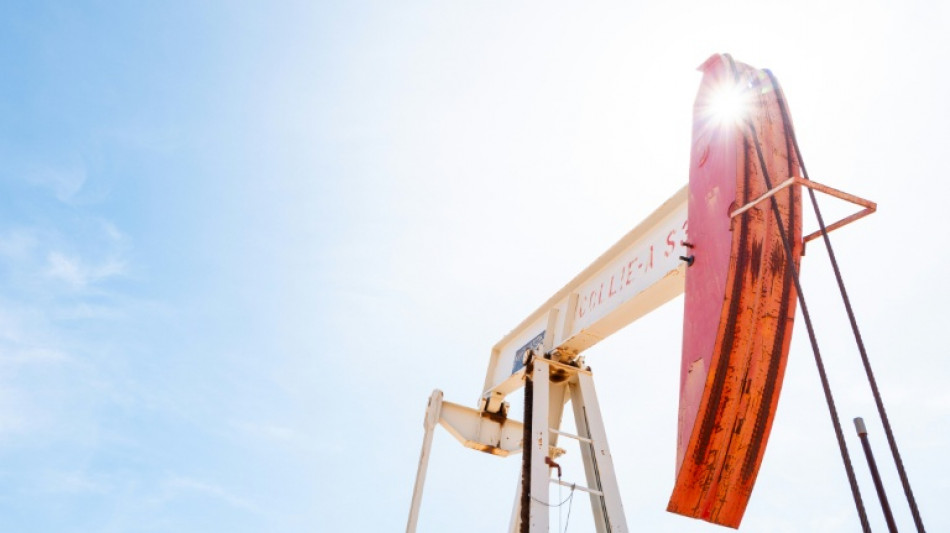
As OPEC+ meets, Iran war hobbles power to shape oil market / Photo: Brandon Bell - GETTY IMAGES NORTH AMERICA/AFP/File

As OPEC+ meets, Iran war hobbles power to shape oil market

OPEC+ ministers meet Sunday to weigh higher production quotas in a bid to cap oil prices that have surged since the Iran war effectively choked off Gulf crude shipments.

Text size:

But even if the cartel members vow to ramp up output by thousands of barrels per day, analysts say geopolitical realities mean they probably won't move the needle on prices.

With the crucial Strait of Hormuz shut since US and Israeli attacks on Iran in late February, oil prices have nearly doubled, igniting inflation pressures worldwide.

Ministers from the 21 member states of OPEC+, the main oil producing nations and their allies, are holding their quarterly meeting online.

The group is likely to beef up its production quotas by "188,000 barrels a day", said Jorge Leon, analyst at Rystad Energy, similar to recent increases.

But in reality, only seven members -- Saudi Arabia, Russia, Iraq, Kuwait, Kazakhstan, Algeria and Oman -- have the capacity to do so.

- Dwindling supply -

Tehran's threats of retaliatory attacks to US and Israeli strikes have virtually blocked the vital Strait of Hormuz, through which roughly a fifth of global oil and gas supplies normally pass.

That is equivalent to about 20 million barrels a day.

But with key Gulf producers shut out of the global market, pledges to raise output in a bid to ease spiralling prices are unlikely to sway traders.

"Any announced production increases or changes to output targets will have limited practical value," said Ole Hansen, a commodities analyst at Saxo Bank.

"There is very little OPEC can do," he told AFP.

OPEC+ itself says daily production has plummeted to just 33 million barrels a day as tankers remain stuck, compared to nearly 43 million before the conflict.

A US blockade on Iranian ports means "it will be even less than that" in reality, said Homayoun Falakshahi, head of crude oil analysis at data firm Kpler.

- UAE slams the door -

The United Arab Emirates' recent decision to quit OPEC further saps away at the cartel's influence, given its huge excess production capacity.

And Abu Dhabi has made clear it wants to boost output.

"They don't want to be dictated to, they want to maximise their revenues," said Lawrence Haar, a lecturer in finance at the University of Brighton in England.

And the cartel risks seeing other countries follow the UAE's example.

"If Iraq were to leave, it could mark the end of OPEC+," Falakshahi said.

Saudi Arabia, by far the cartel's most influential member, "is going to do what it takes to stop anyone else from leaving," Falakshahi predicted.

That could translate into more flexible output quotas or decreased penalties for any excess production.

But "for now, the compensation framework has effectively become irrelevant due to widespread production shut-ins," Hansen said.

As a result, the Iran war has largely neutralised the cartel's stated mission "to secure an efficient, economic and regular supply of petroleum to consumers, and a steady income to producers".

For Falakshahi, the only factor limiting further oil price spikes at the moment is China, "which is buying less oil than normal" by tapping into its vast strategic reserves.

O.Hofer--NZN