Zürcher Nachrichten - World 'dangerously unprepared' for next crisis: Red Cross

EUR -
AED 4.253793
AFN 73.538311
ALL 96.012872
AMD 436.811565
ANG 2.073056
AOA 1061.957069
ARS 1594.404251
AUD 1.662949
AWG 2.087146
AZN 1.967907
BAM 1.952753
BBD 2.333738
BDT 142.199929
BGN 1.979513
BHD 0.437188
BIF 3439.490881
BMD 1.158078
BND 1.481252
BOB 8.006885
BRL 6.049219
BSD 1.158682
BTN 108.992733
BWP 15.791107
BYN 3.434259
BYR 22698.323661
BZD 2.330614
CAD 1.598929
CDF 2640.417213
CHF 0.916078
CLF 0.026914
CLP 1062.697695
CNY 7.992473
CNH 7.991953
COP 4287.771244
CRC 538.780131
CUC 1.158078
CUP 30.68906
CVE 110.741159
CZK 24.465541
DJF 205.813906
DKK 7.473348
DOP 69.918955
DZD 153.548932
EGP 60.832783
ERN 17.371166
ETB 182.173115
FJD 2.601013
FKP 0.865346
GBP 0.865298
GEL 3.120975
GGP 0.865346
GHS 12.680718
GIP 0.865346
GMD 85.116128
GNF 10167.922589
GTQ 8.86839
GYD 242.440496
HKD 9.053331
HNL 30.712537
HRK 7.537113
HTG 151.948123
HUF 386.461924
IDR 19514.76796
ILS 3.608397
IMP 0.865346
INR 108.902099
IQD 1517.081837
IRR 1520729.78105
ISK 143.208453
JEP 0.865346
JMD 182.519893
JOD 0.821096
JPY 184.418109
KES 150.260853
KGS 101.272974
KHR 4647.365541
KMF 494.499603
KPW 1042.286578
KRW 1737.441285
KWD 0.354974
KYD 0.965639
KZT 559.089227
LAK 24997.108058
LBP 103705.861729
LKR 364.424437
LRD 212.681294
LSL 19.618142
LTL 3.419502
LVL 0.70051
LYD 7.382801
MAD 10.801971
MDL 20.261343
MGA 4829.183971
MKD 61.657391
MMK 2432.15733
MNT 4133.721531
MOP 9.331543
MRU 46.473894
MUR 53.816164
MVR 17.892624
MWK 2011.581663
MXN 20.530511
MYR 4.591194
MZN 74.003039
NAD 19.60631
NGN 1605.454434
NIO 42.524631
NOK 11.217755
NPR 174.391379
NZD 1.989022
OMR 0.445279
PAB 1.158747
PEN 4.007533
PGK 4.990736
PHP 69.517674
PKR 323.162008
PLN 4.275217
PYG 7539.299492
QAR 4.220007
RON 5.095663
RSD 117.432579
RUB 93.801927
RWF 1690.793497
SAR 4.344623
SBD 9.313304
SCR 17.058428
SDG 696.005112
SEK 10.807494
SGD 1.482044
SHP 0.868858
SLE 28.43085
SLL 24284.32366
SOS 661.262482
SRD 43.243198
STD 23969.871023
STN 24.782864
SVC 10.139308
SYP 128.486707
SZL 19.569633
THB 37.787798
TJS 11.095647
TMT 4.053272
TND 3.401852
TOP 2.788373
TRY 51.370242
TTD 7.87901
TWD 36.94728
TZS 2976.328133
UAH 50.873868
UGX 4287.420243
USD 1.158078
UYU 46.90781
UZS 14128.548223
VES 535.136558
VND 30515.348392
VUV 138.399637
WST 3.17105
XAF 654.963162
XAG 0.015959
XAU 0.000254
XCD 3.129763
XCG 2.088422
XDR 0.81354
XOF 652.57625
XPF 119.331742
YER 276.375769
ZAR 19.58907
ZMK 10424.085847
ZMW 21.698169
ZWL 372.900559
  • RBGPF

    -13.5000

    69

    -19.57%

  • CMSC

    -0.0250

    22.845

    -0.11%

  • RYCEF

    0.3000

    15.9

    +1.89%

  • VOD

    0.1050

    14.765

    +0.71%

  • AZN

    1.9600

    187.74

    +1.04%

  • BCE

    -0.2150

    25.615

    -0.84%

  • NGG

    1.9750

    84.305

    +2.34%

  • RELX

    -0.1450

    32.315

    -0.45%

  • GSK

    1.8650

    54.815

    +3.4%

  • RIO

    0.8180

    87.588

    +0.93%

  • BTI

    0.6550

    58.415

    +1.12%

  • BCC

    1.2500

    74.82

    +1.67%

  • JRI

    0.3300

    12.19

    +2.71%

  • BP

    0.7850

    45.575

    +1.72%

  • CMSD

    0.0700

    22.7

    +0.31%

World 'dangerously unprepared' for next crisis: Red Cross
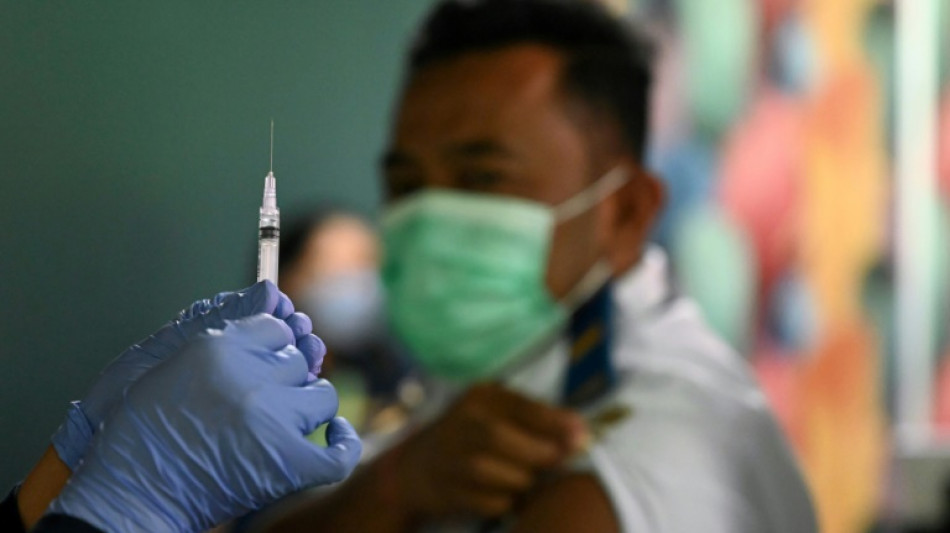
World 'dangerously unprepared' for next crisis: Red Cross / Photo: SONNY TUMBELAKA - AFP

World 'dangerously unprepared' for next crisis: Red Cross

All countries remain "dangerously unprepared" for the next pandemic, the Red Cross warned on Monday, saying future health crises could also collide with increasingly likely climate-related disasters.

Text size:

Despite three "brutal" years of the Covid-19 pandemic, strong preparedness systems are "severely lacking", the International Federation of Red Cross and Red Crescent Societies (IFRC) said.

The world's largest humanitarian network said building trust, equity and local action networks were vital to get ready for the next crisis.

"All countries remain dangerously unprepared for future outbreaks," the IFRC said, concluding that governments were no more ready now than in 2019.

It said countries needed to be prepared for "multiple hazards, not just one", saying societies only became truly resilient through planning for different types of disaster, as they can occur simultaneously.

The IFRC cited the rise in climate-related disasters and waves of disease outbreaks this century, of which Covid-19 was just one.

It said extreme weather events were growing more frequent and intense, "and our ability to merely respond to them is limited".

The IFRC issued two reports making recommendations on mitigating future tragedies on the scale of Covid-19, on the third anniversary of the World Health Organization declaring the virus an international public health emergency.

"The Covid-19 pandemic should be a wake-up call for the global community to prepare now for the next health crisis," said IFRC secretary general Jagan Chapagain.

"The next pandemic could be just around the corner; if the experience of Covid-19 won't quicken our steps toward preparedness, what will?"

The report said major hazards harm those who are already vulnerable the most, and leaving the poorest exposed was "self-defeating", as a disease can return in a more dangerous form.

- Breakdown of trust -

The IFRC said if people trusted safety messages, they would be willing to comply with public health measures and accept vaccination.

But the organisation said crisis responders "cannot wait until the next time to build trust", urging consistent cultivation over time.

The IFRC said if trust was fragile, public health became political and individualised -- something which impaired the Covid response.

It also said the coronavirus pandemic had thrived on and exacerbated inequalities, with poor sanitation, overcrowding, lack of access to health and social services, and malnutrition creating conditions for diseases to thrive in.

"The world must address inequitable health and socio-economic vulnerabilities far in advance of the next crisis," it recommended.

The organisation also said local communities should be leveraged to perform life-saving work, as that is where pandemics begin and end.

The IFRC called for the development of pandemic response products that are cheaper, and easier to store and administer.

By 2025, it said countries should increase domestic health finance by one percent of gross domestic product, and global health finance by at least $15 billion per year.

The IFRC said its network had reached more than 1.1 billion people over the past three years to help keep them safe during the Covid pandemic.

U.Ammann--NZN