Fanning mistrust on health, Russia seeks foothold in West Africa / Photo: Olympia DE MAISMONT - AFP/File
"Health and Sovereignty" was the theme. The conference on December 22, 2023, in Burkina Faso's capital Ouagadougou brought together researchers and naturopathic practitioners from several West African countries who praised the possibilities of traditional plants.
In the predominantly African crowd, one speaker stood out. Denis Degterev, a former diplomat and professor of international relations theory in Moscow.
"Medical sovereignty is one of the multifaceted parts of sovereignty and Russia wants to help African countries advance it," he said in French to the Burkina24 network at the conference, where some wore stickers of the Russian and Burkina Faso flags.
Sovereignty has been the buzzword for the military rulers in the nation which experienced two coups in 2022. The junta, like those in Mali and Niger, has turned to Russia after loudly rejecting support from former colonial power France in their long-running battles against jihadists.
Russia has increasingly eyed distrust of Western public health efforts as a way to boost its influence. According to the United States, Russia has launched a full-scale disinformation effort in Burkina Faso, Mali and elsewhere in West Africa, including by promoting conspiracy theories on social media and recruiting local online influencers.
After the conference in Ouagadougou, a statement in the name of a civil society group in the country's Hauts-Bassins region blamed the Western colonial legacy for "African nations' total dependence on the pharmaceutical industry" and on international assistance.
- Targeting malaria work -
One group that has been especially in the sights of social media accounts has been Target Malaria, a not-for-profit international research consortium that is working to fight malaria, a mosquito-borne disease that kills more than 600,000 people each year, mostly young children in Africa.
Target Malaria, whose main financial supporter is the Bill and Melinda Gates Foundation, has worked since 2012 in Burkina Faso with the approval of authorities.
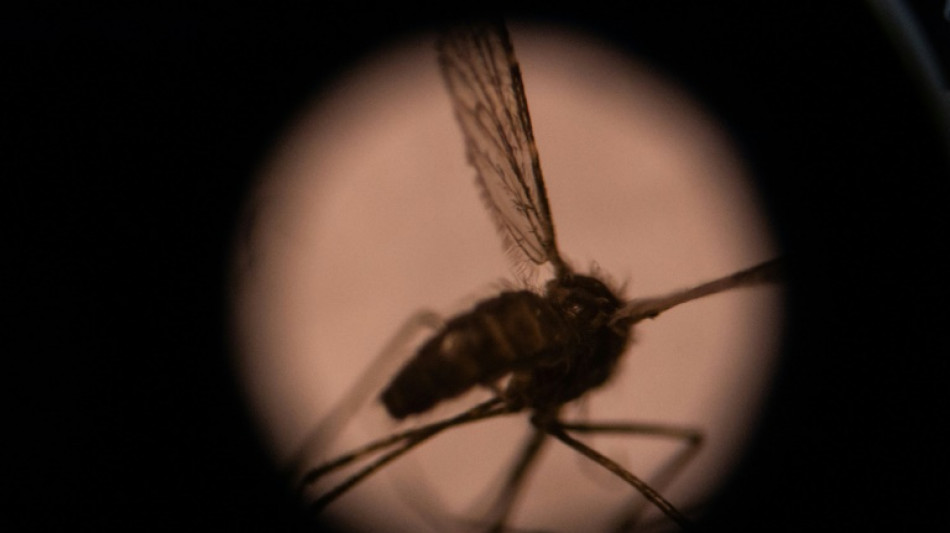
Target Malaria is seeking to use genetic technologies to control malaria. In 2022, the group imported into Burkina Faso genetically modified mosquitoes developed in a laboratory at Imperial College London and bred in Italy that will breed primarily male offspring. Only female mosquitoes bite humans and transmit malaria.
Social media postings and comments from influencers attacked Target Malaria last year over an epidemic of another mosquito-spread disease, dengue fever, which killed nearly 600 people in Burkina Faso.
The research institute working with Target Malaria in Burkina Faso's second city Bobo Dioulasso, capital of the Hauts-Bassins region, rejected any link between the anti-malaria modifications and dengue fever, calling the allegations "false" and "deeply regrettable".
While attention has ebbed following the dengue outbreak, which is seasonal, some activists have kept up the cause.
Nestor Podasse, an activist in Burkina Faso critical of foreign influence, in a Facebook post said the research was "used by the Americans to create biological weapons" but praised Russia for sending doctors to work against dengue fever.
The Gates Foundation denied its anti-malaria research was aimed at creating biological weapons.
Among the influencers has been Egountchi Behanzin, a French activist of Togolese origin with more than 300,000 Facebook followers. In October, he began posting videos alleging a link between Target Malaria and dengue fever.
- US sees Russian interests -
The United States, a geopolitical adversary of Russia which closely follows Moscow's information efforts, said it has traced the effort back to Russia.
James Rubin, special envoy and coordinator of the State Department's Global Engagement Center, which tracks foreign disinformation, said Russia was seeking in Africa to solidify support and increase distrust of the West.
He said Moscow had failing to make greater traction in Europe following its invasion of Ukraine, including with a debunked story of Kyiv developing biological weapons with US support.
Russians expelled from embassies in Europe or who worked for state-backed Russia Today "didn't go home. They've been redeployed to Latin America and to Africa," Rubin told AFP.
The State Department said Russia's "African Initiative" has used both branded and unbranded social media accounts to push disinformation and has set up offices both in Ouagadougou and Mali's capital Bamako.
The State Department said the chief editor is Artem Kureyev, who heads another organisation publicly registered in Moscow, and pointed to a channel on the Telegram social media service that promotes African Initiative content.
Russia's embassy in Washington rejected the accusations, saying the United States was trying to "intimidate" countries that value cooperation with Russia.
But Rubin said Russia had a long track record of disinformation on public health, pointing to Cold War-era stories seeking to link the HIV/AIDS crisis to the United States.
"It's a particularly egregious action for Russia to take, because you can draw a straight line between Russian disinformation and the killing of Africans," he said.
He said that an earlier US effort to expose health disinformation in Latin America has proven successful, with Russia not expanding efforts there.
"We are trying to inoculate the populations of Africa -- especially the elites, the journalists, the governments, the civil society -- who would be the first to see these stories, so that they know it's got a made-in-the-Kremlin stamp on it and they don't get misled," Rubin said.
burs-pid-sct/bp
M.J.Baumann--NZN