Zürcher Nachrichten - Dozens of viruses detected in Chinese fur farm animals

EUR -
AED 4.241201
AFN 76.219915
ALL 93.210974
AMD 421.7986
AOA 1060.156793
ARS 1727.958172
AUD 1.63908
AWG 2.081626
AZN 1.959559
BAM 1.954403
BBD 2.32254
BDT 142.738005
BHD 0.43488
BIF 3440.896583
BMD 1.154855
BND 1.478624
BOB 14.004993
BRL 5.916207
BSD 1.153151
BTN 109.628664
BWP 15.63742
BYN 3.410563
BYR 22635.15384
BZD 2.319233
CAD 1.618125
CDF 2611.126427
CHF 0.932311
CLF 0.026733
CLP 1055.559908
CNY 7.795147
CNH 7.793913
COP 3675.544784
CRC 522.915026
CUC 1.154855
CUP 30.603652
CVE 110.186265
CZK 24.201154
DJF 205.338828
DKK 7.47541
DOP 67.250199
DZD 153.530983
EGP 57.54318
ERN 17.322822
ETB 186.117873
FJD 2.553963
FKP 0.857848
GBP 0.857774
GEL 3.019946
GGP 0.857848
GHS 13.520339
GIP 0.857848
GMD 84.878181
GNF 10128.411837
GTQ 8.795715
GYD 241.227629
HKD 9.058306
HNL 30.907112
HRK 7.534038
HTG 150.767698
HUF 362.223087
IDR 20682.294394
ILS 3.477385
IMP 0.857848
INR 109.932764
IQD 1510.627108
IRR 1587694.361999
ISK 141.792902
JEP 0.857848
JMD 183.243508
JOD 0.818791
JPY 182.181232
KES 149.439303
KGS 100.991685
KHR 4673.518854
KMF 493.12343
KRW 1638.640772
KWD 0.357023
KYD 0.961017
KZT 541.135669
LAK 26067.486096
LBP 103263.512096
LKR 386.906578
LRD 208.141271
LSL 18.917964
LTL 3.409986
LVL 0.69856
LYD 7.339597
MAD 10.74762
MDL 20.03577
MGA 4908.365176
MKD 61.481068
MMK 2424.552772
MNT 4152.673297
MOP 9.316283
MRU 46.240358
MUR 54.209096
MVR 17.842347
MWK 1999.510632
MXN 19.917775
MYR 4.721853
MZN 73.807157
NAD 18.917964
NGN 1572.381111
NIO 42.438205
NOK 11.00856
NPR 175.401109
NZD 1.964222
OMR 0.444037
PAB 1.153176
PEN 3.903611
PGK 5.170149
PHP 70.148769
PKR 320.189388
PLN 4.30117
PYG 6876.93715
QAR 4.215887
RON 5.244777
RSD 117.358631
RUB 93.515578
RWF 1693.938243
SAR 4.333626
SBD 9.317771
SCR 16.99798
SDG 693.483603
SEK 10.953417
SGD 1.479663
SLE 28.408276
SOS 659.009126
SRD 43.501064
STD 23903.162464
STN 24.481764
SVC 10.089834
SZL 18.902002
THB 38.159872
TJS 10.643495
TMT 4.041992
TND 3.383582
TRY 54.964638
TTD 7.82126
TWD 37.289687
TZS 3055.166026
UAH 51.602087
UGX 4300.926733
USD 1.154855
UYU 46.366868
UZS 13708.204675
VES 871.004473
VND 30288.376519
VUV 137.825311
WST 3.151849
XAF 655.468764
XAG 0.018606
XAU 0.000271
XCD 3.121053
XCG 2.078224
XDR 0.815196
XOF 655.474435
XPF 119.331742
YER 273.556256
ZAR 18.867557
ZMK 10395.078432
ZMW 22.01327
ZWL 371.86277
  • CMSC

    -0.0600

    21.73

    -0.28%

  • VOD

    -0.3800

    15.31

    -2.48%

  • NGG

    -0.1600

    80.26

    -0.2%

  • RBGPF

    0.0000

    69.74

    0%

  • RELX

    -0.1900

    36.61

    -0.52%

  • BCE

    0.0600

    22.06

    +0.27%

  • RYCEF

    0.6000

    21

    +2.86%

  • AZN

    5.8800

    161.5

    +3.64%

  • RIO

    2.5000

    101.51

    +2.46%

  • GSK

    -0.0700

    51.46

    -0.14%

  • CMSD

    0.0200

    22.04

    +0.09%

  • BP

    -1.2300

    41.21

    -2.98%

  • BTI

    0.1500

    59.27

    +0.25%

  • BCC

    -1.6900

    84.8

    -1.99%

  • JRI

    -0.0500

    12.67

    -0.39%

Dozens of viruses detected in Chinese fur farm animals
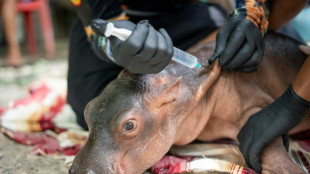
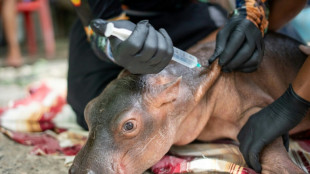
Dozens of viruses detected in Chinese fur farm animals / Photo: Greg Baker - AFP/File

Dozens of viruses detected in Chinese fur farm animals

Dozens of viruses have been detected mixing in animals at fur farms in China, some of which are new and have the potential to spill over into humans, researchers said Wednesday.

Text size:

Since the Covid-19 pandemic, scientists have been warning that farming mammals such as minks for their fur could make it easier for new viruses to cross over from the wild and spark fresh outbreaks.

Virologist Edward Holmes, who has led research into Covid-19, told AFP he felt that the global fur farming industry "is one most likely ways by which a new pandemic will start".

"Personally, I think the fur farming industry globally should be closed down," he added.

Holmes is a co-author of a new study looking at the potential danger posed by viruses in fur farms in the country where the first Covid cases emerged in late 2019.

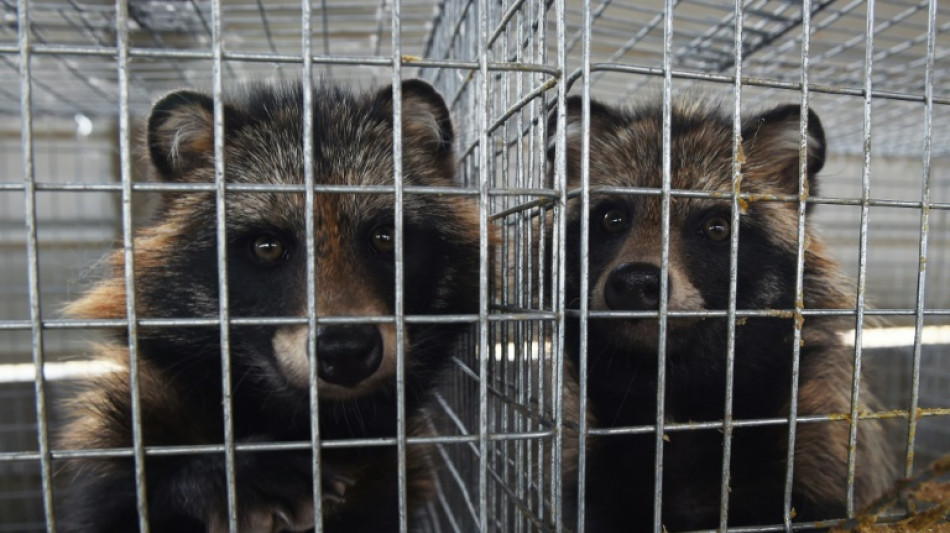
The Chinese-led team of researchers sequenced the genetic material from lung and intestine samples of 461 animals such as minks, rabbits, foxes and raccoon dogs that died from disease across the nation between 2021 and 2024.

Most were from fur farms, some were also farmed for food or traditional medicine, while around 50 were wild animals.

The team detected 125 viruses, including 36 new ones, according to the study in the journal Nature.

Thirty-nine of the viruses have a "high risk" of jumping across species, including to humans, the researchers evaluated.

Some of those viruses -- such as hepatitis E and Japanese encephalitis -- have already spread to humans, but 13 were new, the study said.

Several types of bird flu were also detected in guinea pigs, minks and muskrats.

And seven types of coronaviruses were also spotted -- though none were closely related to SARS-CoV-2, which causes Covid.

- 'Alarm bell' virus -

The virus that most concerned Holmes was the "Pipistrellus bat HKU5-like virus". It had previously been detected in bats but was found in the lungs of two farmed minks.

It is a relative of the Middle East respiratory syndrome coronavirus (MERS), which can be deadly to humans.

"That we now see that it jumped from bats to farmed mink must serve as an alarm bell," said Holmes, who is a professor at the University of Sydney.

"This virus needs to be monitored."

Thousands of unknown viruses are believed to be circulating among wild mammals. Scientists fear that fur farms could allow farmed animals to catch such viruses, which could in turn expose humans.

The leading theory for the origin of Covid is that it began in bats, then was transmitted to humans during the trade of wild animals.

"I strongly believe that the wildlife trade was responsible for the emergence of SARS-CoV-2," Holmes said.

"And I think that the related fur farming trade could easily result in another pandemic virus," he added.

In the study, the researchers called for increased surveillance of fur farm animals -- particularly for minks, raccoon dogs and guinea pigs, which recorded the most "high risk" viruses.

Denmark culled its entire farmed mink population over Covid fears in 2020, but has since reauthorised the practice.

A.Ferraro--NZN