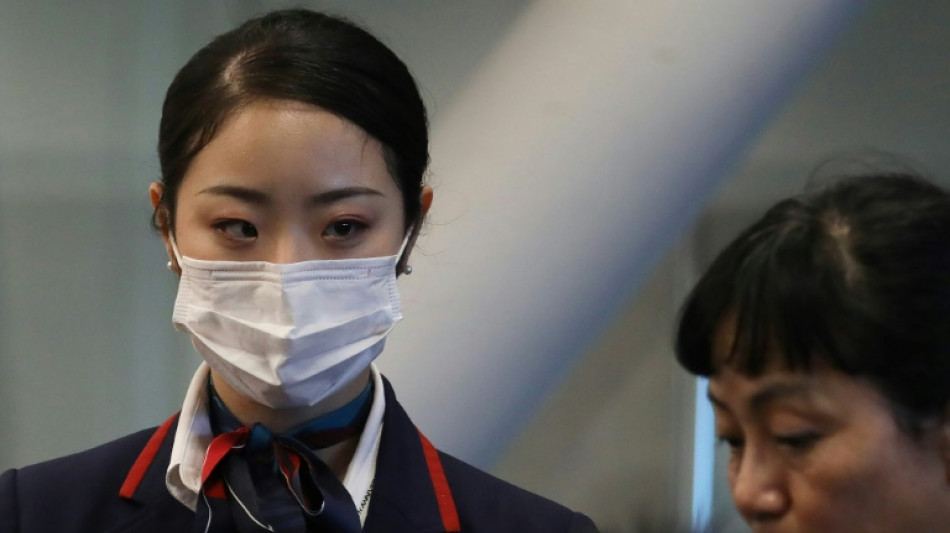
Is the world ready for the next pandemic? / Photo: MARIO TAMA - GETTY IMAGES NORTH AMERICA/AFP
An awkward question remains five years after Covid-19 began its deadly rampage: is the world ready to handle the next pandemic?
The World Health Organization, which was at the heart of the pandemic response, has been galvanising efforts to determine where the next threat might come from and to ensure the planet is ready to face it.
But while the UN health agency considers the world more prepared than it was when Covid hit, it warns we are not nearly ready enough.
- View from the WHO -
Asked whether the world was better prepared for the next pandemic, WHO chief Tedros Adhanom Ghebreyesus said recently: "Yes and no".
"If the next pandemic arrived today, the world would still face some of the same weaknesses and vulnerabilities," he warned.
"But the world has also learned many of the painful lessons the pandemic taught us, and has taken significant steps to strengthen its defences."
Maria Van Kerkhove, the WHO's epidemic and pandemic preparedness and prevention director, said it was a matter of when, not if, we will face another pandemic.
"There's a lot that has improved because of the 2009 (H1N1) flu pandemic but also because of Covid. But I think the world is not ready for another infectious disease massive outbreak or pandemic."
- Expert views -
The Independent Panel for Pandemic Preparedness and Response, created by the WHO, was blunt in its assessment.
"In 2025, the world is not ready to tackle another pandemic threat," it said, citing continued inequality in access to funding and pandemic-fighting tools like vaccines.
Renowned Dutch virologist Marion Koopmans told AFP the success and speedy production of mRNA vaccines were a "game changer" for the next pandemic.
However, she warned that "a seeming increase in vaccine hesitancy", amid "staggering" levels of disinformation, meant that if another pandemic arrived soon, "we would have major issues with the use of vaccines because of that."
Meg Schaeffer, a disease epidemiologist at the US-based SAS Institute, said it would take public health agencies four to five years to upgrade systems to detect and share information faster.
"No, I don't think that we're any more prepared than we were with Covid," she said.
However, "I do have confidence that we as society know what to do... to protect each other," through distancing, facemasks, and limiting travel and personal interactions, she added.
- Mitigation efforts -
Steps have been taken to prepare for the next pandemic and handle its impact.
The new WHO Hub for Pandemic and Epidemic Intelligence in Berlin works on collaborative surveillance to better detect threats and mitigate them.
The World Bank's Pandemic Fund has issued $885 million in grants since 2022 to fund nearly 50 projects across 75 countries.
An mRNA technology transfer hub was set up in South Africa to improve local vaccine production, while a Global Training Hub for Bio-manufacturing was established in South Korea to improve responses.
- New global alarm button -
After Covid struck, the WHO on January 30, 2020 declared a Public Health Emergency of International Concern (PHEIC) -- the highest alarm level under the International Health Regulations.
But most countries did not jolt into action until Tedros described the outbreak as a pandemic on March 11 that year.
To address this, the health regulations were amended last June to include a new, higher "pandemic emergency" level of alarm, requiring countries to take "rapid" coordinated action.
- Pandemic treaty -
In December 2021, countries decided to start drafting an accord on pandemic prevention, preparedness and response, to help avert a repeat of the failings exposed by Covid.
After numerous negotiation rounds, the WHO's 194 member states have broadly agreed on what to include, but there are several remaining sticking points.
A key fault line lies between Western nations with major pharmaceutical industry sectors and poorer countries wary of again being sidelined.
One outstanding issue is the proposed obligation to quickly share emerging pathogens, and then the pandemic-fighting benefits derived from them, like vaccines.
The deadline for reaching a deal has been pushed back a year to May 2025.
- Looking for next threats -
Global experts have been working hard to determine where the next pandemic threat will come from.
Tom Peacock, a virologist at Imperial College London, told AFP the possibility of an H5N1 bird flu pandemic should be taken "very seriously".
The WHO tasked more than 200 independent scientists to evaluate 1,652 pathogens, mostly viruses. They identified more than 30 priority pathogens.
Among them were those that cause Covid-19, Ebola and Marburg, Lassa fever, MERS, SARS and Zika.
Also on the list is "Disease X" -- a placeholder for a pathogen currently unknown to cause human disease.
The current plans aim at amassing broad knowledge, tools and countermeasures that could be rapidly adapted to emerging threats.
D.Smith--NZN