People can spread bird flu to their cats, US study suggests / Photo: Mandel NGAN - AFP/File
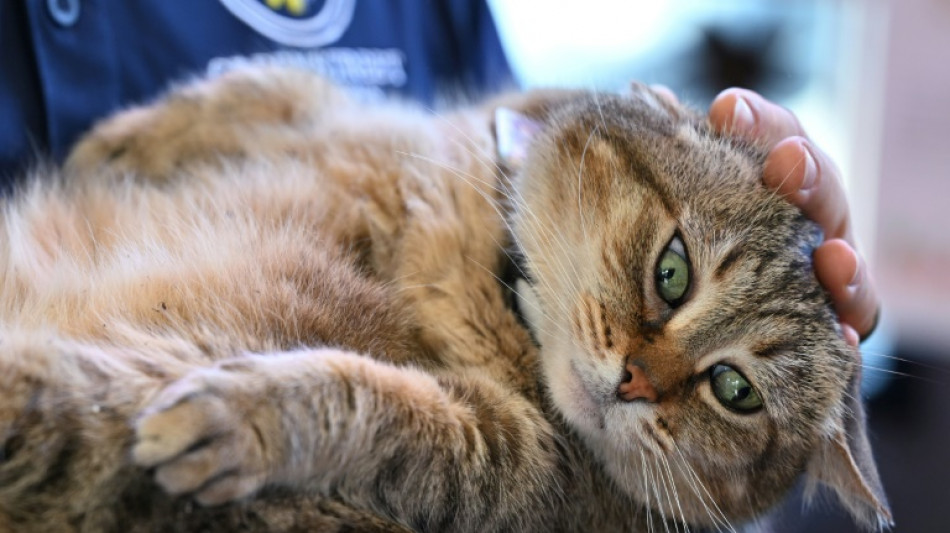
A study published Thursday by the US Centers for Disease Control and Prevention (CDC) suggests that people can transmit bird flu to their domestic cats, with fatal consequences.
Two household case studies from Michigan in May 2024 were published in the agency's Morbidity and Mortality Weekly Report, as fears grow that the virus could mutate and cause a human pandemic.
Since then, it has also emerged that cats can be infected by pet food contaminated with the virus -- and it can spread between "big cat" species in shelters.
Both case studies involved pet owners who worked at or near dairy cattle farms affected by bird flu, and both resulted in deaths of infected felines.
In the first case, a five-year-old indoor female cat rapidly developed a loss of appetite, poor grooming habits, disorientation, lethargy, and neurological deterioration.
Her condition worsened quickly, requiring emergency care at the Michigan State University (MSU) Veterinary Medical Center.
Despite intervention, her symptoms progressed, and she was euthanized within four days. Postmortem testing confirmed she had contracted bird flu.
Two other cats lived in the same household. One exhibited mild symptoms, which the owners attributed to allergies, and they ceased communication with public health officials.
Among the household members, the farm worker declined testing, while an adult and two adolescents tested negative for bird flu.
- Unpasteurized milk connection -
Days later, a second case involving a six-month-old male Maine Coon was brought to the university. The cat exhibited symptoms including anorexia, lethargy, facial swelling, and limited movement, and died within 24 hours.
This cat lived with another feline that remained unaffected.
The Maine Coon's owner regularly transported unpasteurized milk from various Michigan farms, including those confirmed to have infected dairy cattle.
The owner reported handling raw milk without protective gear, frequently getting splashed in the face, eyes, and clothing, and failing to change work clothes before entering the home.
Notably, the sick cat frequently rolled in the owner's contaminated work clothes, whereas the unaffected cat did not.
The owner also experienced eye irritation before the cat fell ill but declined testing for bird flu.
"Farmworkers are encouraged to consider removing clothing and footwear and to rinse off any animal byproduct residue (including milk and feces) before entering households," the CDC researchers advised.
Since the US outbreak began in 2024, 69 human cases of bird flu have been officially reported in the US, though the true number may be significantly higher due to limited testing among farm workers. One person has died.
Experts warn that as the virus continues to circulate widely among mammals and birds, it could eventually mix with seasonal influenza, potentially mutating into a strain capable of efficient human-to-human transmission.
Newly confirmed US Health Secretary Robert F. Kennedy Jr. has said he wants the government to pivot away from infectious disease research and cast doubt on whether germs actually cause illness.
He has also for decades questioned the use of vaccines -- seen as key to containing bird flu if it does become a pandemic -- and has promoted the consumption of raw milk, a known vector for bird flu.
F.Carpenteri--NZN