Zürcher Nachrichten - Health threat of global plastics projected to soar

EUR -
AED 4.243454
AFN 75.681362
ALL 93.352162
AMD 422.408246
AOA 1059.564012
ARS 1729.138262
AUD 1.638404
AWG 2.079843
AZN 1.963661
BAM 1.957305
BBD 2.325988
BDT 142.949883
BHD 0.435533
BIF 3446.033988
BMD 1.155468
BND 1.480838
BOB 14.025478
BRL 5.907559
BSD 1.154888
BTN 109.790919
BWP 15.660971
BYN 3.415626
BYR 22647.176448
BZD 2.322635
CAD 1.623083
CDF 2611.357712
CHF 0.934236
CLF 0.026744
CLP 1056.005978
CNY 7.803513
CNH 7.79714
COP 3704.015036
CRC 523.70256
CUC 1.155468
CUP 30.619907
CVE 110.349824
CZK 24.193207
DJF 205.640063
DKK 7.475174
DOP 67.351772
DZD 153.410303
EGP 57.527756
ERN 17.332023
ETB 186.394945
FJD 2.555838
FKP 0.858771
GBP 0.857178
GEL 3.015959
GGP 0.858771
GHS 13.539881
GIP 0.858771
GMD 85.504071
GNF 10143.797342
GTQ 8.808771
GYD 241.576287
HKD 9.062464
HNL 30.953794
HRK 7.536772
HTG 150.996068
HUF 362.11799
IDR 20648.216486
ILS 3.468136
IMP 0.858771
INR 109.855387
IQD 1512.862909
IRR 1588913.18939
ISK 141.811219
JEP 0.858771
JMD 183.521069
JOD 0.819249
JPY 182.057301
KES 149.574978
KGS 101.045388
KHR 4680.577616
KMF 494.540184
KRW 1644.82625
KWD 0.357167
KYD 0.962436
KZT 541.934229
LAK 26105.501972
LBP 103414.555274
LKR 387.537893
LRD 208.449329
LSL 18.945963
LTL 3.411798
LVL 0.698931
LYD 7.35065
MAD 10.763574
MDL 20.065337
MGA 4915.672226
MKD 61.577333
MMK 2425.677069
MNT 4157.602989
MOP 9.330031
MRU 46.309597
MUR 53.68301
MVR 17.86373
MWK 2002.461267
MXN 19.887335
MYR 4.730258
MZN 73.830248
NAD 18.945963
NGN 1574.211541
NIO 42.502671
NOK 10.985539
NPR 175.666792
NZD 1.967803
OMR 0.444286
PAB 1.154863
PEN 3.909405
PGK 5.17798
PHP 70.182561
PKR 320.672995
PLN 4.305413
PYG 6887.29413
QAR 4.222145
RON 5.247328
RSD 117.367819
RUB 93.588103
RWF 1696.496723
SAR 4.335928
SBD 9.32642
SCR 15.50525
SDG 693.843401
SEK 10.96306
SGD 1.480553
SLE 27.615748
SOS 660.010193
SRD 43.781846
STD 23915.858572
STN 24.518847
SVC 10.104767
SZL 18.930634
THB 38.287014
TJS 10.659063
TMT 4.055693
TND 3.388605
TRY 54.972826
TTD 7.834022
TWD 37.330285
TZS 3061.988403
UAH 51.680025
UGX 4307.310947
USD 1.155468
UYU 46.435694
UZS 13728.552874
VES 871.467105
VND 30332.195355
VUV 138.152408
WST 3.16223
XAF 656.458767
XAG 0.018593
XAU 0.000275
XCD 3.12271
XCG 2.081309
XDR 0.81744
XOF 656.461609
XPF 119.331742
YER 275.405769
ZAR 18.893401
ZMK 10400.608613
ZMW 22.045469
ZWL 372.060285
  • NGG

    0.0300

    80.45

    +0.04%

  • CMSC

    0.0200

    21.81

    +0.09%

  • VOD

    -0.3750

    15.315

    -2.45%

  • RELX

    0.3400

    37.14

    +0.92%

  • GSK

    0.4000

    51.93

    +0.77%

  • BP

    -0.8200

    41.62

    -1.97%

  • BCC

    -1.7600

    84.73

    -2.08%

  • RBGPF

    -1.2500

    69.74

    -1.79%

  • BCE

    -0.1450

    21.855

    -0.66%

  • BTI

    -0.0900

    59.03

    -0.15%

  • RYCEF

    0.7200

    21.07

    +3.42%

  • AZN

    7.8700

    163.49

    +4.81%

  • RIO

    2.1450

    101.155

    +2.12%

  • JRI

    -0.0500

    12.67

    -0.39%

  • CMSD

    0.0000

    22.02

    0%

Health threat of global plastics projected to soar
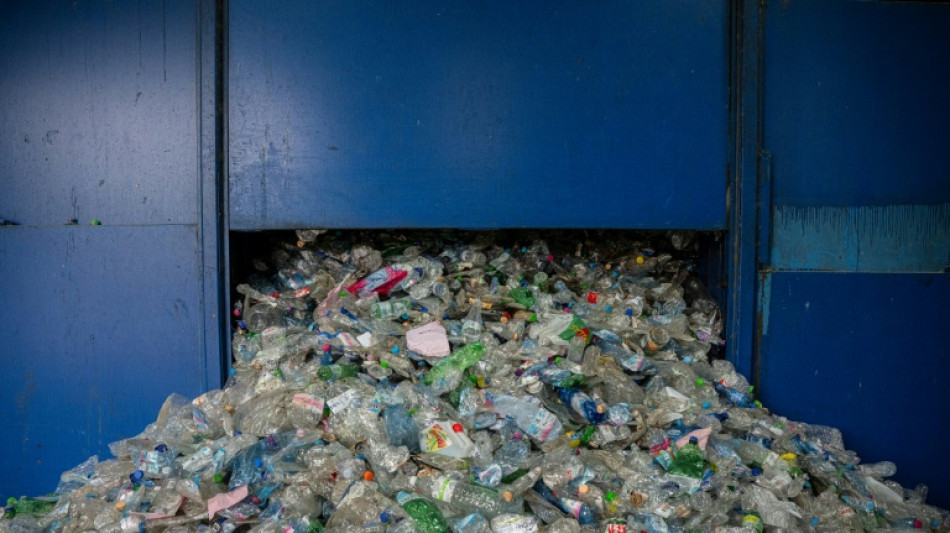
Health threat of global plastics projected to soar / Photo: Angelos TZORTZINIS - AFP/File

Health threat of global plastics projected to soar

The threat posed by plastic production, usage and disposal to human health will skyrocket in the coming years unless the world does something to address this global crisis, researchers warned Tuesday.

Text size:

A British-French team of researchers attempted to cover all the different ways that plastic affects health, from oil and gas extraction during production to all the products that end up in landfills.

However they said that their modelling study still does not take into account an array of other ways plastic could harm health, such as microplastics or chemicals that can leach out of food packaging.

"This is undoubtedly a vast underestimate of the total human health impacts," lead study author Megan Deeney of the London School of Hygiene & Tropical Medicine told AFP.

The study, published in The Lancet Planetary Health, said it was the first to estimate the number of healthy years of life lost due to the lifecycle of plastic worldwide.

The researchers used a measure called DALYs, which represents the number of years lost to either early death or diminished quality of life from illness.

Under a business-as-usual scenario, the number of DALYs caused by plastic was projected to more than double from 2.1 million in 2016 to 4.5 million in 2040.

Planet-heating greenhouse gas emissions from plastic production had the biggest health impact, followed by air pollution and toxic chemicals.

- 'Public health crisis' -

Deeney gave the example of a plastic water bottle.

Like more than 90 percent of all plastic, its production begins with the extraction of oil and gas.

A series of chemical processes then transform those fossil fuels into Polyethylene terephthalate -- or PET -- which the bottle is made from.

Deeney pointed out that a stretch of more than 200 petrochemical plants involved in plastic production in the US state of Louisiana is known as "cancer alley".

Once made, the plastic bottle is transported across the world to a shop.

Then it gets chucked in the rubbish -- or littered.

Despite recycling efforts, most plastic ends up in landfills where it can take centuries to decompose, leaching out chemicals during that time, Deeney said.

The researchers also modelled a scenario where the world tried harder to fight the health effects of plastic.

They found that plastic recycling made little difference.

The most effective measure was reducing the amount of "unnecessary" plastic created in the first place, Deeney said.

Talks to seal a world-first treaty to fight plastic pollution fell apart in August under opposition from oil-producing countries.

However Deeney emphasised that countries can still act at a national level to address this "global public health crisis".

M.J.Baumann--NZN