Zürcher Nachrichten - Antibiotic taken after sex drastically reduces STDs: study

EUR -
AED 4.316068
AFN 75.78368
ALL 95.590345
AMD 433.921011
ANG 2.103199
AOA 1078.693153
ARS 1639.785212
AUD 1.624081
AWG 2.115085
AZN 1.998447
BAM 1.953692
BBD 2.367425
BDT 144.224377
BGN 1.960098
BHD 0.443342
BIF 3496.940129
BMD 1.175047
BND 1.48805
BOB 8.122098
BRL 5.804148
BSD 1.175422
BTN 110.788156
BWP 15.737751
BYN 3.321717
BYR 23030.922895
BZD 2.364009
CAD 1.602171
CDF 2720.234209
CHF 0.915114
CLF 0.026583
CLP 1046.250228
CNY 7.992494
CNH 7.994215
COP 4395.921653
CRC 539.208999
CUC 1.175047
CUP 31.138748
CVE 110.718804
CZK 24.309497
DJF 208.829292
DKK 7.472536
DOP 69.974145
DZD 155.20245
EGP 61.946583
ERN 17.625706
ETB 184.837228
FJD 2.569065
FKP 0.864214
GBP 0.865099
GEL 3.14908
GGP 0.864214
GHS 13.242649
GIP 0.864214
GMD 85.778323
GNF 10313.979512
GTQ 8.975086
GYD 245.920458
HKD 9.203498
HNL 31.268177
HRK 7.538985
HTG 153.949298
HUF 356.459886
IDR 20367.502417
ILS 3.409229
IMP 0.864214
INR 110.911284
IQD 1539.311683
IRR 1542719.319578
ISK 143.802053
JEP 0.864214
JMD 185.140228
JOD 0.833171
JPY 184.059961
KES 151.757262
KGS 102.723202
KHR 4714.873056
KMF 492.344575
KPW 1057.555194
KRW 1710.72734
KWD 0.361773
KYD 0.979526
KZT 544.33643
LAK 25792.283247
LBP 105225.46686
LKR 378.490323
LRD 215.562468
LSL 19.235691
LTL 3.469608
LVL 0.710774
LYD 7.437674
MAD 10.742863
MDL 20.222835
MGA 4894.071095
MKD 61.679754
MMK 2467.412574
MNT 4207.19177
MOP 9.480809
MRU 46.925498
MUR 54.88696
MVR 18.1603
MWK 2046.931705
MXN 20.277164
MYR 4.59457
MZN 75.083217
NAD 19.235747
NGN 1598.816408
NIO 43.130063
NOK 10.920412
NPR 177.26371
NZD 1.972799
OMR 0.451806
PAB 1.175412
PEN 4.062727
PGK 5.099342
PHP 71.029227
PKR 327.365667
PLN 4.227866
PYG 7194.237187
QAR 4.280702
RON 5.263274
RSD 117.383642
RUB 87.720656
RWF 1716.15627
SAR 4.436151
SBD 9.438281
SCR 16.52231
SDG 705.619296
SEK 10.86037
SGD 1.48966
SHP 0.877291
SLE 28.907303
SLL 24640.145375
SOS 671.539675
SRD 43.983217
STD 24321.10228
STN 24.999127
SVC 10.284902
SYP 129.899463
SZL 19.235297
THB 37.88334
TJS 10.984361
TMT 4.124415
TND 3.371797
TOP 2.829232
TRY 53.167497
TTD 7.951285
TWD 36.887663
TZS 3052.181577
UAH 51.470562
UGX 4396.218926
USD 1.175047
UYU 46.999286
UZS 14247.445607
VES 583.06901
VND 30915.488845
VUV 138.765659
WST 3.186155
XAF 655.238824
XAG 0.014727
XAU 0.000249
XCD 3.175623
XCG 2.118351
XDR 0.815968
XOF 653.912644
XPF 119.331742
YER 280.367229
ZAR 19.270304
ZMK 10576.837589
ZMW 22.391458
ZWL 378.364682
  • RBGPF

    0.0000

    63.18

    0%

  • CMSC

    -0.0400

    22.97

    -0.17%

  • AZN

    -2.4000

    182.52

    -1.31%

  • BCC

    -1.4800

    72.76

    -2.03%

  • BCE

    0.3400

    24.57

    +1.38%

  • GSK

    -0.0300

    50.5

    -0.06%

  • RIO

    -2.4000

    103.11

    -2.33%

  • CMSD

    0.0000

    23.42

    0%

  • BTI

    -1.4800

    58.08

    -2.55%

  • NGG

    -1.9400

    85.91

    -2.26%

  • JRI

    -0.0200

    13.15

    -0.15%

  • RELX

    -1.5900

    34.16

    -4.65%

  • RYCEF

    -0.0500

    17.45

    -0.29%

  • VOD

    -0.4400

    15.69

    -2.8%

  • BP

    -0.8200

    43.81

    -1.87%

Antibiotic taken after sex drastically reduces STDs: study
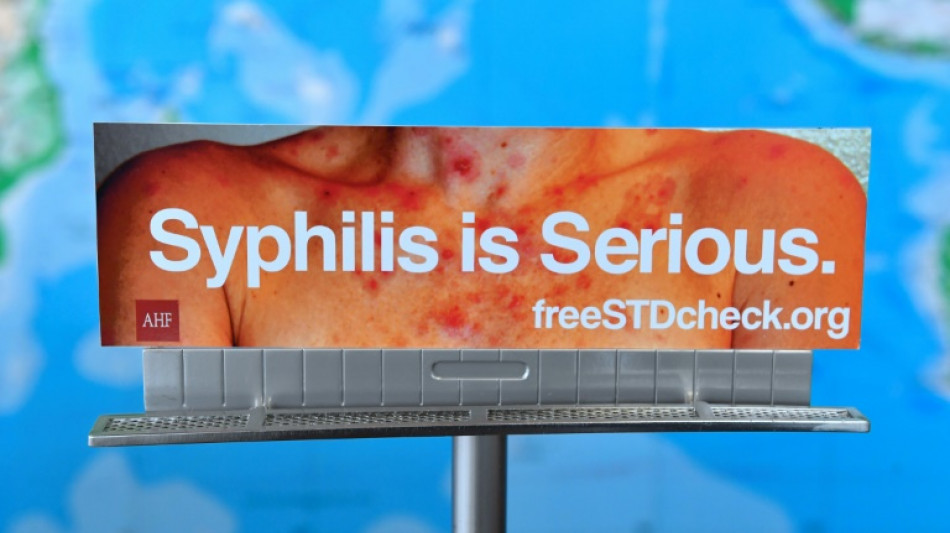
Antibiotic taken after sex drastically reduces STDs: study / Photo: Frederic J. BROWN - AFP/File

Antibiotic taken after sex drastically reduces STDs: study

An antibiotic taken after sex without a condom can drastically reduce the rate of three bacterial STDs among high-risk groups, data from a clinical study showed Wednesday.

Text size:

The research was presented at the 24th International AIDS conference in Montreal, where it was hailed as a major development.

"This has the capacity to change the guidelines" on clinical practice, Steven Deeks, an HIV expert at the University of California, San Francisco (UCSF), who was not involved in the study, told AFP.

Doxycycline reduced rates of gonorrhea and chlamydia by more than 60 percent among men who have sex with men (MSM), and also appeared highly effective against syphilis, but there weren't enough cases to reach statistical significance.

The trial was halted early because researchers found the drug was undeniably working and it would have been unethical to continue testing.

The study comes amid rising rates of these diseases, particularly among MSM, whose use of condoms has declined since the advent of effective HIV pre-exposure prophylaxis (PrEP) pills.

A previous trial by French researchers, which used doxycycline as a post-exposure prophylaxis (PEP), showed it was effective against syphilis and chlamydia among MSM, but not for gonorrhea.

For the new study, researchers recruited around 500 people, mostly MSM but also some transgender women and gender diverse people, at sites in San Francisco and Seattle.

Some were taking HIV PrEP, while others were living with HIV.

In both of the groups, around two-thirds received doxycycline, while a third did not. They were followed to monitor their outcomes every three months.

The pill, dosed at 200 milligrams, was given within three days of exposure. Participants could continue to take it as needed depending on how much sexual contact they were having.

The intervention reduced the incidence of STDs by 62 percent in the group living with HIV, and 66 percent in the group on HIV PrEP.

Side effects were mild and adherence levels remained high.

"We now have two studies that support the use of doxycycline as PEP in men who have sex with men," study lead Annie Luetkemeyer of UCSF told reporters at the AIDS conference.

"I really think we're at a place where we need to think very strongly about rolling this out and how to incorporate this into guidelines."

She stressed, however, that right now the data supports the treatment as targeted intervention among high risk groups that have a high prevalence of STDs -- not everyone.

More study is also needed to better understand the potential impacts on antibiotic resistance, the authors said.

Researchers want to know if it could increase resistance from STDs -- which is thought more possible for gonorrhea than chlamydia and syphilis -- from so-called "bystander" bacteria that live on the body and in the throat.

They also want to probe the potentially disruptive impact on the gut microbiome.

O.Krasniqi--NZN