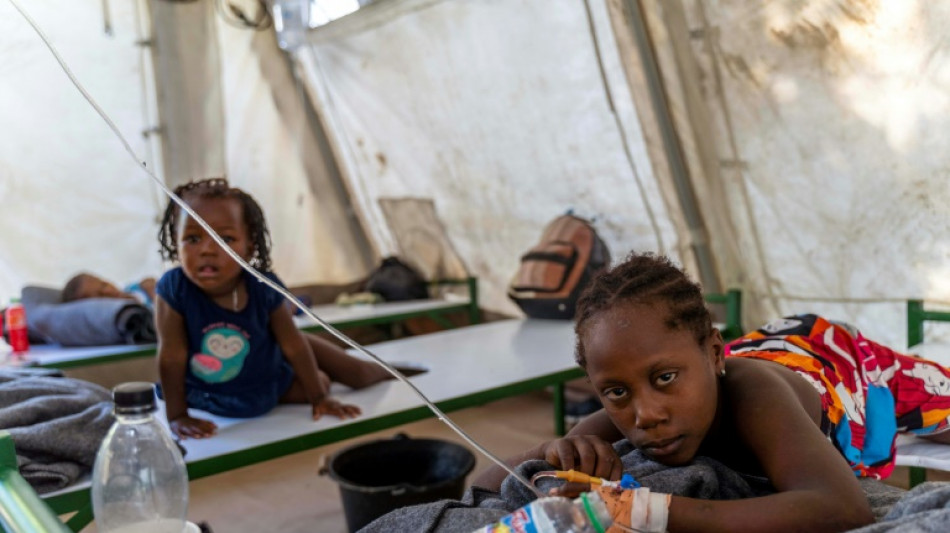
Cholera: killer of the poor / Photo: Richard Pierrin - AFP/File
Cholera, which has made a comeback in Haiti three years after a devastating outbreak, is a highly contagious waterborne bacterial disease that can kill in a matter of hours.
The illness mainly affects poverty-stricken people and after years of decline, it is spreading once more.
The World Health Organization warned last month of a "worrying upsurge" in the number of cholera outbreaks and noted that they were increasingly deadly.
Here are five things to know about a killer that can be easily stopped in its tracks with proper sanitation and medicine.
- What causes it? -
Cholera is an acute diarrhoeal infection caused by a comma-shaped bacterium called vibrio cholerae, transmitted through water or food that is contaminated by human faecal matter.
It mainly affects people living in extreme poverty or in conflict zones, with little or no access to clean water and sanitation.
Climate change is fuelling a resurgence, with growing numbers of floods, cyclones, droughts and other extreme weather events reducing access to clean water, creating an ideal environment for cholera to thrive.
The World Health Organisation estimates that there are between 1.3 and 4.0 million cases of cholera worldwide each year, causing up to 143,000 deaths.
Three-quarters of people infected show no symptoms but in 10-20 percent of cases it causes severe diarrhoea and dehydration which can kill within hours if left untreated.
It is usually treatable with oral rehydration solutions (sachets dissolved in water) but in more severe cases patients require intravenous fluids and antibiotics.
- Where does it come from? -
Up until the 19th century, cholera only existed in the Ganges delta in India.
Then in 1817, it spread to other parts of Asia, as well as the Middle East and east Africa, marking the start of the first cholera pandemic.
Millions of people have been killed in six subsequent pandemics, all of which began in Asia and then spread to the four corners of the globe.
So far this year, 29 countries have reported outbreaks, up from under 20 for the previous five years combined, according to the WHO.
Apart from Haiti, where 33 cholera deaths have been recorded since the start of October, the disease is also spreading quickly in war-scarred Syria and neighbouring crisis-hit Lebanon.
The war in Yemen produced one of the biggest cholera outbreaks in modern history, with aid agencies in December 2017 estimating the caseload at one million.
- Who is at risk? -
The people most likely to contract cholera live in urban slums or refugee camps.
In Haiti, the outbreak has been linked to fuel shortages caused by a gang blockade of the country's main oil terminal that has made it difficult for the sick to reach hospitals.
At least 33 people have died and 960 suspected cases have been logged by the health ministry.
The return of cholera has revived memories of the epidemic introduced by UN peacekeepers in 2010, after a major earthquake ravaged the country. The disease claimed more than 10,000 lives from then until 2019.
- Is there a vaccine? -
The WHO has approved two oral vaccines, which provide protection against cholera for 2-3 years and are destined for use in humanitarian emergencies.
Full protection requires two doses of a vaccine but with demand currently outstripping supply, the WHO has recommended a temporary shift to a one-dose strategy to make stocks go further.
O.Krasniqi--NZN