Zürcher Nachrichten - Massive Australia wildfires increased Antarctic ozone hole: study

EUR -
AED 4.234647
AFN 72.643117
ALL 95.757309
AMD 435.408728
ANG 2.064091
AOA 1057.36486
ARS 1614.346342
AUD 1.657376
AWG 2.078408
AZN 1.958576
BAM 1.951805
BBD 2.325839
BDT 141.699943
BGN 1.970952
BHD 0.432714
BIF 3418.203011
BMD 1.15307
BND 1.476877
BOB 7.979562
BRL 6.142287
BSD 1.154836
BTN 107.960008
BWP 15.747244
BYN 3.503552
BYR 22600.165943
BZD 2.322546
CAD 1.583482
CDF 2623.233322
CHF 0.910977
CLF 0.02668
CLP 1053.47892
CNY 7.940499
CNH 7.975581
COP 4262.368236
CRC 539.395868
CUC 1.15307
CUP 30.556347
CVE 110.039751
CZK 24.519569
DJF 205.639061
DKK 7.471402
DOP 68.54968
DZD 151.575728
EGP 59.993636
ERN 17.296045
ETB 181.99598
FJD 2.553415
FKP 0.86425
GBP 0.867287
GEL 3.130599
GGP 0.86425
GHS 12.588232
GIP 0.86425
GMD 84.754467
GNF 10122.279909
GTQ 8.845893
GYD 241.602302
HKD 9.0294
HNL 30.56696
HRK 7.534383
HTG 151.499883
HUF 394.348104
IDR 19591.634159
ILS 3.620064
IMP 0.86425
INR 108.33689
IQD 1512.803324
IRR 1517007.312332
ISK 143.810774
JEP 0.86425
JMD 181.43176
JOD 0.817567
JPY 183.967079
KES 149.033754
KGS 100.833527
KHR 4614.554106
KMF 492.361081
KPW 1037.767304
KRW 1744.899987
KWD 0.353497
KYD 0.96233
KZT 555.193531
LAK 24798.023914
LBP 103421.202089
LKR 360.239473
LRD 211.327417
LSL 19.480655
LTL 3.404715
LVL 0.69748
LYD 7.392867
MAD 10.790871
MDL 20.11066
MGA 4815.289368
MKD 61.514082
MMK 2420.814966
MNT 4112.942181
MOP 9.321419
MRU 46.226376
MUR 53.69826
MVR 17.826655
MWK 2002.561585
MXN 20.74707
MYR 4.542518
MZN 73.682844
NAD 19.480823
NGN 1564.415464
NIO 42.493018
NOK 11.085554
NPR 172.734917
NZD 1.989824
OMR 0.440697
PAB 1.154821
PEN 3.992527
PGK 4.984796
PHP 69.617751
PKR 322.430976
PLN 4.281665
PYG 7542.56054
QAR 4.222856
RON 5.092994
RSD 117.210073
RUB 97.493633
RWF 1680.289628
SAR 4.329659
SBD 9.284125
SCR 15.845265
SDG 692.995016
SEK 10.832917
SGD 1.480346
SHP 0.865101
SLE 28.336616
SLL 24179.307368
SOS 659.960522
SRD 43.225694
STD 23866.214565
STN 24.449951
SVC 10.104317
SYP 127.488051
SZL 19.487785
THB 38.115291
TJS 11.091795
TMT 4.047275
TND 3.410619
TOP 2.776315
TRY 51.114334
TTD 7.834894
TWD 37.054472
TZS 2998.28211
UAH 50.591177
UGX 4365.064806
USD 1.15307
UYU 46.533738
UZS 14079.180219
VES 524.289984
VND 30370.702591
VUV 137.475997
WST 3.145334
XAF 654.628344
XAG 0.018232
XAU 0.000269
XCD 3.116229
XCG 2.081222
XDR 0.814158
XOF 654.617013
XPF 119.331742
YER 275.125069
ZAR 19.826569
ZMK 10379.012321
ZMW 22.547845
ZWL 371.28797
  • RIO

    -2.5000

    83.15

    -3.01%

  • RBGPF

    -13.5000

    69

    -19.57%

  • RELX

    -0.4600

    33.36

    -1.38%

  • NGG

    -3.5400

    81.99

    -4.32%

  • BTI

    -1.3500

    57.37

    -2.35%

  • CMSC

    -0.2000

    22.65

    -0.88%

  • GSK

    -0.5300

    51.84

    -1.02%

  • AZN

    -5.3300

    183.6

    -2.9%

  • VOD

    -0.0900

    14.33

    -0.63%

  • RYCEF

    -1.2600

    15.34

    -8.21%

  • CMSD

    -0.2420

    22.658

    -1.07%

  • BP

    -1.0800

    44.78

    -2.41%

  • BCE

    0.0600

    25.79

    +0.23%

  • BCC

    -1.5600

    68.3

    -2.28%

  • JRI

    -0.3900

    11.77

    -3.31%

Massive Australia wildfires increased Antarctic ozone hole: study
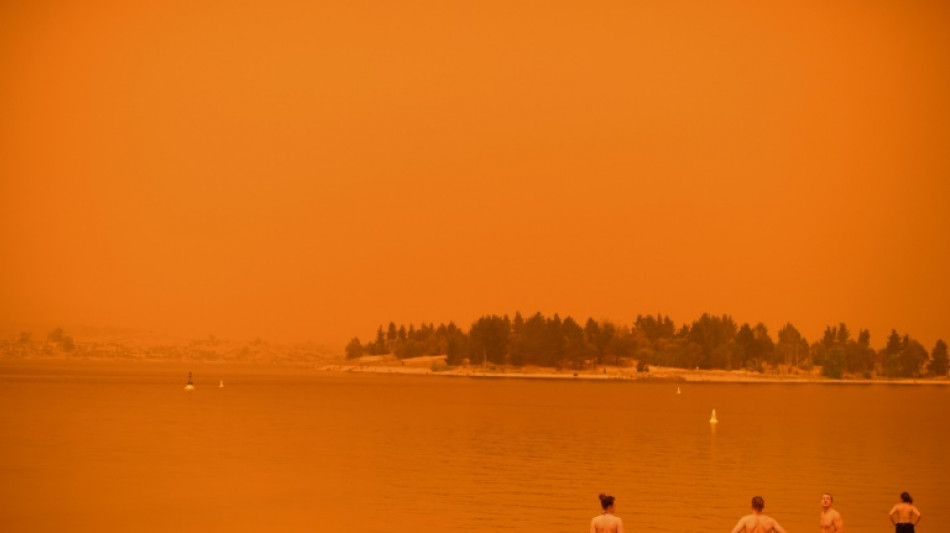
Massive Australia wildfires increased Antarctic ozone hole: study / Photo: Saeed KHAN - AFP/File

Massive Australia wildfires increased Antarctic ozone hole: study

Smoke from monster wildfires in Australia caused a chemical reaction that widened the ozone hole 10 percent, researchers said Wednesday, raising fears that increasing forest fires could delay the recovery of Earth's atmospheric protection against deadly UV radiation.

Text size:

Severe summer heat and drought helped drive the deadly "Black Summer" fires from late 2019 to early 2020, which destroyed vast swathes of eucalyptus forest and enveloped Sydney and other cities in smoke and ash for months.

Previous research concluded that more than a million tonnes of smoke pumped into the atmosphere by the fires prolonged the Antarctic ozone hole that opens up above Antarctica each spring.

In a new study, published in the journal Nature, researchers in the United States and China identified a previously unknown chemical reaction in the wildfire smoke that increased the depletion of ozone -- the atmospheric gas that reduces the amount of ultraviolet radiation reaching the Earth's surface.

Susan Solomon, the Massachusetts Institute of Technology professor who led the research, said that this reaction had chipped away at the edges of the ozone hole over Antarctica, expanding the hole by more than two million square kilometres (770,000 square miles) -- 10 percent of its area compared to the previous year.

"These chemical reactions are happening right on the edge of the region where the ozone hole happens," she said, explaining that the "particles give it a little extra push".

More broadly the study found that by triggering this reaction, the fires likely contributed to a three to five percent depletion of total ozone at mid-latitudes in the southern hemisphere, over Australia, New Zealand, and parts of Africa and South America.

The ozone hole was first created by human pollution -- particularly chlorofluorocarbons (CFCs) emitted from many refrigerators -- but in recent decades, a global agreement on these manmade chemicals has given the ozone layer a chance to heal.

The 1987 Montreal Protocol, ratified by 195 countries, sharply reduced the amount of CFCs pumped in the atmosphere, although the molecules linger for decades.

United Nations modelling predicts that the ozone layer over the southern hemisphere should fully heal by 2060.

But Solomon, who first identified the chemicals responsible for the Antarctic ozone hole in the 1980s, expressed concern that the effects of climate change could slow that recovery.

"We think wildfires are going to become more frequent and intense," she told AFP, adding the ozone hole "will get better eventually, I believe, but it's conceivable that wildfires could certainly slow it down.

"I don't think it's going to stop the recovery altogether. But it could stop it from actually recovering when we think it should."

O.Pereira--NZN