Zürcher Nachrichten - Arctic could be ice-free a decade earlier than thought

EUR -
AED 4.284503
AFN 77.077368
ALL 96.672535
AMD 444.268837
ANG 2.088356
AOA 1069.812202
ARS 1666.951235
AUD 1.755223
AWG 2.099959
AZN 1.977594
BAM 1.958282
BBD 2.348677
BDT 142.67084
BGN 1.958842
BHD 0.439657
BIF 3445.467236
BMD 1.166644
BND 1.510615
BOB 8.058214
BRL 6.356688
BSD 1.166078
BTN 104.846244
BWP 15.492637
BYN 3.352535
BYR 22866.217636
BZD 2.345263
CAD 1.611893
CDF 2603.949043
CHF 0.936867
CLF 0.027523
CLP 1079.732385
CNY 8.248289
CNH 8.244613
COP 4474.067141
CRC 569.622013
CUC 1.166644
CUP 30.91606
CVE 110.405889
CZK 24.214831
DJF 207.653207
DKK 7.468667
DOP 74.634602
DZD 151.273095
EGP 55.344765
ERN 17.499656
ETB 180.875365
FJD 2.63714
FKP 0.874627
GBP 0.874563
GEL 3.144117
GGP 0.874627
GHS 13.264757
GIP 0.874627
GMD 85.164683
GNF 10132.80021
GTQ 8.932437
GYD 243.968192
HKD 9.076121
HNL 30.71293
HRK 7.536985
HTG 152.653493
HUF 381.862915
IDR 19474.784235
ILS 3.771351
IMP 0.874627
INR 105.17941
IQD 1527.629771
IRR 49130.280577
ISK 149.003932
JEP 0.874627
JMD 186.64658
JOD 0.827088
JPY 181.000109
KES 150.848748
KGS 102.023311
KHR 4668.917998
KMF 492.323307
KPW 1049.978797
KRW 1710.652425
KWD 0.358124
KYD 0.971828
KZT 589.724967
LAK 25286.943606
LBP 104425.214634
LKR 359.684369
LRD 205.24279
LSL 19.763266
LTL 3.444796
LVL 0.705691
LYD 6.339035
MAD 10.770352
MDL 19.841064
MGA 5201.59318
MKD 61.718495
MMK 2449.482257
MNT 4138.521318
MOP 9.351013
MRU 46.501943
MUR 53.782159
MVR 17.948159
MWK 2022.063027
MXN 21.188759
MYR 4.794321
MZN 74.559923
NAD 19.763266
NGN 1691.446479
NIO 42.914211
NOK 11.778815
NPR 167.75163
NZD 2.015712
OMR 0.447547
PAB 1.166178
PEN 3.919768
PGK 4.948251
PHP 68.736353
PKR 326.920482
PLN 4.229381
PYG 8020.165807
QAR 4.250542
RON 5.09217
RSD 117.549501
RUB 89.447988
RWF 1696.650557
SAR 4.378528
SBD 9.602169
SCR 15.76892
SDG 701.729618
SEK 10.946788
SGD 1.510938
SHP 0.875285
SLE 27.662086
SLL 24463.93409
SOS 665.243216
SRD 45.066272
STD 24147.170324
STN 24.530989
SVC 10.20389
SYP 12899.390409
SZL 19.748031
THB 37.140688
TJS 10.699299
TMT 4.09492
TND 3.42078
TOP 2.808998
TRY 49.655234
TTD 7.9058
TWD 36.31996
TZS 2852.443816
UAH 48.955252
UGX 4125.211153
USD 1.166644
UYU 45.608396
UZS 13950.742787
VES 296.971426
VND 30758.562652
VUV 141.585177
WST 3.253316
XAF 656.789501
XAG 0.020047
XAU 0.000277
XCD 3.152913
XCG 2.101655
XDR 0.816835
XOF 656.789501
XPF 119.331742
YER 278.303287
ZAR 19.749998
ZMK 10501.191496
ZMW 26.960173
ZWL 375.658814
  • RBGPF

    0.0000

    78.35

    0%

  • CMSC

    -0.0500

    23.43

    -0.21%

  • BCC

    -1.2100

    73.05

    -1.66%

  • NGG

    -0.5000

    75.41

    -0.66%

  • RIO

    -0.6700

    73.06

    -0.92%

  • SCS

    -0.0900

    16.14

    -0.56%

  • CMSD

    -0.0700

    23.25

    -0.3%

  • BCE

    0.3300

    23.55

    +1.4%

  • VOD

    -0.1630

    12.47

    -1.31%

  • RELX

    -0.2200

    40.32

    -0.55%

  • JRI

    0.0400

    13.79

    +0.29%

  • RYCEF

    -0.0500

    14.62

    -0.34%

  • GSK

    -0.1600

    48.41

    -0.33%

  • BTI

    -1.0300

    57.01

    -1.81%

  • AZN

    0.1500

    90.18

    +0.17%

  • BP

    -1.4000

    35.83

    -3.91%

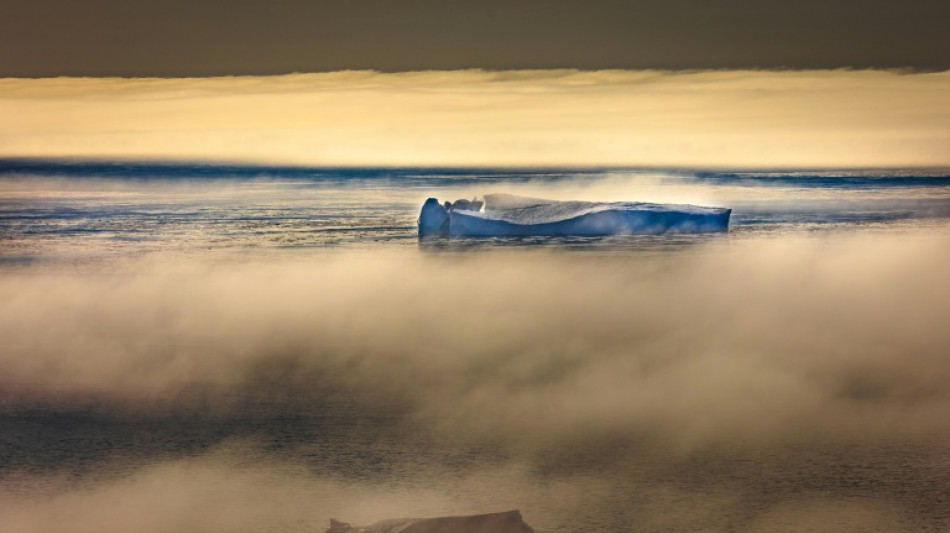
Arctic could be ice-free a decade earlier than thought
Arctic could be ice-free a decade earlier than thought / Photo: Kerem Yücel - AFP/File

Arctic could be ice-free a decade earlier than thought

The Arctic Ocean's ice cap will disappear in summer as soon as the 2030s and a decade earlier than thought, no matter how aggressively humanity draws down the carbon pollution that drives global warming, scientists said Tuesday.

Text size:

Even capping global warming at 1.5 degrees Celsius in line with the Paris climate treaty will not prevent the north pole's vast expanse of floating ice from melting away in September, they reported in Nature Communications.

"It is too late to still protect the Arctic summer sea ice as a landscape and as a habitat," co-author Dirk Notz, a professor at the University of Hamburg's Institute of Oceanography, told AFP.

"This will be the first major component of our climate system that we lose because of our emission of greenhouse gases."

Decreased ice cover has serious impacts over time on weather, people and ecosystems -- not just within the region, but globally.

"It can accelerate global warming by melting permafrost laden with greenhouse gases, and sea level rise by melting the Greenland ice sheet," lead author Seung-Ki Min, a researcher at Pohang University of Science and Technology in South Korea, told AFP.

Greenland's kilometres-thick blanket of ice contains enough frozen water to lift oceans six metres.

By contrast, melting sea ice has no discernible impact on sea levels because the ice is already in ocean water, like ice cubes in a glass.

But it does feed into a vicious circle of warming.

- Three times faster -

About 90 percent of the Sun's energy that hits white sea ice is reflected back into space.

But when sunlight hits dark, unfrozen ocean water instead, nearly the same amount of that energy is absorbed by the ocean and spread across the globe.

Both the North and South Pole regions have warmed by three degrees Celsius compared to late 19th-century levels, nearly three times the global average.

An ice-free September in the 2030s "is a decade faster than in recent projections of the Intergovernmental Panel on Climate Change (IPCC)", the UN's science advisory body, said Min.

In its landmark 2021 report, the IPCC forecast with "high confidence" that the Arctic Ocean would become virtually ice-free at least once by mid-century, and even then only under more extreme greenhouse gas emissions scenarios.

The new study -- which draws from observational data covering the period 1979-2019 to adjust the IPCC models -- finds that threshold will most likely be crossed in the 2040s.

Min and his colleagues also calculated that human activity was responsible for up to 90 percent of the ice cap's shrinking, with only minor impacts from natural factors such as solar and volcanic activity.

The record minimum sea ice extent in the Arctic -- 3.4 million square kilometres (1.3 million square miles) -- occurred in 2012, with the second- and third-lowest ice-covered areas in 2020 and 2019, respectively.

Scientists describe the Arctic Ocean as "ice-free" if the area covered by ice is less than one million square kilometres, about seven percent of the ocean's total area.

Sea ice in Antarctica, meanwhile, dropped to 1.92 million square kilometres in February -- the lowest level on record and almost one million square kilometres below the 1991-2020 mean.

D.Graf--NZN