Zürcher Nachrichten - Extreme weather killed 195,000 in Europe since 1980

EUR -
AED 4.129608
AFN 73.090661
ALL 92.121972
AMD 407.979395
ANG 2.013207
AOA 1031.136794
ARS 1714.655196
AUD 1.624026
AWG 2.024041
AZN 1.909769
BAM 1.94888
BBD 2.266652
BDT 138.368695
BGN 1.892974
BHD 0.423947
BIF 3367.77975
BMD 1.124467
BND 1.44092
BOB 13.554811
BRL 5.874108
BSD 1.125404
BTN 108.459892
BWP 15.920471
BYN 3.389913
BYR 22039.560301
BZD 2.263363
CAD 1.599464
CDF 2597.519284
CHF 0.934281
CLF 0.027957
CLP 1103.900451
CNY 7.539105
CNH 7.55149
COP 3733.546494
CRC 514.151544
CUC 1.124467
CUP 27.007902
CVE 109.874868
CZK 24.463631
DJF 199.840031
DKK 7.47528
DOP 67.074001
DZD 150.283577
EGP 58.838314
ERN 16.86701
ETB 183.822304
FJD 2.533205
FKP 0.847637
GBP 0.85229
GEL 2.917965
GGP 0.847637
GHS 13.17311
GIP 0.847637
GMD 82.651394
GNF 9844.711715
GTQ 8.597092
GYD 235.403109
HKD 8.822976
HNL 30.209392
HRK 7.532358
HTG 147.280503
HUF 368.762316
IDR 20185.426067
ILS 3.470216
IMP 0.847637
INR 108.201929
IQD 1473.052245
IRR 1963926.102715
ISK 136.993406
JEP 0.847637
JMD 177.250638
JOD 0.797256
JPY 177.558458
KES 145.843607
KGS 98.331303
KHR 4557.614656
KMF 489.142826
KPW 1012.020984
KRW 1532.693636
KWD 0.34728
KYD 0.93787
KZT 498.669378
LAK 25236.39333
LBP 100777.22297
LKR 371.892986
LRD 192.944912
LSL 18.772988
LTL 3.320259
LVL 0.680179
LYD 7.209402
MAD 10.97523
MDL 20.037852
MGA 4969.355348
MKD 61.592109
MMK 2361.137675
MNT 4045.89407
MOP 9.096302
MRU 45.05602
MUR 53.77151
MVR 17.384495
MWK 1951.371281
MXN 20.599938
MYR 4.595476
MZN 71.857309
NAD 18.772955
NGN 1493.540323
NIO 41.412955
NOK 10.837032
NPR 173.533521
NZD 2.00921
OMR 0.432362
PAB 1.125404
PEN 3.883013
PGK 5.020175
PHP 70.62665
PKR 311.74433
PLN 4.377557
PYG 6557.715569
QAR 4.102135
RON 5.344032
RSD 117.548395
RUB 93.755425
RWF 1660.603707
SAR 4.223717
SBD 9.068663
SCR 15.486865
SDG 676.37214
SEK 11.298051
SGD 1.439976
SHP 0.848495
SLE 27.669252
SLL 23579.509224
SOS 643.116491
SRD 42.361502
STD 23274.204109
STN 24.413316
SVC 9.847036
SYP 14620.32493
SZL 18.772997
THB 37.8574
TJS 10.364652
TMT 3.94688
TND 3.370001
TOP 2.707447
TRY 55.228102
TTD 7.634891
TWD 35.870174
TZS 2962.974918
UAH 50.532973
UGX 4468.135027
USD 1.124467
UYU 45.299157
UZS 13301.769508
VES 966.029967
VND 29215.911007
VUV 134.652545
WST 3.121746
XAF 655.957
XAG 0.018428
XAU 0.000269271906
XCD 3.03893
XCG 2.028109
XDR 0.795057
XOF 655.957
XPF 119.331742
YER 265.795963
ZAR 18.790569
ZMK 10121.568936
ZMW 22.130422
ZWL 362.078032
SSP 6423.623147
MXV 2.331357
  • RBGPF

    0.0000

    65

    0%

  • CMSC

    0.6300

    20.16

    +3.13%

  • RIO

    -1.3000

    92.87

    -1.4%

  • RYCEF

    -0.2000

    19.4

    -1.03%

  • RELX

    0.3100

    33.49

    +0.93%

  • NGG

    -0.4900

    75.33

    -0.65%

  • GSK

    -0.9900

    47.18

    -2.1%

  • AZN

    -3.7700

    157.7

    -2.39%

  • VOD

    0.2300

    16.38

    +1.4%

  • BTI

    -1.2100

    53.19

    -2.27%

  • BCC

    0.5500

    74.7

    +0.74%

  • BCE

    -0.4200

    19.92

    -2.11%

  • CMSD

    0.5300

    20.34

    +2.61%

  • JRI

    0.0000

    10.77

    0%

  • BP

    0.5100

    44.5

    +1.15%

Extreme weather killed 195,000 in Europe since 1980
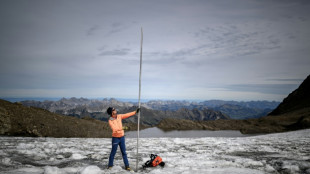
Extreme weather killed 195,000 in Europe since 1980 / Photo: Patrick T. FALLON - AFP

Extreme weather killed 195,000 in Europe since 1980

Extreme weather conditions in Europe have killed almost 195,000 people and caused economic losses of more than 560 billion euros since 1980, the European Environment Agency said Wednesday.

Text size:

"Nearly 195,000 fatalities have been caused by floods, storms, heat- and coldwaves, forest fires and landslides" between 1980 and 2021, the EAA said in its report.

Of the 560 billion euros ($605 billion) in losses, only 170 billion, or 30 percent, were insured, the EEA said, as it launched a new online portal collating recent data on the impact of extreme weather.

"To prevent further losses, we need to urgently move from responding to extreme weather events...to proactively preparing for them," EEA expert Aleksandra Kazmierczak told AFP.

According to the latest data, heatwaves accounted for 81 percent of deaths and 15 percent of financial losses.

Europe needs to take measures to protect its ageing population, with the elderly particularly sensitive to extreme heat, the EEA said.

"Most national adaptation policies and health strategies recognise the impacts of heat on cardiovascular and respiratory systems. But less than half cover direct impacts of heat like dehydration or heat stroke," it said.

The summer of 2022 saw more deaths than usual in Europe following repeated heatwaves, but the 2022 deaths were not included in the data published on Wednesday.

There were 53,000 more deaths in July 2022 than the monthly average in 2016-2019, up by 16 percent, though not all of those deaths were directly attributed to the heat, the EEA said.

Spain registered more than 4,600 deaths linked to the extreme heat in June, July and August.

Climate modelling has predicted longer, more intense and more frequent heatwaves.

In February 2022, the EAA said extreme weather killed 142,000 people and caused 510 billion euros in losses for the period 1980-2020.

The increase in the figures released on Wednesday was partly due to the fact that in 2021, flooding in Germany and Belgium led to economic losses of almost 50 billion euros.

In terms of deaths, a change in methodology in France and Germany was responsible for the large variation, the EEA said.

- 'Devastating consequences' -

Climate change caused by humans increased the risk of drought five- or six-fold in 2022, a year when forest fires ravaged twice as much territory as in recent years, the EEA said.

Droughts could end up being very costly.

Economic losses could rise from nine billion euros per year currently to 25 billion euros at the end of the century if the planet warms by 1.5C degrees.

That could climb to 31 billion euros if it warms by 2C and 45 billion euros if it warms by 3C, according to scientific scenarios.

The consequences for agriculture could be "devastating", the EEA warned.

"Farmers can limit adverse impacts of rising temperature and droughts by adapting crop varieties, changing sowing dates and with changed irrigation patterns," the report said.

Without changes, yields and farm incomes are projected to decline in the future, it said.

While human losses from flooding are much lower, accounting for just two percent of the total, they are the most costly, accounting for 56 percent of economic losses.

O.Meier--NZN