Zürcher Nachrichten - Land and sea efforts to save reefs must work together: study

EUR -
AED 4.241984
AFN 72.191027
ALL 95.026157
AMD 425.573382
ANG 2.068103
AOA 1060.35179
ARS 1661.267345
AUD 1.645314
AWG 2.08201
AZN 1.960677
BAM 1.95633
BBD 2.327371
BDT 141.838428
BGN 1.928871
BHD 0.43582
BIF 3453.850705
BMD 1.155068
BND 1.487903
BOB 7.985198
BRL 6.004734
BSD 1.155533
BTN 110.087303
BWP 15.692319
BYN 3.180762
BYR 22639.331688
BZD 2.32403
CAD 1.608917
CDF 2628.934477
CHF 0.922093
CLF 0.026897
CLP 1058.642738
CNY 7.822986
CNH 7.830327
COP 4135.154788
CRC 529.943578
CUC 1.155068
CUP 30.6093
CVE 110.296793
CZK 24.16997
DJF 205.766639
DKK 7.474393
DOP 67.418266
DZD 154.287051
EGP 59.857698
ERN 17.326019
ETB 186.29578
FJD 2.562865
FKP 0.862732
GBP 0.86216
GEL 3.060876
GGP 0.862732
GHS 13.461705
GIP 0.862732
GMD 84.319965
GNF 10122.917887
GTQ 8.808386
GYD 241.756546
HKD 9.052429
HNL 30.892905
HRK 7.53243
HTG 151.140949
HUF 355.673124
IDR 20665.320573
ILS 3.428773
IMP 0.862732
INR 110.102457
IQD 1513.810138
IRR 1588420.559225
ISK 143.39061
JEP 0.862732
JMD 182.469437
JOD 0.818886
JPY 185.355485
KES 149.45954
KGS 101.009648
KHR 4650.280033
KMF 493.214155
KPW 1039.393951
KRW 1756.494513
KWD 0.357251
KYD 0.962965
KZT 563.695162
LAK 25445.003976
LBP 103477.78323
LKR 384.800917
LRD 210.307889
LSL 19.145118
LTL 3.410615
LVL 0.698689
LYD 7.376903
MAD 10.700499
MDL 20.111536
MGA 4847.313286
MKD 61.606622
MMK 2424.391891
MNT 4130.85024
MOP 9.327067
MRU 46.204318
MUR 55.293329
MVR 17.856813
MWK 2003.751551
MXN 20.088266
MYR 4.700669
MZN 73.796598
NAD 19.145118
NGN 1572.059584
NIO 42.52152
NOK 10.934278
NPR 176.139484
NZD 1.983609
OMR 0.444117
PAB 1.155518
PEN 3.928864
PGK 5.136392
PHP 70.777937
PKR 321.559488
PLN 4.247589
PYG 7136.995419
QAR 4.213187
RON 5.235578
RSD 117.360632
RUB 82.989819
RWF 1695.166611
SAR 4.336625
SBD 9.293183
SCR 15.29514
SDG 693.620584
SEK 10.956224
SGD 1.485925
SHP 0.862375
SLE 28.472024
SLL 24221.199668
SOS 660.381776
SRD 43.15449
STD 23907.574353
STN 24.507064
SVC 10.110914
SYP 127.672083
SZL 19.140269
THB 38.042744
TJS 10.809835
TMT 4.054288
TND 3.391678
TOP 2.781126
TRY 53.291717
TTD 7.843125
TWD 36.584352
TZS 3026.512485
UAH 52.069507
UGX 4350.253942
USD 1.155068
UYU 46.812683
UZS 13930.015266
VES 654.892562
VND 30401.388267
VUV 138.02171
WST 3.170655
XAF 656.137608
XAG 0.017896
XAU 0.00028
XCD 3.121629
XCG 2.082564
XDR 0.816431
XOF 656.126244
XPF 119.331742
YER 275.656561
ZAR 19.074504
ZMK 10397.006324
ZMW 20.019511
ZWL 371.931406
  • RBGPF

    2.0500

    60.72

    +3.38%

  • CMSC

    -0.0600

    22.25

    -0.27%

  • RYCEF

    -0.2300

    16.49

    -1.39%

  • GSK

    -0.1650

    51.085

    -0.32%

  • CMSD

    0.0200

    22.3

    +0.09%

  • BTI

    1.1900

    61.14

    +1.95%

  • BCC

    -0.7800

    69.23

    -1.13%

  • RELX

    -0.7300

    34.21

    -2.13%

  • NGG

    -0.2800

    80.8

    -0.35%

  • BCE

    0.2250

    24.805

    +0.91%

  • RIO

    -1.5500

    99.87

    -1.55%

  • VOD

    0.3960

    15.066

    +2.63%

  • BP

    1.0300

    43.7

    +2.36%

  • JRI

    0.1650

    12.885

    +1.28%

  • AZN

    -4.6060

    178.824

    -2.58%

Land and sea efforts to save reefs must work together: study
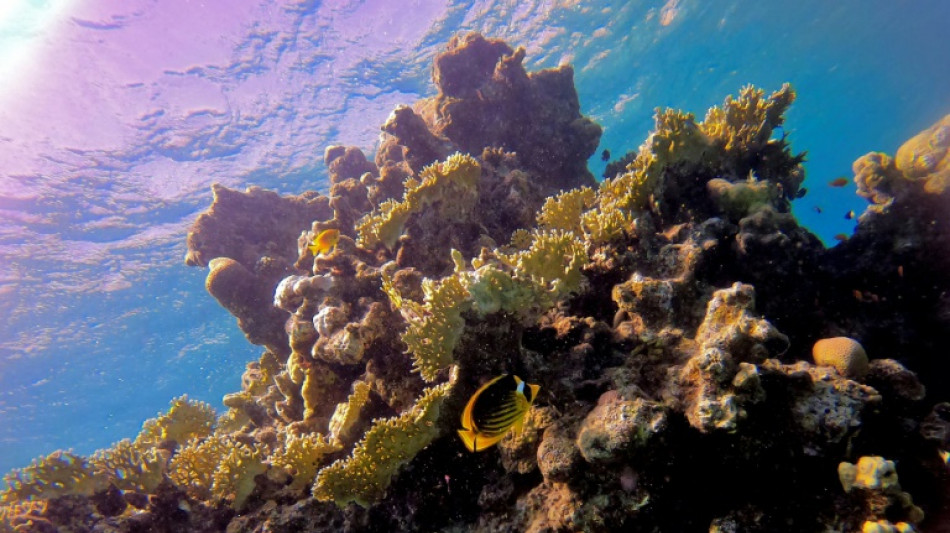
Land and sea efforts to save reefs must work together: study / Photo: MENAHEM KAHANA - AFP/File

Land and sea efforts to save reefs must work together: study

A new study offers a glimmer of hope in efforts to save the world's coral reefs, which play a vital role in underwater life but have been put under threat by rising ocean temperatures.

Text size:

The study published Wednesday, which is based on 20 years of data from the US island of Hawaii, says that combining local efforts to limit the impact of humans on both the land and sea give coral reefs a greater chance at bouncing back.

"We found that both land-based (for example wastewater pollution) and sea-based human impacts (for example fishing) must be reduced together to ensure coral reef persistence," the study's co-lead author Gareth Williams, a marine ecologist at the UK's Bangor University, told AFP.

Using high-resolution data and thousands of hours of underwater surveys, the researchers looked at connections between human impacts and the recovery of the reef.

They found that not all coral reefs suffer equally during heatwaves.

In 18 percent of the reefs surveyed during an unprecedented marine heatwave in Hawaii in 2015, coral cover remained unchanged -- and in some cases, increased -- despite the heat.

Their ability to recover was dependent on how strained they were by various human pollutants and how many algae-eating fish were around to pave the way for regrowth, the study said.

The more negative impacts that were remedied, the better the reefs recovered, offering a potential path ahead for conservation efforts.

The researchers carried out modelling which indicated that simultaneously reducing these problems on land and sea gave reefs an up to six times higher chance of regrowing after a heatwave than if the efforts were carried out separately.

They called for more cooperation.

"Resource managers have aspired to manage land and sea together, but because governance tends to be centralised, most terrestrial- and ocean-management efforts remain siloed," said the study's co-lead author Jamison Grove of the US National Oceanic and Atmospheric Administration.

But the researchers warned that the frequency and severity of coral bleaching as ocean temperatures rise due to human-caused climate change could "simply overwhelm the positive effects of local management actions".

The study, published in the journal Nature, came just days after it was revealed that the temperature of the world's oceans rose to their hottest level ever recorded on July 30.

Last year most nations committed to protecting 30 percent of the planet's land and ocean by 2030 to safeguard biodiversity.

F.Schneider--NZN