COP28 turns attention to potent methane emissions / Photo: JOE RAEDLE - GETTY IMAGES NORTH AMERICA/AFP/File
Climate talks often revolve around reducing the most dangerous greenhouse gas CO2.
But other powerful heat-trapping emissions -- of methane -- are also likely to be in the crosshairs of negotiators at the crucial COP28 meeting in Dubai next week.
Methane -- which is potent but relatively short-lived -- is a key target for countries wanting to slash emissions quickly and slow climate change.
That is particularly because large amounts of methane are simply leaking into the atmosphere from fossil fuel infrastructure.
- What is methane? -
Atmospheric methane (CH4) occurs abundantly in nature as the primary component of natural gas.
It is the second largest contributor to climate change, accounting for around 16 percent of the warming effect.
Methane remains in the atmosphere for only about 10 years, but has a much more powerful warming impact than CO2.
Its warming effect is 28 times greater than CO2 over a 100-year timescale (and 80 times over 20 years).
Exactly how much methane is released in the atmosphere remains subject to "significant uncertainty", according to the International Energy Agency (IEA), despite progress in the monitoring of emissions through the use of satellites.
And scientists are puzzling over a steady increase of methane in the atmosphere, with concentrations currently over two-and-a-half times greater than pre-industrial levels.
- Gas leaks and cow burps -
The majority of methane emissions -- around 60 percent -- are linked to human activity, the IEA says, while some 40 percent is from natural sources, mainly wetlands.
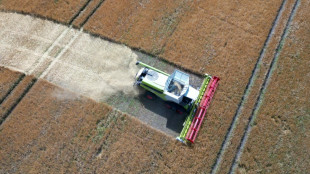
Agriculture is the biggest culprit, responsible for roughly a quarter of emissions.
Most of that is from livestock -- cows and sheep release methane during digestion and in their manure -- and rice cultivation, where flooded fields create ideal conditions for methane-emitting bacteria.
The energy sector -- coal, oil and gas -- is the second largest source of human caused methane emissions.
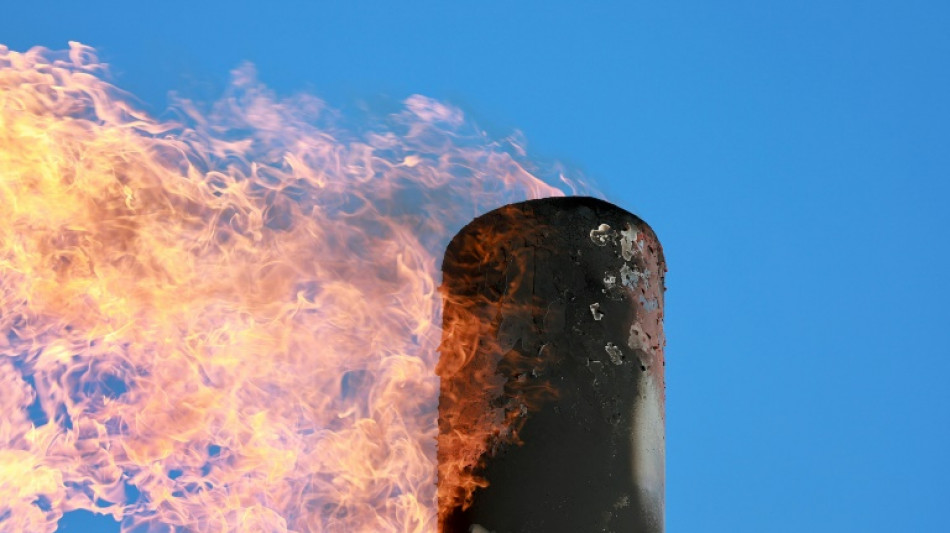
Methane leaks from energy infrastructure -- such as gas pipelines -- and from deliberate releases during maintenance.
Discarded household waste also releases large quantities of methane when it decomposes, if left to rot in landfills.
- What can be done? -
A recent IEA report estimates that rapid cuts in methane emissions linked to the fossil fuel sector could prevent up to 0.1 degrees Celsius of warming by mid-century.
That might sound like a modest reduction, but such a reduction would have an impact greater than "immediately taking all cars and trucks in the world off the road", said the report authors.
IEA Executive Director Fatih Birol called it "one of the best and most affordable" options for reducing global warming.
It could be achieved by repairing leaky infrastructure and eliminating routine flaring and venting during pipeline maintenance.
"Leakage is far too high in many areas where natural gas is extracted but some countries, notably Norway, have shown that it is possible to extract and supply natural gas with minimal levels of leakage," Energy Programme Director William Gillett at the European Academies Science Advisory Council (EASAC) told AFP.
In the case of agriculture, it is possible to modify animal diets by, for example, adding a compound to improve their health and that of the planet.
For rice fields, changes to water management are the "most promising" way to reduce emissions, according to a FAO report.
- Binding agreement? -
A joint EU-US "Global Methane Pledge" was launched in 2021, aiming to reduce worldwide methane emissions by 30 percent by 2030, compared to 2020 levels.
Some 150 countries have signed on, but China, India and Russia were noticeably absent.
"To slow down climate change, it will be critical that the most important players who have not joined so far will engage" with the pledge, said Gillett.
Voluntary initiatives like these also lack rigorous measures to hold countries to account.
Scientists at EASAC have called for COP28 to agree on a "substantial strengthening" of the methane pledge, with a formalised reduction target of around 60 percent in the energy sector, in line with recent EU regulations.
If such a global commitment were to happen at the climate talks in Dubai later this month it would constitute a "major success", they said.
The United States and China have announced they will include methane in their climate action plans, and Beijing has revealed a plan to control its emissions -- although without a quantified target.
China's plan is a "crucial step forward in addressing one of the country's main greenhouse gases, which accounts for 10 percent of the country's total emissions", said Byford Tsand of the climate think tank E3G.
However, "it will take time to assess whether the plan could deliver 'significant effect' in the absence of any quantified reduction targets," he added.
Oil and gas giants have also proposed commitments, including the Oil and Gas Climate Initiative, which aims for zero emissions from their activities by 2030.
Ch.Siegenthaler--NZN