Experts trash Hong Kong's 'throwaway culture' ahead of plastic ban / Photo: Su Xinqi - AFP
Unlike her fellow Hong Kong urbanites toting plastic or paper cups filled with coffee, pet groomer Lucine Mo takes her caffeine hit in a thermal mug with a QR code.
The coded mug can be returned to 35 coffee shops taking part in a Greenpeace pilot project aiming to change one of the city's most wasteful consumption habits -- the near-instinctive use of disposable cutlery.
"Since I learned about the service, I have stopped using those plastic and paper cups," Mo told AFP.
"If a restaurant provides reusable cutlery (for takeaway), I am totally fine with it."
That practice is nearly non-existent in Hong Kong, but come Earth Day on April 22, 2024, caterers and consumers will see a ban on disposable plastic cutlery take effect in more than 28,000 eateries.
The idea is "to build a plastic-free culture", authorities said, but environmentalists are worried that the ban's benefits could be undermined if the city merely replaces plastic waste with that of other materials.
Hong Kong is already swamped with trash -- 13 dumpsites are brimming and the remaining three landfills are expected to fill by 2030.
"The problem actually lies in the throwaway culture," said Greenpeace campaigner Leanne Tam.
"We must tackle the root cause and think about how to replace disposable products with reusable ones."
- Reduce and reuse -
Plastic is the finance hub's second-largest source of municipal solid waste, with the average amount disposed daily totalling 2,331 tonnes in 2021 -- a weight equivalent to nearly 70 adult humpback whales.
In October, the city's legislature amended the "Product Eco-Responsibility Bill", implementing a two-stage ban on some plastic products.
Phase one, starting on Earth Day, will ban some types of polystyrene and plastic tableware that are difficult to recycle.
That means no more plastic forks, knives, spoons and plates for dine-in customers -- or office workers looking to get a quick takeaway meal.
Plastic containers such as cups and bowls will also be banned for sit-down meals, though allowed for takeaway -- until phase two kicks in, which will "depend on the availability and affordability of" reusable alternatives.
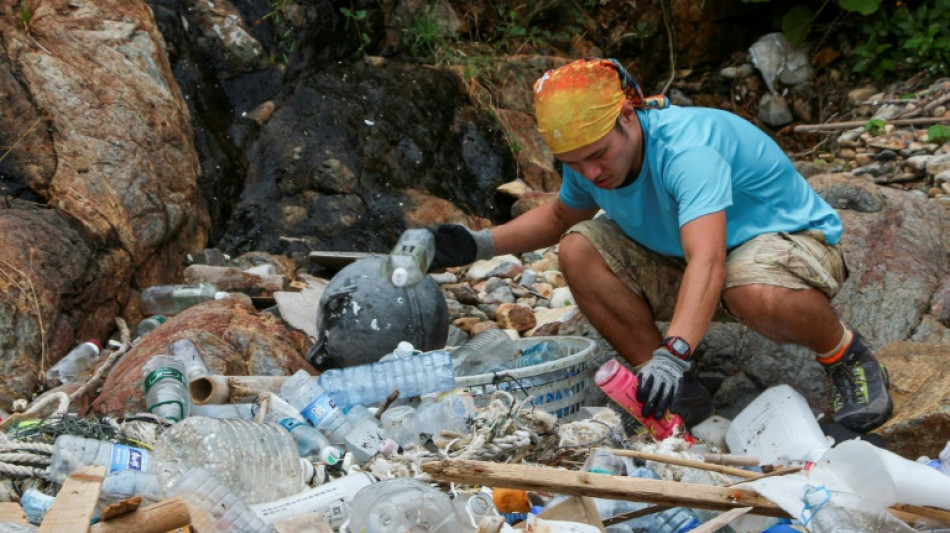
Scanning a trash-strewn beach in northeast Hong Kong, volunteer Yeungs Ting remains sceptical about the ban's effectiveness.
"It's not about whether they are plastic... it's about disposing once you have used it," Ting told AFP, as her team collected about 140 kilograms (308 pounds) of trash during a four-hour cleaning mission.
Their haul included more than 3,000 plastic bottles.
"Will our society, our government or the business sector take the lead in creating a system for borrowing reusable cutlery?" she wondered.
That is the very question Taiwan -- a two-hour flight from Hong Kong -- is attempting to answer.
The birthplace of bubble milk tea, Taiwan uses up to four billion plastic cups a year.
Last year, the self-ruled island announced a series of measures including bans on disposable plastic cups, incentives for customers who use their own mugs, and requirements for fast-food and convenience chains to provide free reusable cups.
Lin Yu-Huei, Taipei's recycling division chief, told AFP about 76 million plastic cups are expected to be saved from trash landfills each year since the capital implemented the ban last December.
"It costs us a huge amount of resources to sort and recycle all types of plastic products," Lin said. "We hope to reduce waste from its origins."
- 'Green and convenient' -
Hong Kong's environment minister echoed this appeal this month, saying that replacing plastic tableware with cutlery of other materials such as "paper, softwood and plant fibres, is not the best solution".
"To reduce waste... more effectively, we should actively use reusable products," Tse Chin-wan, 66, said at the launch of a campaign to encourage the public to do just that.
It will go until the end of April, working with over 750 eateries -- including the city's largest fast food chains -- to offer rewards to customers who decline disposable cutlery.
Greenpeace campaigner Tam, 31, suggested that the government should develop a more widespread and convenient cutlery loan system, allowing customers to borrow reusable utensils for takeaway and return them to restaurants.
"This is what we believe can be the new and actual way out for Hong Kong's trash problem," Tam said. "Being green and being convenient are not in opposition."
W.F.Portman--NZN