Zürcher Nachrichten - Biden strengthens US soot regulations, angering industry

EUR -
AED 4.235108
AFN 72.638695
ALL 95.986116
AMD 435.092592
ANG 2.063949
AOA 1057.292369
ARS 1577.236365
AUD 1.673475
AWG 2.078266
AZN 1.958134
BAM 1.955386
BBD 2.320668
BDT 141.373711
BGN 1.970817
BHD 0.435957
BIF 3424.38207
BMD 1.152991
BND 1.480725
BOB 7.979516
BRL 6.049975
BSD 1.152186
BTN 108.575339
BWP 15.841123
BYN 3.460157
BYR 22598.615681
BZD 2.317349
CAD 1.59725
CDF 2635.149736
CHF 0.916506
CLF 0.027072
CLP 1068.948607
CNY 7.966185
CNH 7.980055
COP 4255.61911
CRC 534.200663
CUC 1.152991
CUP 30.554251
CVE 110.542933
CZK 24.511426
DJF 204.909943
DKK 7.471979
DOP 68.605777
DZD 153.395731
EGP 60.817599
ERN 17.294859
ETB 181.192506
FJD 2.594811
FKP 0.862247
GBP 0.865314
GEL 3.107286
GGP 0.862247
GHS 12.636424
GIP 0.862247
GMD 84.719455
GNF 10120.377686
GTQ 8.814361
GYD 241.055175
HKD 9.023247
HNL 30.577003
HRK 7.535828
HTG 150.891941
HUF 388.338432
IDR 19510.445669
ILS 3.602059
IMP 0.862247
INR 108.645093
IQD 1510.417681
IRR 1514222.549315
ISK 143.339936
JEP 0.862247
JMD 181.081615
JOD 0.817484
JPY 184.182756
KES 149.773716
KGS 100.828779
KHR 4629.257123
KMF 492.326899
KPW 1037.758177
KRW 1739.332384
KWD 0.35421
KYD 0.960221
KZT 555.084372
LAK 25063.132529
LBP 103250.307387
LKR 362.372615
LRD 211.803486
LSL 19.658594
LTL 3.404482
LVL 0.697433
LYD 7.35573
MAD 10.768576
MDL 20.238324
MGA 4813.735514
MKD 61.653053
MMK 2421.261549
MNT 4132.119635
MOP 9.284814
MRU 46.246593
MUR 53.751971
MVR 17.825775
MWK 2001.591211
MXN 20.574308
MYR 4.605027
MZN 73.687834
NAD 19.658789
NGN 1598.632905
NIO 42.337441
NOK 11.175356
NPR 173.720942
NZD 2.002185
OMR 0.443309
PAB 1.152181
PEN 3.988767
PGK 4.968807
PHP 69.448107
PKR 321.972295
PLN 4.27801
PYG 7540.995323
QAR 4.215912
RON 5.097026
RSD 117.441351
RUB 93.822176
RWF 1683.36627
SAR 4.326033
SBD 9.272321
SCR 15.995702
SDG 692.947394
SEK 10.884917
SGD 1.482394
SHP 0.865042
SLE 28.306224
SLL 24177.648784
SOS 658.93198
SRD 43.308612
STD 23864.577457
STN 24.616349
SVC 10.082038
SYP 128.492581
SZL 19.658268
THB 38.014217
TJS 11.02665
TMT 4.046997
TND 3.370773
TOP 2.776124
TRY 51.145977
TTD 7.820546
TWD 36.875174
TZS 2968.95063
UAH 50.55856
UGX 4286.184377
USD 1.152991
UYU 46.710504
UZS 14054.955391
VES 537.314539
VND 30382.455194
VUV 137.232784
WST 3.170183
XAF 655.832201
XAG 0.01708
XAU 0.000263
XCD 3.116015
XCG 2.076605
XDR 0.813367
XOF 653.172449
XPF 119.331742
YER 275.161365
ZAR 19.752487
ZMK 10378.307533
ZMW 21.632883
ZWL 371.262501
  • RBGPF

    -13.5000

    69

    -19.57%

  • CMSC

    -0.0650

    22.845

    -0.28%

  • RIO

    -1.7700

    85.77

    -2.06%

  • NGG

    -1.8800

    82.41

    -2.28%

  • RYCEF

    -0.6000

    15.3

    -3.92%

  • CMSD

    0.1600

    22.84

    +0.7%

  • GSK

    -0.7100

    53.99

    -1.32%

  • BCC

    -0.3300

    74.32

    -0.44%

  • RELX

    -0.4050

    32.065

    -1.26%

  • JRI

    -0.0300

    12.07

    -0.25%

  • AZN

    -3.7400

    183.4

    -2.04%

  • BTI

    -0.1700

    58.28

    -0.29%

  • BCE

    -0.0300

    25.46

    -0.12%

  • VOD

    -0.0900

    14.63

    -0.62%

  • BP

    0.7800

    46.19

    +1.69%

Biden strengthens US soot regulations, angering industry
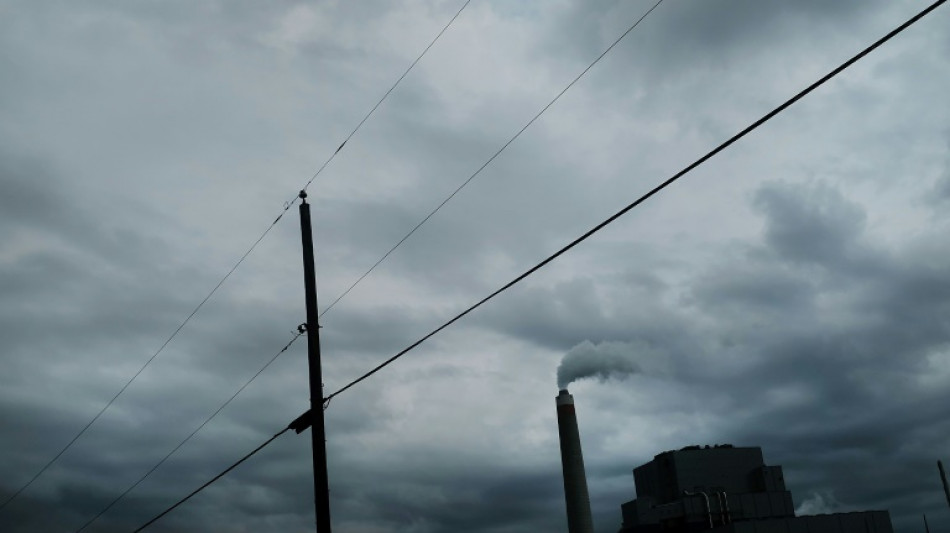
Biden strengthens US soot regulations, angering industry / Photo: SPENCER PLATT - GETTY IMAGES NORTH AMERICA/AFP/File

Biden strengthens US soot regulations, angering industry

President Joe Biden's administration on Wednesday announced tough new air quality standards it said were sorely needed to protect the health of vulnerable communities, though industry groups have said the move would devastate domestic manufacturing.

Text size:

It comes as the Democratic incumbent faces a tough election rematch against the likely Republican candidate Donald Trump, who rolled back dozens of air pollution regulations when he was in office.

The Environmental Protection Agency (EPA)'s new rule concerns fine particulate matter, commonly known as soot, a widespread, deadly pollutant linked to asthma and heart disease, and more.

Under the new standard, levels of PM2.5 (particles that are 2.5 micrometers in diameter and smaller) would not be permitted to exceed an average annual level of 9 micrograms per cubic meter, down from the current 12 micrograms per cubic meter and more stringent than current as well as proposed European Union regulations.

"Today's action is a critical step forward to better protect workers, families and communities from the dangerous and costly impacts of fine particle pollution," EPA chief Michael Regan told reporters on a press call.

Vehicles, smokestacks and fires are common sources of fine particles, which also form when gases emitted by car engines, power plants and industrial processes react in the atmosphere.

The agency estimated the action would prevent up to 4,500 premature deaths and 290,000 lost workdays, and generate up to $46 billion in net health benefits in 2032, the first year that states would be required to meet the new standard.

- Industry critical -

Wednesday's announcement was hailed by environmental and health groups.

"The body of science around this pollution is so robust -- we know it takes people before their time, premature deaths from heart attacks, we know that it gives children and adults asthma and many other sicknesses," said Abbie Dillen, president of the environmental law nonprofit Earthjustice.

"We could not be more grateful on behalf of all of the clients that we've represented over the years," she added.

Industry groups have said the rule would threaten US manufacturing operations, and the issue threatens to become yet another battleground in key swing states in the 2024 presidential election.

"The standards will hinder onshoring, resulting in continued manufacturing abroad -- which is less clean than manufacturing in the US," the National Association of Manufacturers said in a statement when the rule was first mooted a year ago.

The move has also been opposed by the American Forest & Paper Association, with the pulp and paper mills large emitters of air pollution.

But the EPA has disputed the characterizations, calculating that 99 percent of the country's more than 3,100 counties will be in compliance by 2032 because of an overall downward trend in air pollution from other initiatives.

It added states could exclude exceptional circumstances arising from wildfires from the particulate matter they report -- a factor that could be important as climate change makes smoke exposure from forest blazes more common.

F.Schneider--NZN