Zürcher Nachrichten - Adagio in sea: Coral larvae 'settle near sounds of healthy reefs'

EUR -
AED 4.337402
AFN 77.949497
ALL 96.746586
AMD 448.977858
ANG 2.114171
AOA 1083.021357
ARS 1714.875512
AUD 1.685498
AWG 2.125888
AZN 2.012064
BAM 1.955268
BBD 2.38905
BDT 145.070535
BGN 1.983418
BHD 0.445266
BIF 3528.573785
BMD 1.181049
BND 1.507858
BOB 8.225762
BRL 6.214439
BSD 1.186177
BTN 108.470491
BWP 15.623457
BYN 3.396476
BYR 23148.554586
BZD 2.385551
CAD 1.613708
CDF 2545.159901
CHF 0.919208
CLF 0.025873
CLP 1021.607686
CNY 8.204152
CNH 8.191376
COP 4286.025744
CRC 588.998578
CUC 1.181049
CUP 31.297791
CVE 110.235011
CZK 24.302084
DJF 211.222538
DKK 7.468828
DOP 74.978008
DZD 153.399354
EGP 55.615706
ERN 17.715731
ETB 185.042803
FJD 2.598659
FKP 0.861876
GBP 0.86249
GEL 3.182902
GGP 0.861876
GHS 13.006462
GIP 0.861876
GMD 86.804949
GNF 10416.368516
GTQ 9.101524
GYD 248.162489
HKD 9.228272
HNL 31.335885
HRK 7.533794
HTG 155.578208
HUF 381.061234
IDR 19805.714336
ILS 3.652334
IMP 0.861876
INR 106.79255
IQD 1553.870701
IRR 49751.676815
ISK 145.209813
JEP 0.861876
JMD 186.382904
JOD 0.837354
JPY 183.589884
KES 153.004664
KGS 103.282928
KHR 4779.402566
KMF 493.678066
KPW 1062.943833
KRW 1711.71749
KWD 0.362877
KYD 0.988427
KZT 599.002117
LAK 25509.060426
LBP 105741.299905
LKR 367.318518
LRD 220.030142
LSL 18.990734
LTL 3.48733
LVL 0.714405
LYD 7.493961
MAD 10.816757
MDL 20.081537
MGA 5293.52655
MKD 61.640235
MMK 2480.18629
MNT 4209.99602
MOP 9.542264
MRU 47.137696
MUR 54.198214
MVR 18.247651
MWK 2058.282399
MXN 20.491608
MYR 4.652739
MZN 75.291426
NAD 18.990894
NGN 1654.105612
NIO 43.681959
NOK 11.432319
NPR 173.688047
NZD 1.957015
OMR 0.454115
PAB 1.186177
PEN 3.995113
PGK 5.086622
PHP 69.560822
PKR 332.277686
PLN 4.219923
PYG 7886.854432
QAR 4.33612
RON 5.09564
RSD 117.441072
RUB 90.309541
RWF 1735.465057
SAR 4.429108
SBD 9.51701
SCR 17.546644
SDG 710.395921
SEK 10.55802
SGD 1.500091
SHP 0.886092
SLE 28.906223
SLL 24765.999919
SOS 678.438173
SRD 44.909376
STD 24445.323632
STN 24.512634
SVC 10.379132
SYP 13061.896589
SZL 18.995986
THB 37.167278
TJS 11.078586
TMT 4.145481
TND 3.422169
TOP 2.843682
TRY 51.371886
TTD 8.030883
TWD 37.296322
TZS 3045.971612
UAH 51.1218
UGX 4236.847393
USD 1.181049
UYU 46.017481
UZS 14501.055082
VES 438.925607
VND 30730.296737
VUV 140.729879
WST 3.201564
XAF 656.28969
XAG 0.014184
XAU 0.000245
XCD 3.191843
XCG 2.137709
XDR 0.81619
XOF 655.7786
XPF 119.331742
YER 281.532483
ZAR 18.880752
ZMK 10630.856255
ZMW 23.277667
ZWL 380.297201
  • RBGPF

    0.1000

    82.5

    +0.12%

  • SCS

    0.0200

    16.14

    +0.12%

  • CMSC

    -0.0100

    23.75

    -0.04%

  • RYCEF

    0.7000

    16.7

    +4.19%

  • BCC

    0.9400

    81.75

    +1.15%

  • GSK

    0.8700

    52.47

    +1.66%

  • RIO

    1.4900

    92.52

    +1.61%

  • NGG

    -0.6600

    84.61

    -0.78%

  • RELX

    -0.2700

    35.53

    -0.76%

  • BCE

    -0.0300

    25.83

    -0.12%

  • BTI

    0.3100

    60.99

    +0.51%

  • CMSD

    0.0300

    24.08

    +0.12%

  • JRI

    0.0700

    13.15

    +0.53%

  • VOD

    0.2600

    14.91

    +1.74%

  • AZN

    1.3100

    188.41

    +0.7%

  • BP

    -0.1800

    37.7

    -0.48%

Adagio in sea: Coral larvae 'settle near sounds of healthy reefs'
Adagio in sea: Coral larvae 'settle near sounds of healthy reefs' / Photo: Joseph Prezioso - AFP/File

Adagio in sea: Coral larvae 'settle near sounds of healthy reefs'

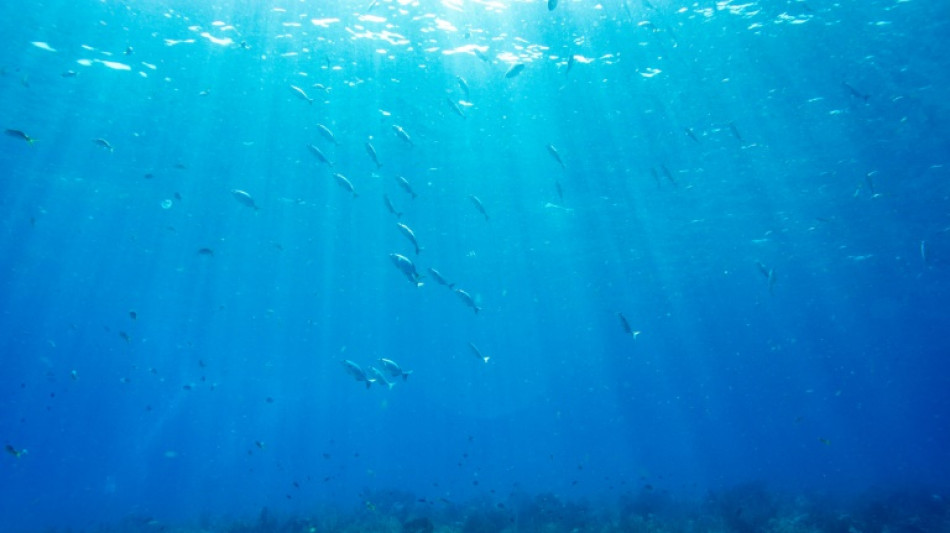
Audio recordings of healthy reefs -- an underwater chorus of fish songs and crackles from snapping shrimp -- may help efforts to restore coral ecosystems harmed by climate and human impacts, scientists said Wednesday.

Text size:

With the future of the world's biodiversity-rich coral reefs threatened by climate change, some experts are looking for rehabilitation strategies to go alongside broader efforts to slash planet-heating pollution.

Researchers at Woods Hole Oceanographic Institution say one such method to help reefs rebuild could be sound, after they broadcast audio from a healthy reef to entice coral larvae to settle on the seabed at a degraded reef.

Coral larvae use a range of signals from reefs, including chemical cues, as they swim through the open water in their first stage of life looking for a permanent home, said Nadege Aoki, lead author of the study published in the journal Royal Society Open Science.

"Now we have also demonstrated that the local sound environment is very important for these corals, and that playing reef sounds can potentially be a vital tool in the effort to restore coral reefs," she told AFP.

Researchers had been listening to coral reefs in the US Virgin Islands for over a decade, gaining insights into the distinct sounds that separate lively habitats from those that have been damaged by bleaching, disease or direct human impacts.

"A healthy coral reef will typically feature many low-frequency sounds of croaks, purrs, and grunts produced by fishes against a near-constant background of crackles and pops produced by snapping shrimp," said Aoki. A degraded reef, with fewer species, "will be much quieter".

- Under threat -

The team collected specimens from a hardy species known as mustard hill coral -- named for its lumpy shape and yellow hue.

They then distributed them in cups at three reefs in the US Virgin Islands -- one healthy and two more degraded, with patchy coral growth and fewer fish.

Researchers then set up underwater speakers to broadcast their back catalogue of healthy reef sounds at one of the degraded reefs.

They found that the coral larvae at this location settled at rates 1.7 times higher on average -- and up to seven times more -- than the other two reefs, where no sound was played.

There was still much more to learn about how corals respond to sound, Aoki said, including whether different species behave in the same ways and how they are able to "hear".

But she added the finding suggests audio could become part of efforts to rebuild damaged reefs, although this would need to be monitored and protected, since settlement is just one step in a coral's life.

"At the rate that coral reefs are disappearing, human intervention will be absolutely essential to preserving reefs in anything close to their current states," she said.

Coral reefs support about a quarter of all marine life, as well as the millions of people who rely on them for food and income.

But human-driven climate change is spurring mass coral bleaching as the oceans heat and scientists warn that up to 90 percent of reefs could be lost if warming reaches 1.5 degrees Celsius above pre-industrial levels.

S.Scheidegger--NZN