Zürcher Nachrichten - UN warns against thirsty tech to solve water crisis

EUR -
AED 4.261874
AFN 76.591666
ALL 92.597073
AMD 422.181196
ANG 2.077013
AOA 1064.163357
ARS 1734.900176
AUD 1.6399
AWG 2.08887
AZN 1.968325
BAM 1.955738
BBD 2.337576
BDT 141.825516
BGN 1.968604
BHD 0.437677
BIF 3469.045487
BMD 1.160483
BND 1.481453
BOB 13.410287
BRL 6.038114
BSD 1.160638
BTN 111.077095
BWP 15.675504
BYN 3.530188
BYR 22745.472905
BZD 2.334176
CAD 1.609898
CDF 2634.297369
CHF 0.940067
CLF 0.027307
CLP 1074.735107
CNY 7.825483
CNH 7.820677
COP 3603.149819
CRC 519.372391
CUC 1.160483
CUP 30.752808
CVE 110.260089
CZK 24.162017
DJF 206.669014
DKK 7.47563
DOP 68.187844
DZD 154.209695
EGP 58.836927
ERN 17.40725
ETB 189.575523
FJD 2.563569
FKP 0.856895
GBP 0.85603
GEL 3.023118
GGP 0.856895
GHS 12.911314
GIP 0.856895
GMD 85.875942
GNF 10197.545796
GTQ 8.856529
GYD 242.817092
HKD 9.100103
HNL 31.119346
HRK 7.535363
HTG 151.805201
HUF 364.496499
IDR 20692.577927
ILS 3.465896
IMP 0.856895
INR 111.057963
IQD 1520.451931
IRR 1595171.347767
ISK 142.194446
JEP 0.856895
JMD 183.394202
JOD 0.822796
JPY 184.616066
KES 150.271402
KGS 101.484102
KHR 4692.851636
KMF 494.366236
KPW 1044.435321
KRW 1614.458562
KWD 0.358114
KYD 0.967169
KZT 536.101502
LAK 26137.610587
LBP 103931.775234
LKR 384.107856
LRD 210.65334
LSL 18.856698
LTL 3.426606
LVL 0.701965
LYD 7.386671
MAD 10.761421
MDL 20.015367
MGA 5001.73412
MKD 61.528055
MMK 2436.1399
MNT 4174.433574
MOP 9.373483
MRU 46.434532
MUR 54.519542
MVR 17.941066
MWK 2012.493021
MXN 19.770533
MYR 4.70889
MZN 74.160694
NAD 18.856698
NGN 1567.84815
NIO 42.70773
NOK 10.909938
NPR 177.727381
NZD 1.973454
OMR 0.446209
PAB 1.160638
PEN 3.908292
PGK 5.140771
PHP 71.744536
PKR 322.102717
PLN 4.324831
PYG 6981.779272
QAR 4.231366
RON 5.246782
RSD 117.389823
RUB 98.636032
RWF 1710.145934
SAR 4.359006
SBD 9.31382
SCR 15.926447
SDG 698.033885
SEK 11.037629
SGD 1.480928
SHP 0.859763
SLE 28.606131
SLL 24334.753902
SOS 663.270458
SRD 44.060118
STD 24019.661541
STN 24.498698
SVC 10.155548
SYP 15088.603907
SZL 18.86216
THB 38.373735
TJS 10.706531
TMT 4.061692
TND 3.392093
TOP 2.794165
TRY 55.630208
TTD 7.872582
TWD 37.079811
TZS 3072.641833
UAH 51.892389
UGX 4328.769893
USD 1.160483
UYU 46.518529
UZS 13695.567016
VES 895.402058
VND 30382.033336
VUV 137.187098
WST 3.151754
XAF 655.936263
XAG 0.018233
XAU 0.000266
XCD 3.136264
XCG 2.091707
XDR 0.820522
XOF 655.927785
XPF 119.331742
YER 275.183963
ZAR 18.847003
ZMK 10445.737551
ZMW 21.731845
ZWL 373.675153
  • RBGPF

    0.3500

    69

    +0.51%

  • JRI

    -0.0400

    12.44

    -0.32%

  • CMSC

    -0.1200

    21.24

    -0.56%

  • RYCEF

    -0.2500

    20.81

    -1.2%

  • CMSD

    -0.0900

    21.09

    -0.43%

  • RIO

    -0.5200

    96.69

    -0.54%

  • BCC

    -1.7600

    80.18

    -2.2%

  • GSK

    0.8700

    51.15

    +1.7%

  • BTI

    0.6500

    56.38

    +1.15%

  • NGG

    0.8600

    82.15

    +1.05%

  • VOD

    -0.0700

    16.13

    -0.43%

  • BCE

    0.0100

    23.36

    +0.04%

  • BP

    0.5600

    43.41

    +1.29%

  • RELX

    0.9500

    34.51

    +2.75%

  • AZN

    3.2100

    160.1

    +2%

UN warns against thirsty tech to solve water crisis
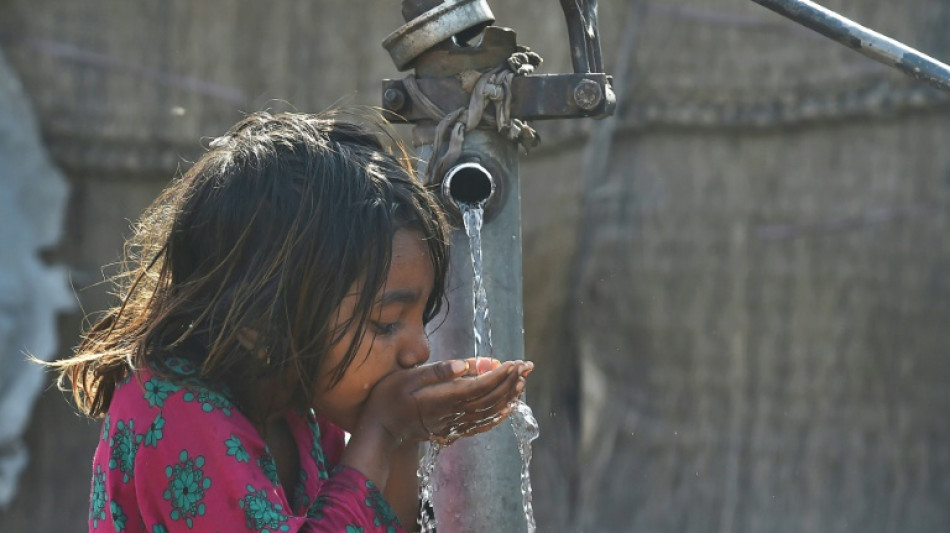
UN warns against thirsty tech to solve water crisis / Photo: ARIF ALI - AFP/File

UN warns against thirsty tech to solve water crisis

The world needs to better manage its freshwater resources but thirsty new technologies touted as solutions could lead to "serious problems" if left unchecked, a UN report warned Friday.

Text size:

Roughly half of the planet's population is facing grave water shortages, with climate change-linked droughts affecting more than 1.4 billion people between 2002 and 2021, the report for the UN cultural agency UNESCO said.

As of 2022, more than 2 billion people were without access to safely managed drinking water, while 3.5 billion people lacked access to decent toilets, it added.

On top of that, pharmaceuticals, hormones and industrial chemicals are seeping into the world's rivers.

The report, titled "Water for prosperity and peace", called for more water education, data collection and investment to address the crisis.

It also highlighted the limits of new computer-led solutions.

"An array of technologies is available to improve both water supply, water use efficiency and the quality and extension of" sanitation services, it said.

But "several rapidly emerging technologies are highly water-intensive and, if left unchecked, could lead to serious problems in the near future."

Artificial intelligence (AI) had "the potential to enhance (river) basin management, emergency response, and the operation and maintenance of water supply and wastewater treatment plants," said the report.

But "AI and related technologies require large volumes of water for computer cooling systems, in addition to the (often water-intensive) energy required to power the equipment."

- Flawed solutions -

While climate change is projected to intensify patterns of record rainfall and drought in coming years, solutions to tackle that problem were also using up too much water, it added.

One such technique, called carbon capture and storage, syphons off CO2 from the exhaust of fossil fuel-fired power plants and heavy industry such as steel and cement factories in a bid to reduce planet-heating carbon pollution.

But "carbon capture and storage systems... are extremely energy- and water-intensive," the report said.

Energy production accounts for between 10 and 15 percent of global water withdrawals, both to extract fossil fuels and cool thermal and nuclear power stations, it said.

While wind, solar and geothermal energy systems are more water-efficient, they still require lithium batteries for power storage.

Yet the extraction of lithium and other critical minerals for solar panels "is usually highly water-intensive, with significant risks to water quality" especially groundwater, ecosystems and local populations, the report said.

L.Muratori--NZN