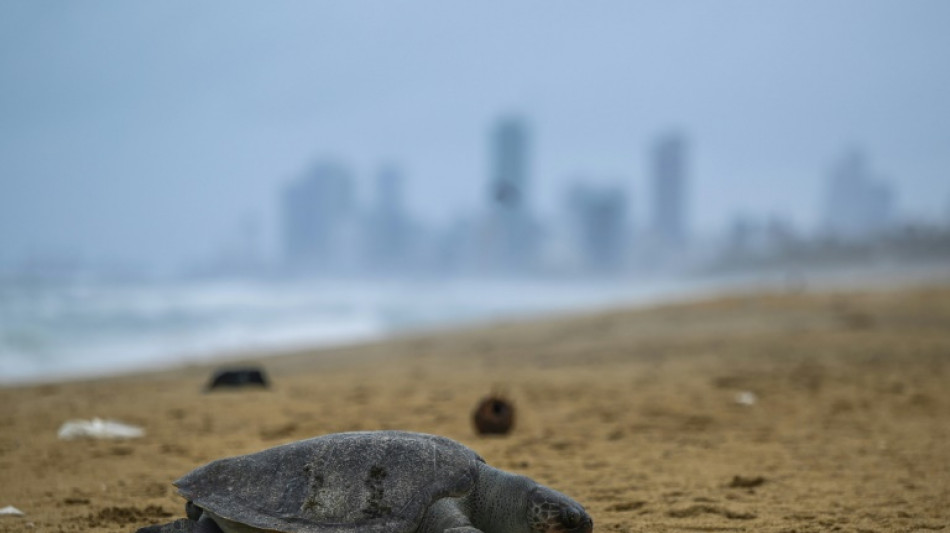
Over 21% of reptile species at risk of extinction / Photo: ISHARA S. KODIKARA - AFP/File
At least one in five reptile species are threatened with extinction, including more than half of turtles and crocodiles, according to the first major global assessment of the world's so-called cold-blooded creatures.
Catastrophic declines in biodiversity across the world are increasingly seen as a threat to life on Earth -- and as important as the interrelated menace of climate change.
Threats to other creatures have been well documented. More than 40 percent of amphibians, 25 percent of mammals and 13 percent of birds could face extinction.
But until now, researchers did not have a comprehensive picture of the proportion of reptiles at risk.
In a new global assessment, published in the journal Nature, researchers assessed 10,196 reptile species and evaluated them using criteria from the International Union for Conservation of Nature (IUCN) Red List of threatened species.
They found that at least 1,829 -- 21 percent -- were either vulnerable, endangered or critically endangered.
"It's just overwhelming the number of species that we see as being threatened," said co-author Neil Cox, who manages of the IUCN-Conservation International Biodiversity Assessment Unit and co-led the study.
"Now we know the threats facing each reptile species, the global community can take the next step by joining conservation plans with global policy agreement and invest in turning around the often too under-appreciated and severe biodiversity crisis."
Crocodiles and turtles were found to be among the most at-risk species, with around 58 percent and 50 percent found to be under threat respectively.
Cox said this was often down to "over-exploitation and persecution".
Crocodiles are killed for their meat and to remove them from human settlements, he said, while turtles are targeted by the pet trade and used for traditional medicine.
- 'Furry, feathery' focus -
Another well-known species at risk is the fearsome king cobra, the world's largest venomous snake. It can grow to around five metres long, feasting on other snakes in forests across a huge area from India to Southeast Asia.
It has been classified as vulnerable, indicating it is "very close to extinction", Cox said at a press briefing on the research.
"It's a real iconic species in Asia and it's such a shame that even widespread species such as this are really suffering and in decline," he said, adding that logging and deliberate attacks by humans were among the biggest threats to the snake.
Bruce Young, chief Zoologist at NatureServe, who co-led the study, said threatened reptiles were largely found concentrated in Southeast Asia, Western Africa, northern Madagascar, the Northern Andes and the Caribbean.
The researchers found reptiles restricted to arid habitats such as deserts, grasslands, and savannas "are significantly less threatened" than those in forest habitats, he explained.
Agriculture, logging, invasive species and urban development were found to be among the threats to reptiles, while people also target them for the pet trade or kill them for food or out of fear.
Climate change was found to pose a direct threat to some 10 percent of reptile species, although researchers said that was likely an underestimate.
The researchers were surprised to find that conservation aimed at other creatures had also benefited reptiles to an extent, although they stressed that the study highlights the need for specific urgent conservation for some reptiles.
Young said the reptile assessment, which involved hundreds of scientists from across the world, took around 15 years to complete and was hampered by a lack of funding.
"Reptiles, to many people, are not charismatic. And there's just been a lot more focus on some of the more furry or feathery species of vertebrates for conservation," he said.
Researchers said they hope the new assessment will help spur international action to halt biodiversity loss.
Ch.Siegenthaler--NZN