Farmers innovate to save Iraq's rice production / Photo: Qassem al-KAABI - AFP
After seeing his once-lush rice field shrink in recent years due to relentless drought, Iraqi farmer Muntazer al-Joufi fought back using tougher seeds and water-saving irrigation techniques.
"It's the first time we're using modern techniques that consume less water" to cultivate rice, Joufi, 40, said as he surveyed his land in the central province of Najaf.
"There is a huge difference" compared to flooding the field, Joufi added, referring to a traditional method by which the land must stay submerged all summer.
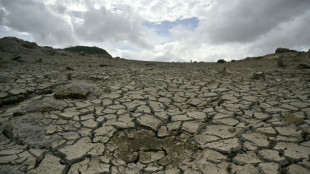
But four consecutive years of drought and declining rainfall have strangled rice production in Iraq, which is still recovering from years of war and chaos, and where rice and bread are a staple of the diet.
The United Nations says Iraq is one of the world's five most climate-vulnerable nations.
Joufi is among farmers receiving support from the agriculture ministry, whose experts have been developing innovative methods to save Iraq's rice production.
Their work involves pairing resilient rice seeds with modern irrigation systems to replace the flooding method in a country hit by water scarcity, heatwaves and dwindling rivers.
Under Iraq's scorching sun, with temperature soaring towards 50 degrees Celsius (122 Fahrenheit), Joufi trudged across the muddy field, pausing to tend malfunctioning sprinklers spread out on his one hectare (2.5 acres) of land.
Iraq's rice crop usually requires between 10 and 12 billion cubic metres of water during the five-month growing period.
However, experts say new methods using sprinklers and drip irrigation use 70 percent less water than the traditional flooding practice, when workers had to ensure fields were totally covered with water.
Now, Joufi said, it takes just "one person to turn on the sprinklers... and water reaches every patch of the land".
- New seeds -
Agriculture ministry experts say that during the years of drought, the area planted with rice has shrunk from more than 30,000 hectares to just 5,000.
"Because of the drought and water scarcity, we must use modern irrigation techniques and new seeds," said Abdel Kazem Jawad Moussa, who leads a team of such experts.
They have been experimenting with different types of sprinklers, drip irrigation, and five different kinds of seeds that withstand drought and consume less water in the hope of finding the best combination.
"We want to learn which seed genotypes respond well" to irrigation using sprinklers instead of flooding, Moussa said.
Last year, Al-Ghari -- a genotype derived from Iraq's prized amber rice -- and South Asian jasmine seeds yielded good results when cultivated with small sprinklers, so experts offered the combination to farmers like Joufi, hoping for the best.
"At the end of the season, we will come up with recommendations," Moussa said, adding that he also hoped to introduce three new types of seeds next year with a shorter planting season.
In addition to drought, the authorities blame upstream dams built by Iraq's powerful neighbours Iran and Turkey for dramatically lowering water levels in the Tigris and Euphrates rivers, which have irrigated Iraq for millennia.
- 'The last good year' -
Water scarcity has forced many farmers to abandon their plots, and authorities have drastically reduced farm activity to ensure sufficient drinking water for Iraq's 43 million people.
In 2022, authorities limited the rice crop areas to 1,000 hectares in Najaf and the southern province of Diwaniyah, the heartlands of planting amber rice.
Recently, farmers in Diwaniyah protested, urging the government to allow them to farm their lands after a two-year halt.
But despite bountiful rains this winter that helped ease water shortages, authorities have only permitted them to cultivate rice on 30 percent of their lands.
"The last good year was 2020," said farmer Fayez al-Yassiri in his field in Diwaniyah where he hopes to forge on growing amber and jasmine rice.
Iraq is the second-largest oil producer in the OPEC cartel, but despite having immense oil and gas reserves, it remains dependent on imports to meet its energy needs and faces chronic power outages.
Yassiri urged the authorities to help, specifically by providing farmers with electricity and pesticides.
His cousin Bassem Yassiri was less hopeful. "Water shortages have ended agriculture in this region," he said.
E.Leuenberger--NZN