Zürcher Nachrichten - Coastal cities alarmingly slow to adapt to climate change: study

EUR -
AED 4.302379
AFN 77.630569
ALL 96.538014
AMD 446.976007
ANG 2.097477
AOA 1074.275501
ARS 1697.812677
AUD 1.7715
AWG 2.111649
AZN 1.988399
BAM 1.95657
BBD 2.359729
BDT 143.286422
BGN 1.95657
BHD 0.441674
BIF 3464.164096
BMD 1.171511
BND 1.514596
BOB 8.096188
BRL 6.491695
BSD 1.171561
BTN 104.976337
BWP 16.479489
BYN 3.443356
BYR 22961.621678
BZD 2.356328
CAD 1.615778
CDF 2997.309068
CHF 0.931329
CLF 0.027194
CLP 1066.824736
CNY 8.248552
CNH 8.240211
COP 4522.280754
CRC 585.130409
CUC 1.171511
CUP 31.04505
CVE 110.308437
CZK 24.328951
DJF 208.632154
DKK 7.469457
DOP 73.388899
DZD 152.378002
EGP 55.864539
ERN 17.57267
ETB 182.00927
FJD 2.675378
FKP 0.875597
GBP 0.875271
GEL 3.145526
GGP 0.875597
GHS 13.456299
GIP 0.875597
GMD 85.520537
GNF 10241.032647
GTQ 8.977535
GYD 245.11652
HKD 9.115606
HNL 30.865154
HRK 7.537036
HTG 153.610488
HUF 386.592292
IDR 19560.724345
ILS 3.757095
IMP 0.875597
INR 104.941054
IQD 1534.804365
IRR 49320.626361
ISK 147.176814
JEP 0.875597
JMD 187.463818
JOD 0.830623
JPY 184.597964
KES 151.019467
KGS 102.44844
KHR 4701.851464
KMF 492.034348
KPW 1054.359906
KRW 1728.822826
KWD 0.359923
KYD 0.976384
KZT 606.298744
LAK 25374.991999
LBP 104916.71342
LKR 362.742839
LRD 207.371657
LSL 19.654239
LTL 3.459169
LVL 0.708636
LYD 6.350501
MAD 10.739129
MDL 19.83481
MGA 5328.098064
MKD 61.574246
MMK 2460.509788
MNT 4160.172387
MOP 9.390298
MRU 46.887463
MUR 54.065043
MVR 18.100085
MWK 2031.59999
MXN 21.112051
MYR 4.77627
MZN 74.866593
NAD 19.654239
NGN 1710.59357
NIO 43.116978
NOK 11.867632
NPR 167.962139
NZD 2.034347
OMR 0.451528
PAB 1.171561
PEN 3.945454
PGK 4.983963
PHP 68.61665
PKR 328.252757
PLN 4.204513
PYG 7860.095097
QAR 4.271282
RON 5.078971
RSD 117.426239
RUB 94.25453
RWF 1705.871727
SAR 4.394365
SBD 9.544009
SCR 17.761994
SDG 704.665134
SEK 10.855317
SGD 1.5146
SHP 0.878937
SLE 28.175218
SLL 24566.01071
SOS 668.363184
SRD 45.034656
STD 24247.918847
STN 24.509651
SVC 10.251037
SYP 12955.112643
SZL 19.651738
THB 36.814765
TJS 10.796251
TMT 4.10029
TND 3.42935
TOP 2.820719
TRY 50.15797
TTD 7.952131
TWD 36.92475
TZS 2923.151059
UAH 49.537807
UGX 4190.650167
USD 1.171511
UYU 45.998113
UZS 14084.546121
VES 330.553221
VND 30825.391347
VUV 141.78771
WST 3.265972
XAF 656.2154
XAG 0.017352
XAU 0.000269
XCD 3.166068
XCG 2.111531
XDR 0.816121
XOF 656.2154
XPF 119.331742
YER 279.283144
ZAR 19.644956
ZMK 10545.005839
ZMW 26.507438
ZWL 377.226164
  • SCS

    0.0200

    16.14

    +0.12%

  • CMSC

    -0.1200

    23.17

    -0.52%

  • BCC

    -2.9300

    74.77

    -3.92%

  • NGG

    -0.2800

    76.11

    -0.37%

  • RYCEF

    0.2800

    15.68

    +1.79%

  • CMSD

    -0.0300

    23.25

    -0.13%

  • RIO

    0.6900

    78.32

    +0.88%

  • GSK

    0.3200

    48.61

    +0.66%

  • RELX

    0.0800

    40.73

    +0.2%

  • RBGPF

    0.0000

    80.22

    0%

  • BCE

    -0.0100

    22.84

    -0.04%

  • JRI

    -0.0500

    13.38

    -0.37%

  • VOD

    0.0400

    12.84

    +0.31%

  • BTI

    -0.5900

    56.45

    -1.05%

  • AZN

    0.7500

    91.36

    +0.82%

  • BP

    0.6300

    33.94

    +1.86%

Coastal cities alarmingly slow to adapt to climate change: study
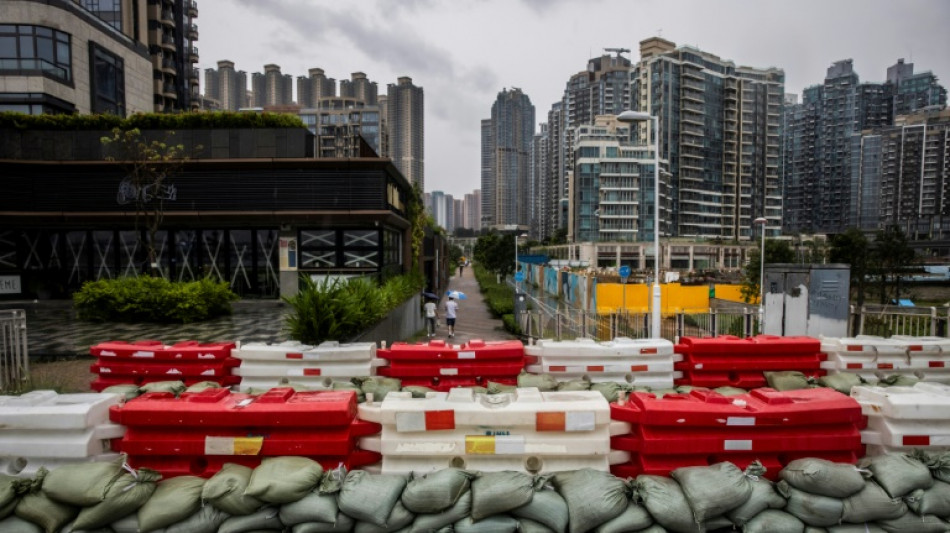
Coastal cities alarmingly slow to adapt to climate change: study / Photo: ISAAC LAWRENCE - AFP/File

Coastal cities alarmingly slow to adapt to climate change: study

Coastal cities are not doing enough to adapt to climate change, taking too long and implementing insufficient measures, according to a major study published this week.

Text size:

While flood barriers and pumping systems are a step in the right direction, "across all regions and income groups, scientifically reported adaptation in coastal cities remains at rather low depth, scope and speed," said the study published in Nature Cities, which looked at 199 cities worldwide.

Given the high exposure and vulnerability of many coastal cities, "this finding is alarming as adaptation to future climate change will require many cities to go beyond business as usual risk management," it said.

Short- and mid-term solutions, as many cities are implementing, could even have an adverse effect, the study warned, leading to a "lock-in and maladaptive path dependency in the long-term."

Instead, adaptation must aim at "transformation" of cities -- a change both of infrastructure and at the institutional level.

Positive models cited in the report include Singapore, Hong Kong and several Swedish cities.

But in the majority, the study found that coastal cities focus primarily on combating sea level rise, various types of flooding, and to a lesser extent the risks posed by erosion and storms.

And for scientists such a scope is too narrow -- cities need to address other problems linked to climate change, such as heatwaves.

- Institutions and households -

By comparing data from 199 cities, listed in 683 scientific articles, the researchers found that the actors driving adaptation changed according to the country and income category.

The richest coastal areas take a technological approach to dealing with climate change and the major players are institutions.

Meanwhile, lower-income cities located mainly in Africa, Asia, and South and Central America, have no other choice but to rely on a "behavioural and cultural" effort for populations to adapt.

In lower-income coastal cities, there is a lack of institutional and/or technological support, making it "more likely individuals/households are reported as prime adaptation actors."

The poorest economies remain under-represented in the scientific literature, which complicates their adaptation.

"A considerable gap in research that needs to be addressed urgently," the study warned.

X.Blaser--NZN