Covid lessons learned? UN summit mulls plan for healthy planet, and humans / Photo: Ronny Adolof Buol - AFP
The Covid-19 and Ebola outbreaks brought into stark relief the harms that can come to humans if we interfere too much with nature, placing ourselves in contact with animals carrying unknown pathogens.
At the COP16 biodiversity summit in Cali, Colombia, experts and activists have urged world leaders world to learn the lessons from the estimated seven million lives lost to Covid, and thousands more due to Ebola.
It is up to governments to act, and there is no time to waste.
The IPBES intergovernmental science and policy body on biodiversity has already warned that "future pandemics will emerge more often, spread more rapidly, do more damage to the world economy and kill more people than Covid-19" unless humankind changes course.
At the UN summit in Cali, delegates are working on a "biodiversity and health action plan" proposed for adoption by the 196 member nations of the Convention on Biological Diversity (CBD).
It includes commitments to limit harmful agriculture and forestry, reduce the use of pesticides, fertilizers and other chemicals damaging to nature, and reduce the use of antibiotics in farm animals.
The plan is voluntary, however, and parties remain stuck on a few details.
Agreement, WWF wildlife policy manager Colman O’Criodain told AFP, "may be at the expense of watered down language on some issues, such as intensive agriculture and use of antimicrobials" -- which affect biotech and agribusiness, both big money-spinners.
For Sue Lieberman, vice president of the Wildlife Conservation Society pushing for the plan's adoption, "we need to change our relationship with nature if we want to prevent more epidemics and pandemics."
- 'When, not if' -
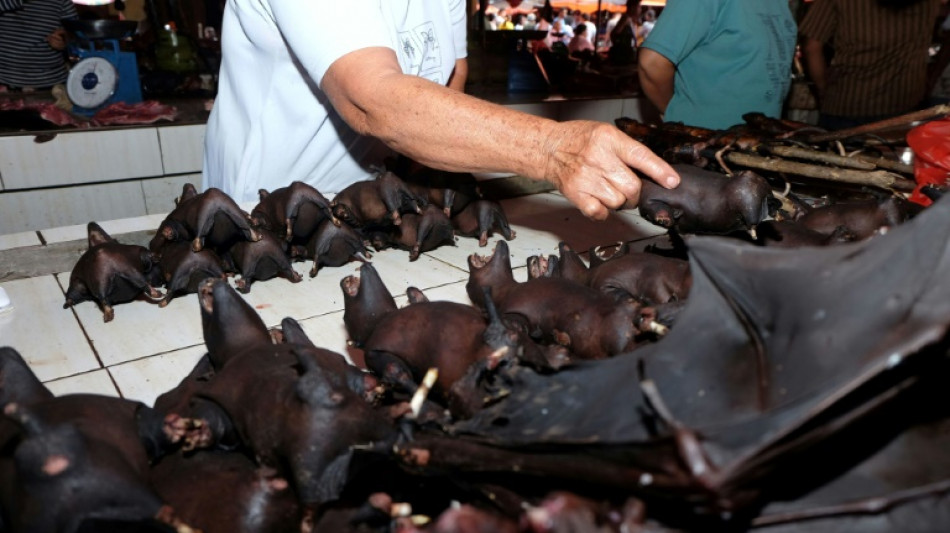
So-called zoonotic diseases spread between animals and people, as can happen when humans encroach into formerly virgin forests, or transport and trade wild animals for their meat.
Covid-19, for example, is believed by many scientists to have emerged at the Wuhan wet market in China, where wild animal meat was illegally sold for consumption.
Ebola, an often fatal hemorrhagic fever that has killed some 15,000 people in Africa, is believed to have its natural host in a bat, which can spread the virus to humans directly or via other animals.
"Deforestation, intensive agriculture, wildlife trade and exploitation are the primary drivers of biodiversity loss and zoonotic disease," Adeline Lerambert of the Born Free wildlife NGO told AFP.
WWF's O'Criodain added: "The further humans and their livestock penetrate into what were intact, undisturbed areas of high biodiversity, the more likely they are to encounter new strains of viruses, especially because viruses are constantly mutating."
The 2020 IPBES report had called for a "transformative change in the global approach to dealing with infectious diseases."
"Covid-19 is at least the sixth global health pandemic since the Great Influenza Pandemic of 1918, and although it has its origins in microbes carried by animals, like all pandemics its emergence has been entirely driven by human activities," it said.
The report estimated that some 1.7 million currently "undiscovered" viruses exist in mammals and birds -- of which up to 827,000 could have the ability to infect people.
As measures to prevent "the spillover of new diseases," the IPBES advocates for expanding protection of natural areas and reducing the unsustainable exploitation of resources.
Will the COP16 action plan be up to the task?
For Lieberman of the Wildlife Conservation Society, it is not ideal that the plan is voluntary, meaning "there's no consequences if a government says: 'never mind, we'll ignore it.' It's up to each country".
But she is hopeful that fear of a repeat of Covid-19 will inspire action nevertheless.
"If nothing is done, if nothing changes, there will be another pandemic. The question is when, not if," Lieberman warned.
B.Brunner--NZN