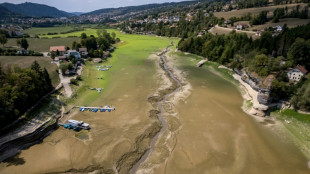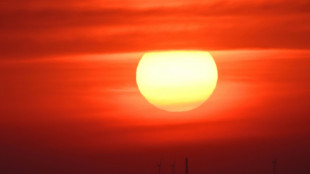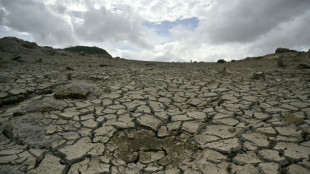
June was hottest on record in western Europe: EU monitor / Photo: Thibaud MORITZ - AFP/File
Western Europe sweltered through its hottest June on record last month, as "extreme" temperatures blasted the region in punishing back-to-back heatwaves, the EU climate monitor Copernicus said Wednesday.
Globally, this past June was the third warmest on record, continuing a blistering heat streak in recent years as the planet warms as a result of humanity's emissions of greenhouse gases.
The previous hottest June was in 2024 and the second hottest was in 2023, the Copernicus Climate Change Service (C3S) said.
Sweltering extremes were particularly pronounced in Europe, which is warming several times faster than the global average.
Millions of people were exposed to high heat stress across parts of the continent as daily average temperatures in western Europe climbed to levels rarely seen before -- and never so early in the summer.
Several countries recorded surface temperatures above 40 degrees Celsius, with heat of up to 46C in Spain and Portugal, Copernicus said.
Samantha Burgess, the EU monitor's Strategic Lead for Climate, said the impact of the heatwaves in Europe was "exceptional", intensified by record sea surface temperatures in the western Mediterranean -- which hit an all-time daily maximum in June.
"In a warming world, heatwaves are likely to become more frequent, more intense and impact more people across Europe," she said.
The two heatwaves -- from June 17 to 22, and again from June 30 to July 2 -- were linked to heat domes trapping warm air over affected regions, prolonging the stifling weather, and worsening pollution and wildfire conditions.
Portugal, Spain, France, Italy, and much of the Balkans saw some of the hottest "feels-like" temperatures, which measure the impact on the human body by taking into account factors like humidity.
Maximum feels-like temperatures north of Lisbon hit 48C, around 7C above average and associated with "extreme heat stress", said Copernicus.
Sea surface temperatures across the western Mediterranean were "exceptionally high" in the month, some 5C above average in some areas, with temperatures surging to a record 27C on June 30.
The higher water temperatures reduced nighttime air cooling along the coasts, contributed to higher humidity, and harmed marine life, Copernicus said.
- Heat, fires and floods -
An AFP analysis based on Copernicus data, found that 12 countries and some 790 million people around the world experienced record heat last month.
Dangerous heat blanketed parts of the United States, while in China, 102 weather stations logged the hottest-ever June day, with some measuring temperatures above 40C, according to state media.
June saw a catalogue of weather extremes across the world.
Devastating wildfires blazed across parts of Canada and southern Europe, while deadly flooding swept areas of South Africa, China and Pakistan.
Copernicus said it was drier than average in parts of western Europe, while particularly arid conditions were seen in North America, eastern and southern Africa, the Arabian Peninsula, parts of central and eastern Asia and southern South America.
Parts of the world that saw wetter-than-average conditions included the southern US, parts of China and southern Brazil.
- Warming limits -
Global warming, driven largely by the burning of fossil fuels, is not just about rising temperatures but the knock-on effects of the extra heat on the atmosphere and seas.
Warmer air can hold more water vapour, and warmer oceans mean greater evaporation, resulting in more intense downpours and storms.
The Copernicus dataset draws on billions of measurements from satellites, ships, aircraft and weather stations.
It has recorded extraordinary heat over the last two years.
While this was partly stoked by warmer El Nino conditions, temperatures have remained at record or near-record levels even after that faded last year.
Copernicus said that June was 1.3C above the temperatures of the pre-industrial era -- roughly the estimated current level of overall global warming.
But temperature extremes in recent years mean that it is one of only three months in the last 24 to have dipped below 1.5C warming.
The Paris climate deal saw countries agree to try to limit long term global warming to 1.5C, beyond which major and lasting climate and environmental changes become more likely.
But many scientists now say it will be almost impossible to stay under that level, with a breach expected around 2030 or before, leaving the world potentially facing the unprecedented challenge of trying to bring warming back down.
F.Carpenteri--NZN