Toxic Balkan wildfires ignite in poorly managed dumps / Photo: Vladimir Zivojinovic - AFP/File
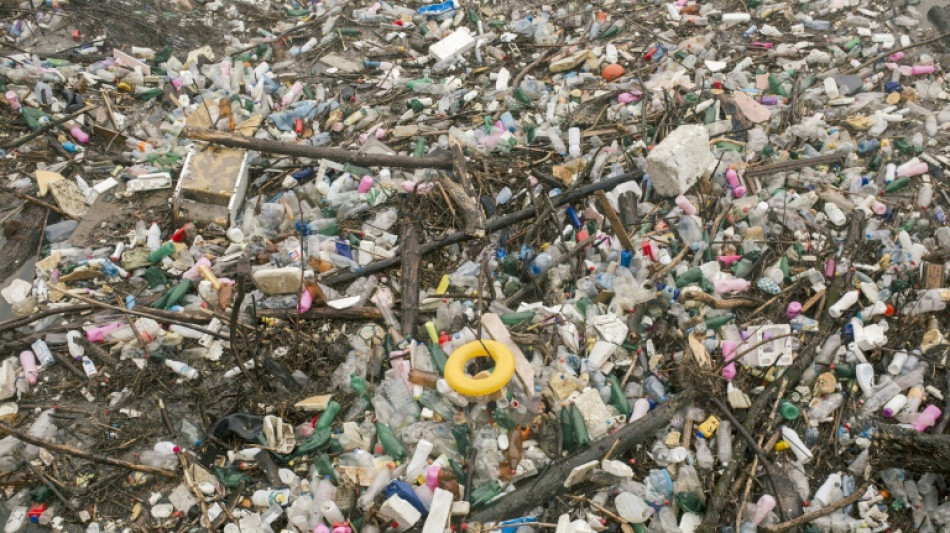
As blistering summer heat sweeps across the Balkans, poorly managed and illegal dumpsites are bursting into flames, sparking wildfires and smothering towns and cities with toxic smoke.
The municipal Golo Brdo dump, deep in the lush forests of southeast Serbia, burned for days after it ignited under the scorching sun in early July.
In the small town of Lukare, about seven kilometres (4.3 miles) from the blaze, the air became foul and unbreathable.
Local children were kept indoors for fear of the deadly diseases that many people nearby already suffer, resident Haris Ibrahimovic told AFP.
"Honestly, no one cares whether we're exposed or not," Ibrahimovic said, frustrated by the inaction and poor monitoring by the local government.
This fire was just one of hundreds of blazes that have torn through parts of Serbia since the start of summer.
Authorities said many fires started at landfill sites, where the improper disposal and management of waste is a long-standing issue.
Although Golo Brdo is a government-run site, Ibrahimovic said what is dumped there was "absolutely uncontrolled", and it caught fire several times since opening in 1999 -- each time burning for around two weeks.
- 'Highly toxic' -
When piles of organic waste aren't stored properly, they can create pockets of methane that ignite under intense heat and burn through the dump's readily available fuel, Aleksandar Jovovic, professor at Belgrade's faculty of mechanical engineering, told AFP.
Jovovic said the issue had grown over decades, and fixing it would mean reforming the entire waste management system to sort and process trash safely.
According to Serbia's environment ministry, less than half the country can access just a dozen properly managed, or "sanitary", landfill sites.
Most waste instead ends up either at an unsanitary site like Golo Brdo, with the unsorted trash piles described by Jovovic, or in one of the 2,500 illegal dumps.
The issue is region-wide, with research by Lloyd's Register finding that Balkan households separate their trash at the lowest rates in the world.
According to the 2024 poll, in Kosovo, less than 20 per cent of households separate their trash. Montenegro, Bulgaria, Bosnia and Serbia all closely follow in the rankings, with households recycling at rates lower than 40 percent.
The impact of poorly managed waste extends far beyond those near a dump, Ibrahimovic said.
Fumes from last month's fire reached two cities around 10 kilometres (5 miles) from Golo Brdo, while the runoff into a local river is "literally black".
"We have a series of cases around the landfill where people are getting lung cancer," he said.
"We're not claiming that it's all because of the landfill, but it certainly has an impact."
Former director of the World Health Organisation's European Centre for Environment and Health, Elizabet Paunovic, said that the impacts of garbage fires on local communities were well-documented.
These blazes belch toxic gases, leach microparticles and pump heavy metals into the atmosphere, while fumes from burning plastic were "highly toxic", Paunovic told AFP.
For people living nearby, these toxins, which can cause congenital disabilities, will often go unnoticed due to poor monitoring by authorities, she said.
- Beyond 'promises'-
Balkan nations, bolstered by foreign investment, are intensifying their efforts to address waste management, but they still lag behind the rest of Europe.
In 2021, Belgrade's Vinca, then one of Europe's largest open dumps, was redeveloped.
Elsewhere in the region, new landfills are planned or have recently opened.
In response to the series of fires at landfills this summer, the government asked local authorities to increase monitoring as an emergency measure.
But progress remains slow, often hindered by aging infrastructure and a lack of accountability.
In Albania, three long-promised incinerators never arrived, despite millions of euros invested in a project now mired in corruption allegations.
At the proposed site, mounds of garbage burned for almost a week in June, blanketing parts of the nearby city of Elbasan in noxious fumes.
"The way this waste is managed is a real corruption case that goes against all the functional safety standards," local environmental expert Ahmet Mehmeti said.
Around 20 people have been charged in a vast scandal linked to the incinerators, but little has changed at the landfill sites.
For those like Ibrahimovic living in the shadow of smoke clouds, promises to fix or even close landfill sites are not new -- he said authorities first vowed to close Golo Brdo in 2018.
After years of protesting, including by blockading the dump, he is now preparing a lawsuit to force change.
"It can only be closed on paper, not through agreements, not through promises."
P.E.Steiner--NZN