Zürcher Nachrichten - Nearly half the world's children exposed to three or more climate risks: UNICEF

EUR -
AED 4.248565
AFN 75.785455
ALL 92.840476
AMD 423.075589
ANG 2.070526
AOA 1061.996261
ARS 1725.818393
AUD 1.633312
AWG 2.083792
AZN 1.954527
BAM 1.956956
BBD 2.328917
BDT 141.935094
BGN 1.962456
BHD 0.436084
BIF 3456.851777
BMD 1.156859
BND 1.479063
BOB 13.475963
BRL 5.988133
BSD 1.156353
BTN 110.278162
BWP 15.578148
BYN 3.517091
BYR 22674.428015
BZD 2.325474
CAD 1.604927
CDF 2629.539733
CHF 0.938814
CLF 0.02684
CLP 1056.281293
CNY 7.800927
CNH 7.799211
COP 3615.854016
CRC 520.238881
CUC 1.156859
CUP 30.656752
CVE 110.334964
CZK 24.202642
DJF 205.901665
DKK 7.475539
DOP 67.684089
DZD 153.61445
EGP 58.162455
ERN 17.352879
ETB 187.043321
FJD 2.560649
FKP 0.857206
GBP 0.854485
GEL 3.019582
GGP 0.857206
GHS 12.661481
GIP 0.857206
GMD 85.034506
GNF 10157.440905
GTQ 8.822289
GYD 241.862914
HKD 9.07828
HNL 30.998192
HRK 7.535311
HTG 151.248523
HUF 362.438588
IDR 20581.670858
ILS 3.411651
IMP 0.857206
INR 110.363672
IQD 1514.786725
IRR 1590203.33482
ISK 142.18916
JEP 0.857206
JMD 183.119283
JOD 0.820194
JPY 183.914485
KES 149.685774
KGS 101.167326
KHR 4678.764619
KMF 493.978398
KPW 1041.173055
KRW 1632.009301
KWD 0.357099
KYD 0.963628
KZT 536.559512
LAK 26096.420024
LBP 103542.882097
LKR 384.780644
LRD 209.876713
LSL 18.705915
LTL 3.415903
LVL 0.699772
LYD 7.362732
MAD 10.724893
MDL 20.051061
MGA 4977.941399
MKD 61.570106
MMK 2428.724962
MNT 4161.604965
MOP 9.345722
MRU 46.43584
MUR 54.488414
MVR 17.873537
MWK 2004.984719
MXN 19.662472
MYR 4.727036
MZN 73.934634
NAD 18.705753
NGN 1573.385539
NIO 42.557354
NOK 10.932891
NPR 176.455943
NZD 1.964086
OMR 0.444809
PAB 1.156283
PEN 3.900107
PGK 5.194339
PHP 70.990603
PKR 321.170209
PLN 4.306331
PYG 6940.100812
QAR 4.215309
RON 5.242535
RSD 117.340344
RUB 97.26666
RWF 1700.407637
SAR 4.346577
SBD 9.311072
SCR 15.884866
SDG 694.692625
SEK 11.000209
SGD 1.478587
SHP 0.857077
SLE 28.34026
SLL 24258.744935
SOS 660.830462
SRD 43.639594
STD 23944.636756
STN 24.51597
SVC 10.117416
SYP 15041.475047
SZL 18.704184
THB 38.318633
TJS 10.678009
TMT 4.060574
TND 3.390103
TOP 2.785438
TRY 55.395282
TTD 7.834103
TWD 36.955268
TZS 3065.278426
UAH 51.727948
UGX 4295.798263
USD 1.156859
UYU 46.329578
UZS 13765.252691
VES 890.907313
VND 30250.116375
VUV 137.217304
WST 3.162453
XAF 656.344825
XAG 0.017805
XAU 0.000265
XCD 3.126468
XCG 2.083957
XDR 0.817959
XOF 656.378888
XPF 119.331742
YER 274.412202
ZAR 18.699005
ZMK 10413.115684
ZMW 21.852913
ZWL 372.507988
  • BCC

    -0.1200

    84.13

    -0.14%

  • RBGPF

    -0.8200

    71.34

    -1.15%

  • RIO

    -3.0200

    98.2

    -3.08%

  • CMSC

    0.0250

    21.475

    +0.12%

  • CMSD

    0.0000

    21.59

    0%

  • BCE

    0.1900

    23.32

    +0.81%

  • RELX

    0.1200

    34.67

    +0.35%

  • GSK

    0.1500

    50.45

    +0.3%

  • BTI

    1.5100

    57.35

    +2.63%

  • JRI

    -0.0300

    12.68

    -0.24%

  • AZN

    -1.2600

    157.24

    -0.8%

  • RYCEF

    -0.3900

    20.71

    -1.88%

  • BP

    -0.1000

    42.83

    -0.23%

  • VOD

    0.1300

    16.22

    +0.8%

  • NGG

    0.5200

    81.2

    +0.64%

Nearly half the world's children exposed to three or more climate risks: UNICEF
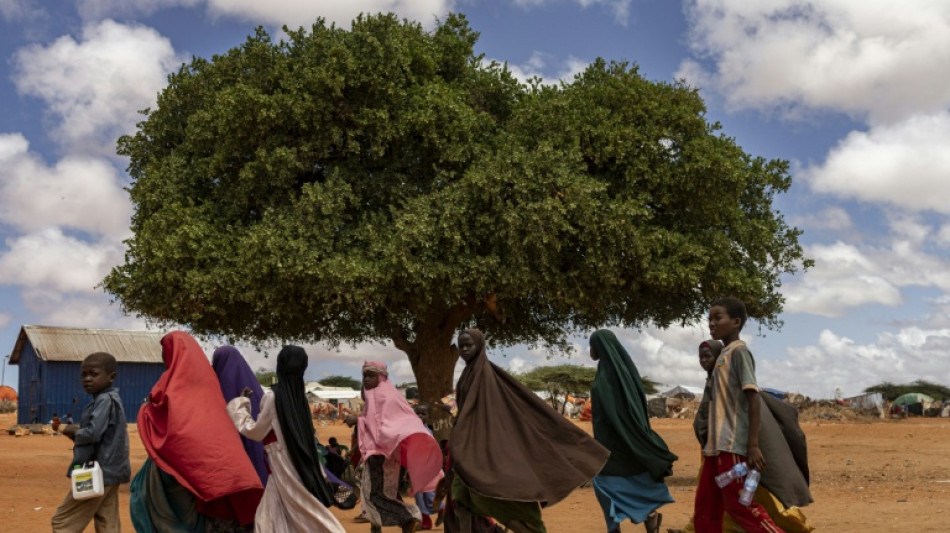
Nearly half the world's children exposed to three or more climate risks: UNICEF / Photo: SIMON MAINA - AFP

Nearly half the world's children exposed to three or more climate risks: UNICEF

More than one billion children face at least three overlapping climate hazards, UNICEF warned Monday, while highlighting the disproportionate impact in some regions of the world.

Text size:

For the report, the UN agency cross-referenced data showing where the roughly 2.4 billion children on the planet live with the geographic distribution of the eight most common climate impacts. They are coastal flooding, river flooding, drought, tropical storms, heat waves -- at least three days above a high temperature threshold, which varies by country -- extreme heat, wildfires and sandstorms.

The report primarily focuses on the 1.1 billion children who are exposed to at least three risks, with the most common combination being drought, extreme heat (above 35 degrees Celsius) and heat waves.

That combination affects some 296 million children, including 74 million in Nigeria, 34 million in Pakistan and 32 million in India.

The number of children in this three-or-more category has increased sharply over the past 20 years.

Almost all children -- some 2.3 billion -- are exposed to at least one risk. Two billion are exposed to at least two, while 364 million face at least four.

Of the 123,000 children exposed to seven or more climate hazards, some 46,000 are in Myanmar.

"Children are at the forefront of the impact of climate change," said UNICEF chief Catherine Russell.

As for the worst place for a child, "there isn't a super short answer," one of the report authors, Tom Slaymaker, told AFP.

- 'Hot spots' -

"But they're not all equal," Slaymaker said. "We do see some hot spots... it's really concentrated in Sub-Saharan Africa and parts of South Asia."

Countries with large populations of children -- including Bangladesh, India, Nigeria and Pakistan -- are at the top of the list for the number of children exposed to at least three hazards.

But in sheer percentage terms, countries in Sub-Saharan Africa -- particularly the Sahel -- have the largest proportion of children affected by hazards. The impacts are often exacerbated by governments' inability to cope with climate hazards.

Chad, for example, faces a humanitarian crisis with limited access to water, electricity and food. According to the report, more than 95 percent of kids in the country are exposed to at least three hazards -- one of the highest proportions in the world.

Other particularly vulnerable countries include 39 island states that face challenges such as limited freshwater, import dependence, and inability to easily shelter elsewhere after a disaster such as a hurricane.

- Nowhere to hide -

No country is truly spared, the report shows.

"In many countries, there will be small pockets of the population which are not exposed to these hazards," Slaymaker said. "They tend to be in the northern hemisphere, particularly so, parts of Scandinavia."

But that is because the report looks only at the eight most common risks worldwide, he stressed, noting that children in those countries may face other threats not covered in the report, such as melting glaciers or thawing permafrost.

abd/pnb/ksb/dw

I.Widmer--NZN