US miner KoBold bets on AI to gain edge in DR Congo mineral hunt / Photo: GLODY MURHABAZI - AFP
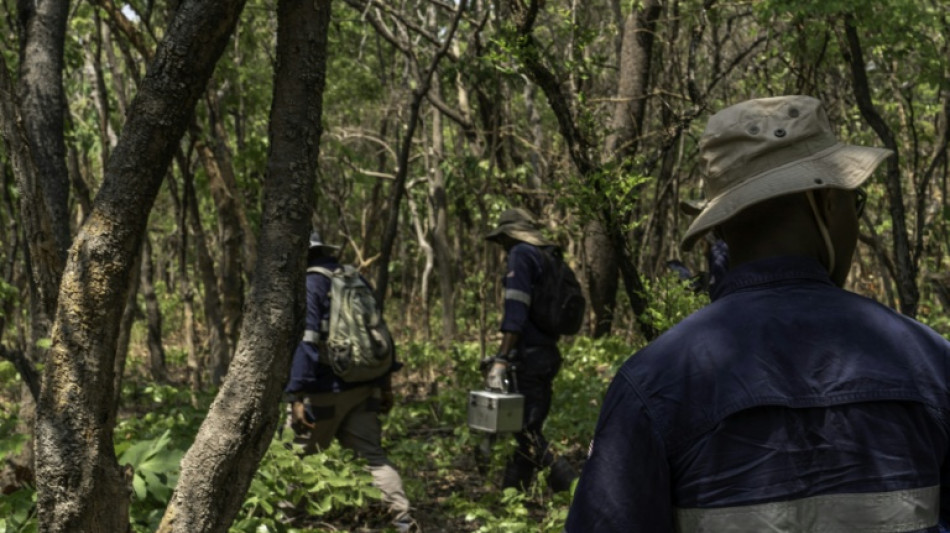
Geologists from US mining company KoBold Metals are pushing deep into the Congolese bush, hoping a cutting-edge army of "explorers" directed by AI will help give them an edge in the race for critical minerals.
Their gear includes high-precision GPS units and tablets connected to an AI system running in real time on servers thousands of kilometres away at the company's California base.
The arrival in the Democratic Republic of Congo (DRC) of the young company, founded in 2018 with backing from investors including Bill Gates and Jeff Bezos, is part of a US strategy to secure supplies of strategic minerals and reduce China's dominance in the sector.
China has invested massively in the DRC since the 2000s and controls 70 to 80 percent of the Congolese copper and cobalt market.
The central African country is the world’s second-largest producer of copper and the top producer of cobalt, which have become crucial for powering so-called clean energy, including rechargeable batteries.
Yet the subsoil of the vast country of more than 2.3 million square kilometres (888,000 square miles) remains largely unexplored.
"The ideal conditions for major discoveries," says KoBold, which is betting on lithium, an essential component in the production of electric cars.
Global demand for lithium is expected to more than double by 2030, according to projections by the International Energy Agency.
"We have very encouraging results," said Benjamin Katabuka, KoBold's managing director in the DRC, without giving more details.
The American company is still only at the exploration stage and hopes to move into production in a few years' time.
KoBold has set up its base in Manono, a remote town in the southeastern DRC, a region that is home to some of the world's most coveted deposits of critical minerals.
- Waiting for investment -
KoBold has obtained 14 exploration permits, covering an area of more than 3,000 square km, since 2025, prior to the signing in December of a strategic partnership agreement between Washington and Kinshasa.
The deal is the economic counterpart to US support aimed at trying -- so far unsuccessfully -- to restore peace in the eastern DRC, which has been torn by conflict for 30 years.
To date, only one other American company, Virtus Minerals, holds assets in the DRC.
"Almost a year since the agreement was signed, but American investment hasn't poured in," Katabuka said.
According to mining and diplomatic sources, talks are to be held to work out how to attract American investment to a Congolese mining sector riven with corruption and marred by financial and environmental scandals.
KoBold plans to invest more than $50 million in the DRC by early 2027.
Its teams have already been hard at work since April, collecting an average of 2,000 soil samples per week.
At depths of just a few dozen centimetres, the analyses can detect a specific "geochemical signature" indicating the presence of pegmatite, the mineral from which lithium is extracted.
KoBold's AI system is then able, based on these data, to create predictive models.
"Once we've determined the presence of lithium at very specific points, that allows us to target the drilling," Kevin Tambwe, the lab manager, said.
The AI system has ingested huge amounts of data: historical geological maps, old drill logs sometimes dating back to the colonial era, and satellite images.
KoBold hopes that its technology will enable it to compete with giants such as China's Zijin, which shipped its first tons of concentrate in June from a huge mine adjacent to the US company's permits.
- Holes left behind -
In Manono, the arrival of the Americans is raising hopes, but in a region where mines have taken a toll on people for over a century, distrust remains.
Vicar general Wilson Katende hopes that "competition" will force an improvement in working conditions.
"Right now, you don't feel like people here have been fairly paid," he said, alluding to miners often earning less than $200 a month at the operations already extracting resources in the area.
On the streets, activity is sluggish. Motorbike taxi drivers drop workers off at Chinese or Indian mines for a few dollars. The poverty rate in the region is 88 percent, according to official statistics.
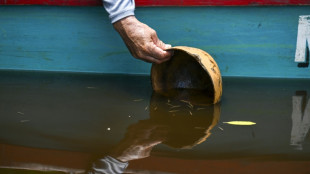
The Lukushi River, which runs through the territory, has been diverted to serve mining operations.
Elders recall that in the past, this tributary of the mighty Congo River was teeming with fish and fed the town.
Soldiers from the Congolese army are visible. The presence of Mai-Mai, local militias, has recently been reported in nearby villages.
Manono was founded in the early 20th century with tin production by Belgian colonisers.
But with plummeting commodity prices and years of turbulence following independence in 1960, the town fell into poverty.
"Manono lacks drinking water. Manono is not electrified," territory administrator Cyprien Kitanga told AFP.
In the past, mining companies "came, took the ore, and left holes behind for the children of Manono", he added.
The recent discovery of lithium has shaken the town from its torpor.
But the local workforce condemns inhumane working conditions.
"We want to go and work for the Americans," said one man in his work clothes, who declined to give his name.
Earlier that same morning, miners burned tyres at the entrance to the mine operated by China's Zijin to protest against meagre wages and endless workdays.
Zijin told AFP in a statement it had "engaged with employee representatives" and agreed measures to address their concerns.
cld/pdw/kjm
N.Zaugg--NZN