Zürcher Nachrichten - Heatwaves and wildfires to worsen air pollution: UN

EUR -
AED 4.15888
AFN 72.475623
ALL 91.876073
AMD 412.282825
ANG 2.027479
AOA 1039.579009
ARS 1726.983441
AUD 1.630218
AWG 2.041221
AZN 1.916389
BAM 1.954271
BBD 2.28626
BDT 139.570778
BGN 1.906394
BHD 0.427956
BIF 3403.796443
BMD 1.132439
BND 1.449391
BOB 13.66149
BRL 5.871019
BSD 1.135087
BTN 108.801298
BWP 15.991133
BYN 3.416251
BYR 22195.800476
BZD 2.282963
CAD 1.613283
CDF 2615.933623
CHF 0.947008
CLF 0.027921
CLP 1102.474236
CNY 7.592719
CNH 7.603692
COP 3753.796809
CRC 518.48281
CUC 1.132439
CUP 27.242959
CVE 110.180237
CZK 24.441084
DJF 202.137353
DKK 7.475715
DOP 67.495691
DZD 151.656518
EGP 58.816628
ERN 16.986582
ETB 185.414109
FJD 2.546572
FKP 0.857246
GBP 0.854458
GEL 2.950034
GGP 0.857246
GHS 13.286778
GIP 0.857246
GMD 83.800313
GNF 9908.839272
GTQ 8.672328
GYD 237.507282
HKD 8.885619
HNL 30.47348
HRK 7.533887
HTG 148.560463
HUF 366.264113
IDR 20313.687191
ILS 3.48072
IMP 0.857246
INR 108.68168
IQD 1487.049427
IRR 1918116.346315
ISK 136.991323
JEP 0.857246
JMD 179.645451
JOD 0.802878
JPY 179.090101
KES 146.900338
KGS 99.030303
KHR 4603.478808
KMF 492.610621
KPW 1019.19528
KRW 1539.929897
KWD 0.349958
KYD 0.945968
KZT 499.313667
LAK 25476.937922
LBP 101650.408497
LKR 375.099838
LRD 194.68023
LSL 18.590331
LTL 3.343797
LVL 0.685001
LYD 7.260158
MAD 11.011229
MDL 20.153784
MGA 4985.988098
MKD 61.526852
MMK 2377.668859
MNT 4075.840209
MOP 9.175101
MRU 45.46142
MUR 54.085412
MVR 17.496778
MWK 1968.316223
MXN 20.483444
MYR 4.627828
MZN 72.374534
NAD 18.591315
NGN 1502.58797
NIO 41.778044
NOK 10.909768
NPR 174.075932
NZD 2.013601
OMR 0.435428
PAB 1.135127
PEN 3.907842
PGK 5.137866
PHP 71.062237
PKR 314.457776
PLN 4.362437
PYG 6640.656693
QAR 4.138316
RON 5.273997
RSD 117.54941
RUB 94.417066
RWF 1676.05139
SAR 4.257169
SBD 9.096481
SCR 15.668675
SDG 681.152935
SEK 11.347382
SGD 1.448655
SHP 0.85593
SLE 27.914406
SLL 23746.666218
SOS 648.678051
SRD 42.604049
STD 23439.196771
STN 24.480302
SVC 9.932315
SYP 14723.969563
SZL 18.581049
THB 38.073198
TJS 10.454857
TMT 3.97486
TND 3.36631
TOP 2.726641
TRY 55.528459
TTD 7.70077
TWD 36.176097
TZS 2989.641786
UAH 50.705501
UGX 4449.576881
USD 1.132439
UYU 45.734816
UZS 13428.491413
VES 971.62009
VND 29406.038315
VUV 134.769599
WST 3.135179
XAF 655.957
XAG 0.01852
XAU 0.000271920184
XCD 3.060473
XCG 2.045817
XDR 0.800693
XOF 655.957
XPF 119.331742
YER 267.705212
ZAR 18.623601
ZMK 10193.317607
ZMW 22.192143
ZWL 364.644832
SSP 6469.160711
MXV 2.31868
  • CMSC

    -0.2228

    19.53

    -1.14%

  • RBGPF

    0.0000

    65

    0%

  • BP

    0.4700

    43.99

    +1.07%

  • GSK

    -1.1800

    48.17

    -2.45%

  • BCE

    0.2000

    20.34

    +0.98%

  • CMSD

    -0.1200

    19.81

    -0.61%

  • BCC

    -1.8200

    74.15

    -2.45%

  • NGG

    0.8800

    75.82

    +1.16%

  • RIO

    0.0100

    94.17

    +0.01%

  • BTI

    -0.4500

    54.4

    -0.83%

  • RYCEF

    -0.7300

    19.08

    -3.83%

  • JRI

    0.0000

    10.77

    0%

  • RELX

    -0.0600

    33.18

    -0.18%

  • AZN

    -2.7400

    161.47

    -1.7%

  • VOD

    -0.1800

    16.15

    -1.11%

Heatwaves and wildfires to worsen air pollution: UN
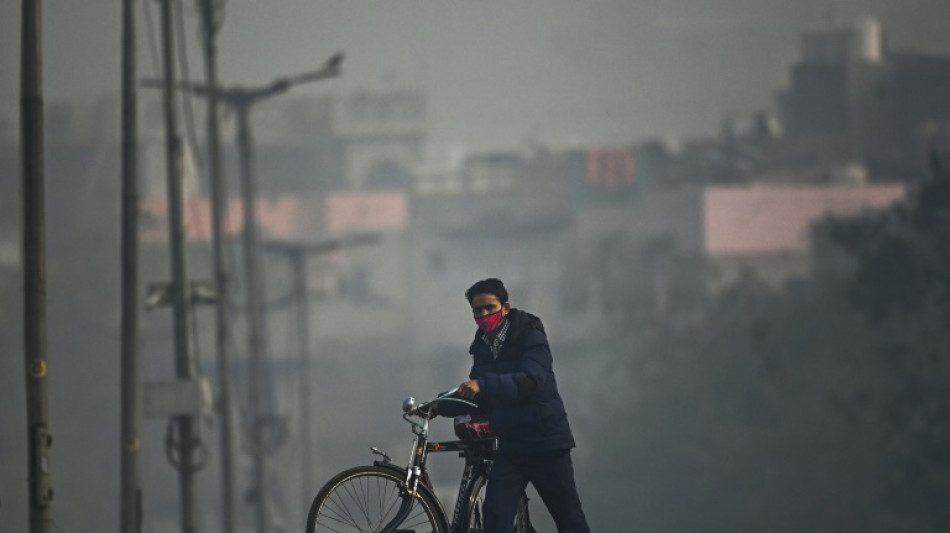
Heatwaves and wildfires to worsen air pollution: UN / Photo: Jewel SAMAD - AFP

Heatwaves and wildfires to worsen air pollution: UN

More frequent and intense heatwaves and wildfires driven by climate change are expected to worsen the quality of the air we breathe, harming human health and ecosystems, the UN warned Wednesday.

Text size:

A new report from the UN's World Meteorological Organization (WMO) cautioned that the interaction between pollution and climate change would impact hundreds of millions of people over the coming century, and urged action to rein in the harm.

The WMO's annual Air Quality and Climate Bulletin examined the impacts of large wildfires across Siberia and western North America in 2021, finding that they produced widespread increases in health hazards, with concentrations in eastern Siberia reaching "levels not observed before".

Tiny particles with a diameter of less than 2.5 micrometres (PM2.5) are considered particularly harmful since they can penetrate deep into the lungs or cardiovascular system.

"As the globe warms, wildfires and associated air pollution are expected to increase, even under a low emissions scenario," WMO chief Petteri Taalas said in a statement.

"In addition to human health impacts, this will also affect ecosystems as air pollutants settle from the atmosphere to Earth's surface."

- 'Foretaste of the future' -

At the global scale, there has been a reduction over the past two decades in the total burned area, as a result of decreasing numbers of fires in savannas and grasslands.

But WMO said that some regions like western North America, the Amazon and Australia were seeing far more fires.

Even beyond wildfires, a hotter climate can drive up pollution and worsen air quality.

Taalas pointed out that severe heatwaves in Europe and China this year, coupled with stable high atmospheric conditions, sunlight and low wind speeds, had been "conducive to high pollution levels," warning that "this is a foretaste of the future."

"We expect a further increase in the frequency, intensity and duration of heatwaves, which could lead to even worse air quality," he said.

This phenomenon is known as the "climate penalty", which refers to how climate change amplifies ground-level ozone production, which negatively impacts air quality.

In the stratosphere, ozone provides important protection from cancer-causing ultraviolet rays, but closer to the ground it is very hazardous for human health.

If emission levels remain high, this climate penalty is expected to account for "a fifth of all surface ozone concentration increase," WMO scientific officer Lorenzo Labrador told reporters.

He warned that most of that increase will happen over Asia, "and there you have about one quarter of the entire world population."

The WMO called for action, stressing that "a worldwide carbon neutrality emissions scenario would limit the future occurrence of extreme ozone air pollution episodes."

The report points out that air quality and climate are interconnected, since chemicals that worsen air quality are normally co-emitted with greenhouse gases.

"Changes in one inevitably cause changes in the other," it said.

D.Smith--NZN