Zürcher Nachrichten - Australia to stockpile critical minerals in strategic reserve

EUR -
AED 4.344094
AFN 74.520932
ALL 96.737874
AMD 444.32222
ANG 2.117019
AOA 1084.691963
ARS 1627.333158
AUD 1.664701
AWG 2.129166
AZN 2.015841
BAM 1.961637
BBD 2.377074
BDT 144.229199
BGN 1.948951
BHD 0.445125
BIF 3500.015394
BMD 1.18287
BND 1.497757
BOB 8.155269
BRL 6.124882
BSD 1.180212
BTN 107.332401
BWP 15.627505
BYN 3.384371
BYR 23184.252019
BZD 2.373664
CAD 1.614836
CDF 2696.943851
CHF 0.913288
CLF 0.02597
CLP 1025.425682
CNY 8.172153
CNH 8.150924
COP 4364.487904
CRC 563.276205
CUC 1.18287
CUP 31.346055
CVE 110.594107
CZK 24.231388
DJF 210.175443
DKK 7.470474
DOP 72.545883
DZD 153.735488
EGP 56.050182
ERN 17.74305
ETB 183.668864
FJD 2.628633
FKP 0.877507
GBP 0.874537
GEL 3.164175
GGP 0.877507
GHS 12.970598
GIP 0.877507
GMD 86.93812
GNF 10354.813999
GTQ 9.055949
GYD 246.884683
HKD 9.242745
HNL 31.223917
HRK 7.537126
HTG 154.700359
HUF 379.919505
IDR 19946.618539
ILS 3.68532
IMP 0.877507
INR 107.318069
IQD 1546.201207
IRR 49828.398976
ISK 145.480999
JEP 0.877507
JMD 183.897244
JOD 0.838644
JPY 182.516254
KES 152.132719
KGS 103.441872
KHR 4746.12358
KMF 494.440072
KPW 1064.593264
KRW 1709.536942
KWD 0.362739
KYD 0.983527
KZT 589.083001
LAK 25290.259104
LBP 105690.214406
LKR 365.166668
LRD 217.758007
LSL 19.013982
LTL 3.492707
LVL 0.715506
LYD 7.466218
MAD 10.822105
MDL 20.270321
MGA 5051.030928
MKD 61.828992
MMK 2484.118815
MNT 4220.154807
MOP 9.500873
MRU 47.256627
MUR 54.90859
MVR 18.28673
MWK 2046.590272
MXN 20.234707
MYR 4.616723
MZN 75.591344
NAD 19.013982
NGN 1588.807407
NIO 43.429237
NOK 11.233693
NPR 171.732043
NZD 1.971921
OMR 0.454513
PAB 1.180212
PEN 3.964498
PGK 5.147317
PHP 68.557371
PKR 329.846763
PLN 4.221314
PYG 7630.707565
QAR 4.301902
RON 5.117216
RSD 117.770463
RUB 90.398854
RWF 1723.729498
SAR 4.437521
SBD 9.516405
SCR 17.93136
SDG 711.499753
SEK 10.660592
SGD 1.495201
SHP 0.887459
SLE 28.983308
SLL 24804.191717
SOS 673.303626
SRD 44.517906
STD 24483.020815
STN 24.573125
SVC 10.32673
SYP 13082.039366
SZL 19.007563
THB 36.808567
TJS 11.182778
TMT 4.140045
TND 3.426697
TOP 2.848067
TRY 51.855389
TTD 7.988773
TWD 37.307132
TZS 3042.052582
UAH 51.084819
UGX 4248.643171
USD 1.18287
UYU 45.796281
UZS 14413.893063
VES 475.314285
VND 30719.133925
VUV 140.053815
WST 3.210813
XAF 657.914832
XAG 0.013668
XAU 0.00023
XCD 3.196765
XCG 2.12713
XDR 0.818235
XOF 657.914832
XPF 119.331742
YER 282.055678
ZAR 18.891664
ZMK 10647.24289
ZMW 22.347502
ZWL 380.883658
  • RBGPF

    0.1000

    82.5

    +0.12%

  • NGG

    0.0100

    90.28

    +0.01%

  • RIO

    0.7500

    97.09

    +0.77%

  • AZN

    -2.2500

    204.2

    -1.1%

  • BCC

    -2.2500

    82.13

    -2.74%

  • GSK

    -0.8444

    59.52

    -1.42%

  • BTI

    1.0900

    62.08

    +1.76%

  • BCE

    0.2300

    25.8

    +0.89%

  • CMSC

    0.0100

    23.96

    +0.04%

  • RYCEF

    0.4000

    18.2

    +2.2%

  • RELX

    0.4700

    31.46

    +1.49%

  • JRI

    0.0800

    13.13

    +0.61%

  • CMSD

    0.0400

    23.8

    +0.17%

  • VOD

    0.1200

    15.65

    +0.77%

  • BP

    -0.3308

    38.18

    -0.87%

Australia to stockpile critical minerals in strategic reserve
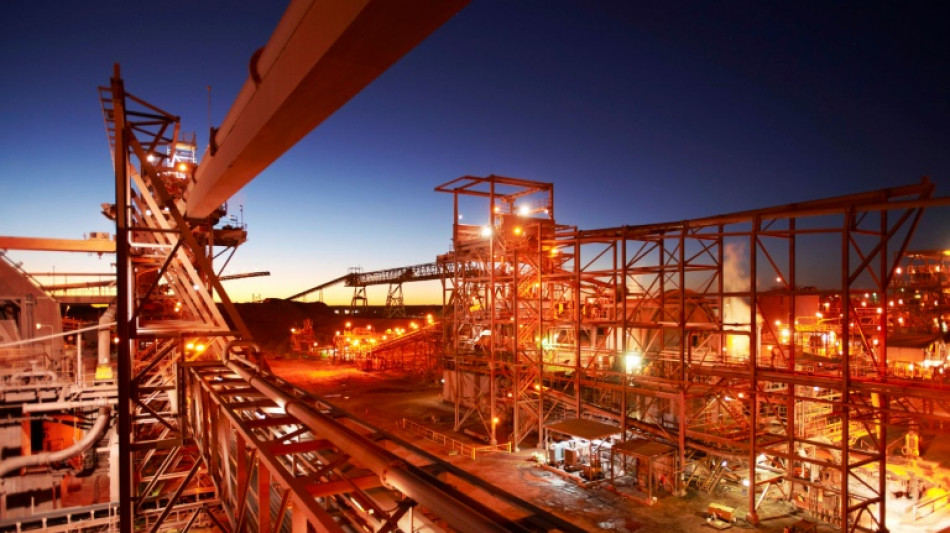
Australia to stockpile critical minerals in strategic reserve / Photo: - - BHP BILLITON/AFP/File

Australia to stockpile critical minerals in strategic reserve

Australia will stockpile critical minerals in a new strategic reserve, Prime Minister Anthony Albanese said Thursday, as nations scramble to source rare earths and coveted metals outside China.

Text size:

Mining superpower Australia sits on bulging deposits of lithium, nickel and cobalt -- metals used in everything from smartphones to electric vehicles.

But most of this boon is sold as raw ore to processing factories in China, which has a chokehold on the global supply of finished critical minerals.

Albanese said Australia would start stockpiling these commodities at home, striking deals to sell them to other "key partners".

"Increasingly uncertain times call for a new approach to make sure Australia maximises the strategic value of critical minerals," he said in a statement.

"We need to do more with the natural resources the world needs, and that Australia can provide."

Australia would initially set aside Aus$1.2 billion (US$760 million) to get the reserve up and running.

Albanese's government has previously suggested Australia could use its critical minerals as a bargaining chip in tariff talks with the United States.

Australia sits on some of the largest lithium deposits in the world, and is also a leading source of lesser-known rare earth metals such as neodymium.

Major manufacturing nations such as the United States, Germany and Japan are eager to obtain these critical minerals from sources other than China.

Japan has its own critical minerals stockpile, while the United States has been investing in metals refineries and other processing technology.

- Rare earth ransom -

"The ability for the government to stockpile is an important safeguard against market pressure, as well as interventions from other nations," Albanese said in a speech later on Thursday.

"It means Australia has the power to sell at the right time to the right partners for the right reasons."

Critical minerals loom as a likely new front in the unfolding trade war between Washington and Beijing.

US President Donald Trump last week ordered a probe that could result in new tariffs targeting China.

Trump's order stated that the United States was dependent on foreign sources of critical minerals, putting its military and energy infrastructure at risk.

China has shown a willingness to hold rare earths to ransom in the past.

At the height of a diplomatic dispute in 2010, China effectively banned the export of rare earths into Japan.

The move rattled Japan's car-making industry, which was heavily reliant on certain rare earth alloys to build magnets used in motors.

China controls some 90 percent of the world's supply of rare earths -- a subset of critical minerals -- and is fiercely protective of its position.

Beijing has banned the export of processing technology that could help rival nations, and has been accused of using state-imposed quotas to control supply.

R.Bernasconi--NZN