Okinawa a reluctant host for US troops 80 years after WWII / Photo: Philip FONG - AFP
Okinawa resident Hiromasa Iha can still recall the screams of his classmates and teachers after a US military jet crashed into his elementary school, killing 18 people more than six decades ago.
As people globally commemorate the 80th anniversary of the end of World War II, the 72-year-old retired businessman is among many residents who oppose the American troops stationed on their island ever since.
He joins dozens of islanders in near-daily protests against the US forces.
The United States has around 54,000 military personnel stationed in Japan, mostly on Okinawa, and a string of incidents over the years, including sexual assault cases, have angered residents.
"For us, these crimes and accidents are not someone else's business, and we feel a pressing unease that we can't predict when these things may happen again," he told AFP, recalling the 1959 school incident.
"We want the bases to go."
The island region, a subtropical paradise with a huge tourism industry, hosts 70 percent of all American bases in Japan and serves as a key US outpost to monitor China, the Taiwan Strait and the Korean peninsula.
The bloody Battle of Okinawa near the end of the war led to the US occupation of the island until 1972, during which troops seized private land in Okinawa to expand their presence in what is locally known as a "bayonet and bulldozer" campaign.
During the Cold War, US troops in Okinawa were seen by Washington as a deterrent against the spread of communism.
Now, both Tokyo and Washington stress the strategic importance of Okinawa in the face of China's territorial ambitions.
But residents have for years voiced their fury over a spate of crimes and accidents involving American soldiers and base personnel.
In 2024 alone, Okinawa police detained 80 people connected to the base -- such as US soldiers or military contractors -- including seven for severely violent crimes.
Okinawa erupted in anger after a 1995 gang rape of a 12-year-old girl by three US Marines.
In August 2004, a Marine helicopter crashed at a university in Okinawa, causing no injuries but amplifying fears of accidents.
In April 2016, a former Marine, who was working as a military contractor in Okinawa, raped and killed a 20-year-old woman.
And as recently as last month, a senior Marine officer visited the Okinawa government to apologise after a Marine was convicted of sexually assaulting a woman.
- 'Truly scary' -
Opinion polls in Okinawa have historically shown that the majority of residents believe the rest of Japan must carry its fair share of the load when it comes to hosting the US military.
Okinawa Governor Denny Tamaki routinely points out the island's "excessive burden", impacting the daily lives of residents.
But repeated calls on authorities to prevent crimes by US soldiers have fallen largely on deaf ears, said Junko Iraha, the chairwomanof a coalition of women's groups in Okinawa.
"It's not that we don't like American people. We are saying, please do something about the bases," she said.
When Okinawa was returned to Japan in 1972, residents expected that US bases would be spread across Japan -- a vision that never came true, she added.
Recent polls suggest growing resignation among the Okinawan public.
In a 2023 survey, nearly 40 percent of Okinawan survey participants said the anti-US base movement was powerless to change Tokyo's policy.
But many Okinawan residents say they live in fear of crimes by American soldiers, with victims still trying to process their grief.
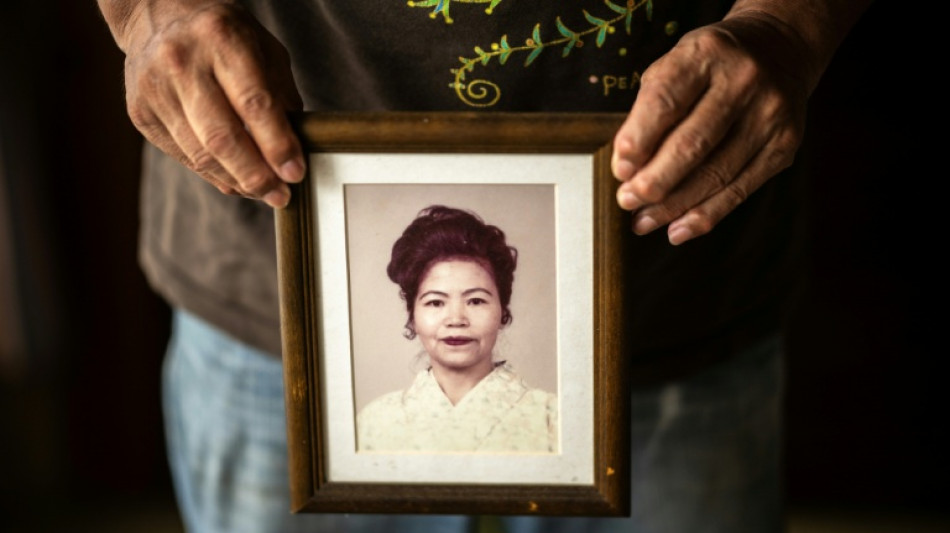
Takemasa Kinjo, 68, was a high school student when his mother was killed by a Marine in 1974 with a brick at their home where she operated a small bar.
"It is truly scary if you think crimes can happen in your neighbourhood," Kinjo said.
He also joined a recent protest at a Marine base that is being expanded into a secluded bay where dugongs and other protected species live.
He believes Okinawa -- where base-related income accounts for just over five percent of its economy -- can thrive thanks to tourism alone, with an increasing number of holidaymakers drawn to the area's turquoise bays and coral reefs.
"There should be no base on Okinawa," he said. "We don't need new military facilities."
Iha, whose elementary school was destroyed by a US jet, feels the need to explain to future generations what happened -- and warn them it could happen again.
At the time of the crash, which also left more than 200 people injured, "everyone thought another war was starting", he recalled.
Now, "every day, military jets fly over our houses, and we see helicopters making emergency landings," said Iha.
"This is not something that only belongs in the past. This can happen again anytime."
N.Zaugg--NZN