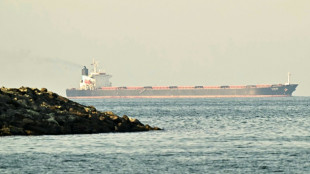
Vast reserves, but little to drink: Tajikistan's water struggles / Photo: STRINGER - AFP
To quench his thirst, Tajik labourer Nematoullo Bassirov must take a risk -- drawing water from the stream running through his yard and hoping he won't fall sick.
Despite mountain glaciers providing Tajikistan with abundant reserves in the otherwise arid region of Central Asia, access to clean, safe drinking water is still a privilege in the poor country.
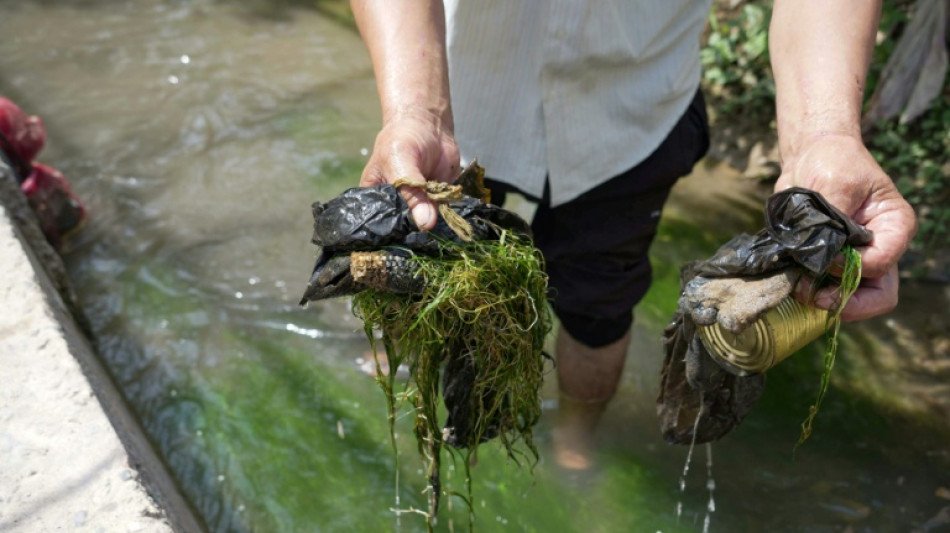
"There's all sorts of dirt in it," Bassirov told AFP, scooping out garbage bags, food wrappers and empty energy drink cans from the small canal.
Sometimes he finds diapers, or droppings from his neighbour's geese.
The stream is used by his entire village in the Balkh district, known widely by its Soviet-era name of Kolkhozobod, in southwestern Tajikistan.
"After irrigating the crops, muddy water arrives here containing pesticides," the 58-year-old told AFP.
His sister-in-law was rinsing grapes in the stream, ready to put on the dinner table.
- Soviet infrastructure -
Only 41 percent of Tajikistan's 10 million people have access to safe drinking water, according to official data from 2023.
Connection to sanitation networks is even lower, at just 15 percent -- the lowest rates in Central Asia.
Across the entire region, some 10 million out of 80 million people lack access to clean drinking water, according to the Eurasian Development Bank.
Most areas -- covered in dry dusty deserts -- struggle for supply.
But Tajikistan faces a different set of problems.
The 25,000 mountain glaciers in Tajikistan and Kyrgyzstan mean the two countries control around two-thirds of the region's water reserves, suggesting water should be abundant.
But outdated infrastructure and funding difficulties complicate the supply of plentiful and reliable drinking water.
Dating from the Soviet era and then further wrecked by a civil war in the 1990s, a quarter of the country's water infrastructure is out of service.
Hydraulic engineer Abdourakhim Abdoulloev said infrastructure problems are routine.
"This drinking water supply station serves 2,800 households. But the equipment needs repairs for supply to resume," he said, standing at a busted facility.
- Water deaths -
As the poorest country in the entire former Soviet Union, Tajikistan also faces tough economic realities.
Its funding deficit is set to widen to $1.2 billion by 2030, the Eurasian Development Bank forecasts.
A study published last year in the scientific journal Nature found Tajikistan had recorded an average of "1,620 annual deaths related to unsafe water between 1990 and 2020."
Researchers from Saudi Arabia and Pakistan recently forecast "an upward trend in deaths related to water."
President Emomali Rahmon, in power since 1992, has made water diplomacy a cornerstone of his foreign policy, pushing a host of resolutions at the United Nations.
"Thanks to the life-giving rivers flowing from snow-capped Tajik mountains, thirsty deserts turn into oases," reads a quote by him plastered on a poster in Balkh.
Authorities this spring launched a 15-year plan to boost access to safe drinking water across the country.
The issue is only set to become more acute with a rising population.
"Providing drinking water and sanitation services is a top priority," the strategy states.
- Stomach worries -
At the dirty river in Balkh, women were washing dishes and laundry in the hazy water. Schoolgirls scrubbed green paint off brushes, while children bathed.
A few kilometres away, even having access to that stream would be a luxury for Malika Ermatova.
The 30-year-old, who lives on completely arid land, gets water delivered by truck, pumped into a four-ton storage tank under her yard.
"We use this water for everything. Drinking, laundry, cleaning the yard, watering the garden," Ermatova said, surrounded by her three children.
The practice is common, even on the outskirts of the capital Dushanbe.
"But the water degrades quickly. We change it every three to four weeks," she said.
The region where she lives, called Khatlon and bordering Afghanistan, is the hottest in the country with temperatures regularly surpassing 40C through the long summer.
Aware of the dangers, Bassirov tries to make the water from the stream in his yard as safe as possible.
He lets it settle in a bucket to remove the impurities that float to the top and then boils it.
Despite his precautions, his family have suffered frequent illnesses.
And Bassirov himself worries that his "stomach can no longer tolerate the water."
Ch.Siegenthaler--NZN