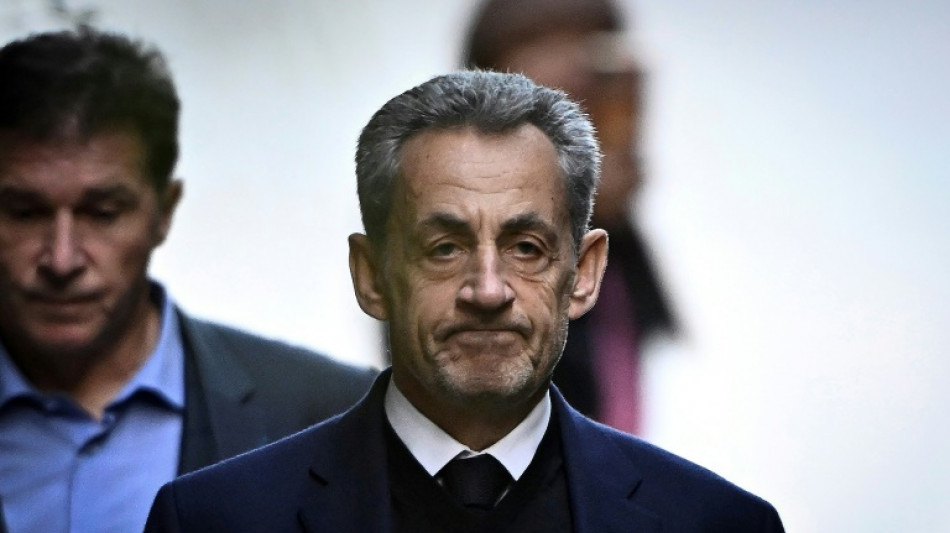
Greyness and solitude: French ex-president describes prison stay / Photo: JULIEN DE ROSA - AFP/File
Greyness and solitude marked French ex-president Nicolas Sarkozy's three weeks in prison, according to excerpts released on Saturday from an upcoming book.
Sarkozy, 70, in October became the first president in the history of modern France to go to jail after his conviction for allowing aides to seek to collect money for his 2007 presidential election campaign from Libyan leader Moamer Kadhafi.
He was handed a five-year sentence but was released with restrictions after serving 20 days, following an appeals court ruling that there was no flight risk.
He has written a 216-page book entitled "Diary of a Prisoner," which is due to come out on December 10 and excerpts of which were published in several French media on Saturday.
"Grey dominated everything, devoured everything, covered every surface," he wrote in one passage. "I would have given anything to be able to look out the window, to enjoy watching the cars go by."
During his first night, he knelt in prayer after watching a football match.
"It came naturally," he wrote. "I stayed like that for several minutes. I prayed for the strength to bear the cross of this injustice."
Sarkozy, who was president from 2007 to 2012, was protected in prison by two security officers and remained confined to his cell 23 hours a day, except for visiting hours.
"It's often said that you learn at any age. That's true because I learned a great deal at La Sante prison, about others as well as about myself," he wrote.
His diet was made up of "dairy products, cereal bars, mineral water, apple juice, and a few sweet treats."
In an interview with Le Figaro, he said that he wrote most of the book while behind bars, writing "with a ballpoint pen on a small plywood table every day" and finished the book after his release on November 10.
Sarkozy remains an influential figure on the right despite the legal problems that have dogged him since leaving office.
Sarkozy has always maintained his innocence. An appeals trial is to get underway in March.
The former president has faced a series of legal challenges since leaving office.
A.Senn--NZN