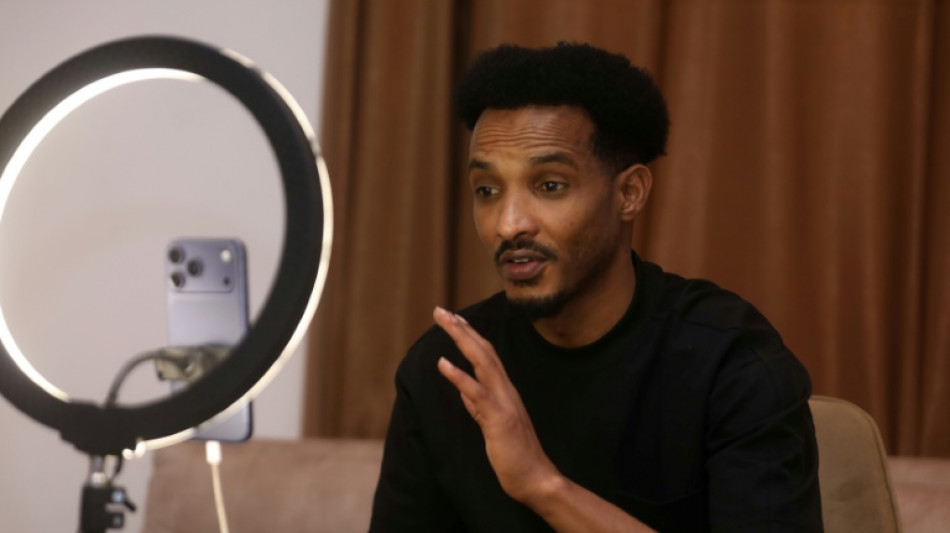
Somali TikToker deported from US for spy kidnapping may be innocent / Photo: Hassan Ali ELMI - AFP
A Somali migrant deported from the United States and labelled an "illegal scumbag" by the White House for aiding the kidnapping of two French spies in Mogadishu may have been wrongly accused.
Mahad Maxamud returned to a hero's welcome in Somalia last month, not least because he is a hugely popular social media star whose online rants have earned him more than 450,000 TikTok followers.
US authorities linked him to the long-running insurgent group Al-Shabaab, which has ties to Al-Qaeda.
But some in Somalia suspect he was the victim of online rivals, thanks to the often aggressive and ethnically tinged roasting contests that occur between Somali TikTokers.
AFP spent weeks investigating Maxamud and gained testimony from Somali and French intelligence sources, who cast doubt on the accusations.
Somali migrants have been a focus of the current US administration, with President Donald Trump unleashing a tirade against the community last week, calling them "garbage" who should "go back to where they came from".
Maxamud was detained by the US Immigration and Customs Enforcement (ICE) in Minnesota in May.
In a post on X on October 24, the White House described him as a "criminal illegal scumbag" who was "involved in the kidnapping of French officials from Sahafi Hotel, Mogadishu".
That was a reference to the abduction in July 2009 of Marc Aubriere and Denis Allex, sent by the French government to train Somali troops under the guise of being journalists, at a time when Al-Shabaab controlled most of the capital.
Aubriere later escaped and returned to France, but Allex was executed during a botched rescue attempt by French forces more than three years after his abduction.
Two Somali security agents told AFP they had never previously linked Maxamud to the kidnapping.
"We don't have information directly connecting him to the abductions," said one agent.
In France, where the DGSE intelligence agency spent years investigating the case, a security source was unequivocal: "Mahad Maxamud was not involved in the kidnapping."
- Hero's welcome -
Maxamud told AFP he moved to South Africa a year before the kidnapping. "I was not involved and it's not true," he said.
He moved to the United States in 2022 and worked for Amazon and Uber prior to his arrest in May.
"There was a lot of men whose faces were covered, wearing bulletproof vests, who put a gun to my head and arrested me," he said.
In November, he was deported to Mogadishu via Kenya along with seven other Somalis.
"I blame Trump for what happened to me, but it's not just limited to me. It's affected people from all over the world who've come to the United States -- Somalis and non-Somalis alike," Maxamud said.
Since returning home, he has posted several polished videos depicting him as a celebrity: posing as he disembarks from a plane, and standing in an SUV driving through a crowd of supporters.
The US allegations, widely rejected by his fans, have fuelled his popularity -- he has added 100,000 followers since the White House tweet -- and earned him a meeting with Ahmed Abdi Kariye, president of his home region, Galmudug.
The White House did not respond to a request for comment.
- Online rivals -
Some suspect he was the victim of online rivals.
A handful of online articles linked Maxamud to the kidnapping, but they appear on sites like Suna Times, run by a Netherlands-based TikTok rival named Dahir Alasow.
Maxamud "had a huge impact online and some envied him and possibly went to extreme lengths to get him in trouble," said a nephew, Ibrahim Ahmed Hersi.
Somali TikTokers like Maxamud "battle" their rivals in split-screen face-offs, competing against opponents with jokes and insults to earn "gifts" from fans.
This often takes on an ethnic dimension in Somalia's clan-based society, and can lead to real-life violence.
"A TikTok video filmed in Minnesota can trigger (armed) clan mobilisation in Somalia within hours," said Jethro Norman, a researcher with the Danish Institute for International Studies.
N.Zaugg--NZN