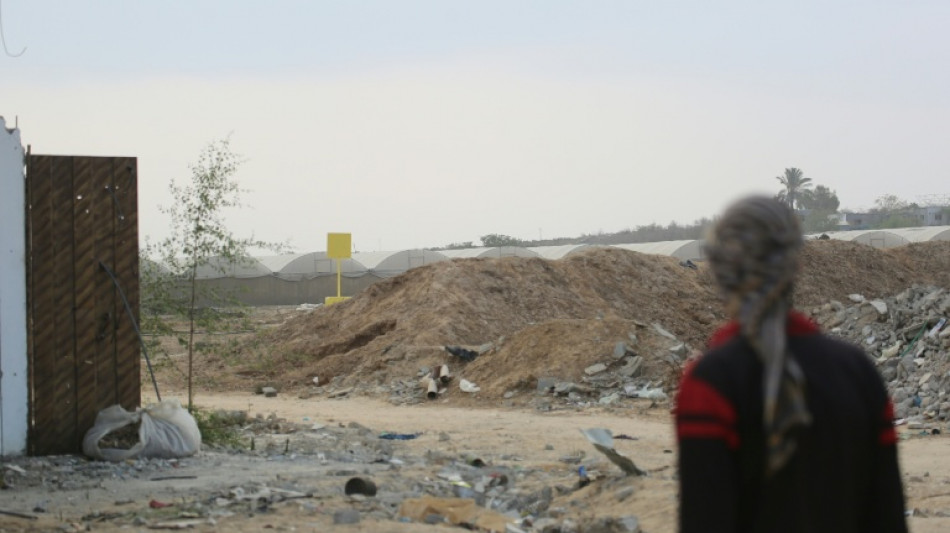
Hamas says no Gaza truce second phase while Israel 'continues violations' / Photo: Bashar Taleb - AFP
Hamas said on Tuesday that the Gaza ceasefire plan cannot proceed to its second phase as long as Israeli "violations" persist and called on mediators to pressure Israel to respect the agreement.
The US-sponsored ceasefire, in effect since October 10, halted the war that began after Hamas's deadly attack on Israel on October 7, 2023. But it remains fragile as Israel and Hamas accuse each other almost daily of breaches.
Meanwhile, an Israeli official said that authorities would allow the Allenby crossing on the Israeli-controlled border between Jordan and the occupied West Bank to reopen on Wednesday to aid trucks destined for Gaza for the first time since late September.
Hamas political bureau member Hossam Badran accused Israel of failing to respect the Gaza ceasefire deal, noting that under its terms, Israel should have reopened the Rafah crossing with Egypt and increased the volume of aid entering the territory.
He urged the mediators, who include Egypt, Qatar and the United States, to pressure Israel "to complete the implementation of the first phase of the ceasefire agreement".
Under the terms of the deal, Palestinian militants committed to releasing the remaining 48 living and dead captives held in the territory. All of the hostages have so far been released except for one body.
In exchange, Israel has released nearly 2,000 Palestinian prisoners in its custody and returned the bodies of hundreds of dead Palestinians.
The first phase of the truce also stipulates that significantly more aid enter Gaza.
Israeli Prime Minister Benjamin Netanyahu has said he expects the second phase of the deal to begin soon but Badran said it could not start "as long as the occupation (Israel) continues its violations".
- Dispute over withdrawal line -
In the announcement of the opening of Allenby crossing, the Israeli official said in a statement that "aid trucks destined for the Gaza Strip will proceed under escort and security, following a thorough security inspection".
Israel closed the crossing in the Jordan Valley, also known as the King Hussein Bridge, after a Jordanian truck driver shot dead an Israeli soldier and a reserve officer at the border in September.
Israel mostly reopened the crossing to travellers a few days later, but not to humanitarian aid destined for the Gaza Strip, which has been left devastated by more than two years of war.
Under the initial steps of the ceasefire plan, Israeli troops withdrew to positions behind a so-called "Yellow Line" in Gaza, though they remain in control of more than half of the territory.
Israel's military chief, Lieutenant General Eyal Zamir, was quoted as saying on Sunday that the demarcation line was the "new border line".
Badran on Tuesday slammed Zamir's comments. "The statements... clearly reveal the criminal occupation's lack of commitment to the ceasefire agreement," he said.
The second stage of the truce plan concerns disarming Hamas, the further withdrawal of Israeli forces as a transitional authority is established, and the deployment of an international stabilisation force.
Israel has said the next phase cannot begin until the body of the last Gaza captive, the Israeli Ran Gvili, is handed over.
A final goal of the agreement is the withdrawal of Israeli forces from Gaza in phases if certain conditions are met.
Hamas has said it is ready to hand over its weapons to the government of a future Palestinian state on the condition that the Israeli occupation ends.
The Gaza war was sparked by Hamas's October 7, 2023 attack on Israel, which resulted in the deaths of 1,221 people.
Israel's retaliatory assault on Gaza has killed at least 70,366 people, according to figures from the territory's health ministry that the United Nations considers reliable.
The ministry says since the ceasefire came into effect, 377 Palestinians have been killed by Israeli fire. Israel's military has reported three soldiers killed during the same period.
T.Gerber--NZN