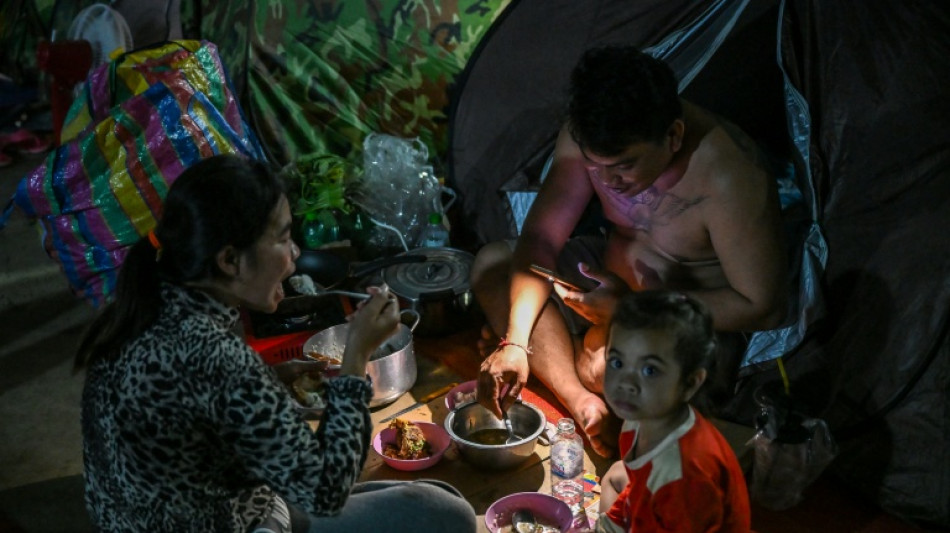
Thailand continues Cambodia strikes despite Trump truce calls / Photo: TANG CHHIN Sothy - AFP
Thailand said Saturday it was continuing military strikes against Cambodia despite US President Donald Trump saying the countries had agreed to stop fighting after calls with him.
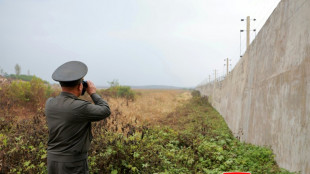
Renewed clashes between the Southeast Asian neighbours, which stem from a long-running dispute over the colonial-era demarcation of their 800-kilometre (500-mile) border, broke out this month and have displaced around half a million people on both sides.
Each side blamed the other for reigniting the conflict -- which has killed at least 20 people this week -- but there were signs that tensions might be easing when Trump said a truce had been agreed.
However, on Saturday, Thai Prime Minister Anutin Charnvirakul said the country would "continue to perform military actions until we feel no more harm and threats to our land and people".
Bangkok's joint press centre confirmed that Thai forces had "retaliated" against Cambodian military targets at 5:50 am (2250 Friday GMT).
The statements came as Cambodia said Thai fighter jets had dropped several bombs on its territory.
A Thai navy spokesman said the air force "successfully destroyed" two Cambodian bridges used to transport weapons to the conflict zone.
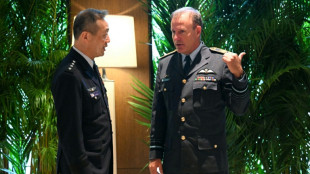
Trump had hailed his "very good conversation" with Anutin and Cambodian Prime Minister Hun Manet on Friday.
"They have agreed to CEASE all shooting effective this evening, and go back to the original Peace Accord" agreed in July, Trump wrote on his Truth Social platform.
After the call with Trump, Thailand's Anutin said Cambodia "is going to comply with the ceasefire", adding: "The one who violated the agreement needs to fix (the situation)."
Cambodia's Hun Manet said his country "has always been adhering to peaceful means for dispute resolutions".
Cambodian information minister Neth Pheaktra said Saturday Thai forces had "expanded their attacks to include civilian infrastructure and Cambodian civilians".
Royal Thai Air Force spokesman Chakkrit Thammavichai said the army was "using high-precision weapons to prevent the damage on innocent civilians".
- Months of tensions -
The United States, China and Malaysia, as chair of the regional bloc ASEAN, brokered a ceasefire in July after an initial five-day spate of violence.
In October, Trump backed a follow-on joint declaration between Thailand and Cambodia, touting new trade deals after they agreed to prolong their truce.
But Thailand suspended the agreement the following month after Thai soldiers were wounded by landmines at the border.
Hun Manet added that he had suggested the US and Malaysia could use their information gathering capabilities "to verify which side opened fire first" on December 7.
"The last round of peace efforts didn't work out... I don't know if this one will either," said Thai border evacuee Kanyapat Saopria, 39. "I just don't trust Cambodia anymore."
burs-sjc/mjw
G.Kuhn--NZN