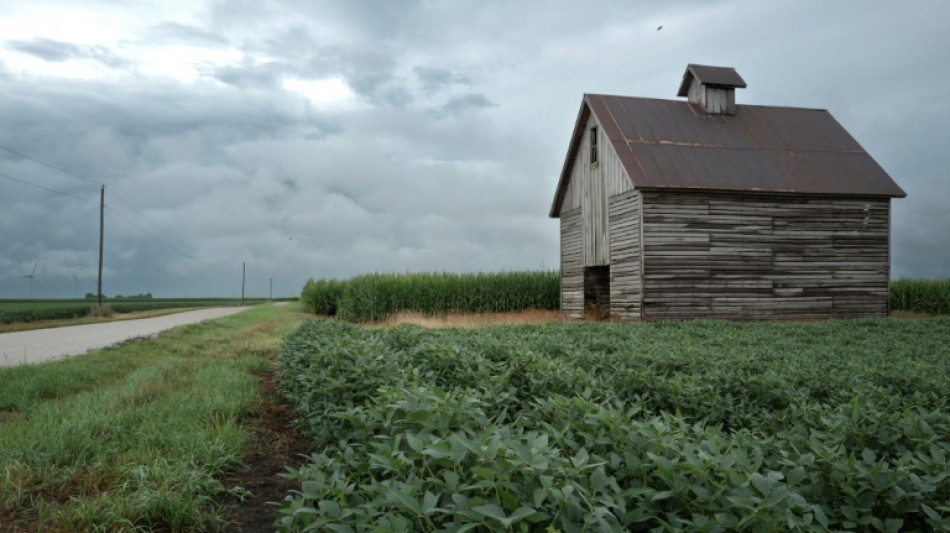
'Make America Healthy' movement takes on Big Ag, in break with Republicans / Photo: SCOTT OLSON - GETTY IMAGES NORTH AMERICA/AFP/File
From Wyoming to Florida and the capital Washington, "Make America Healthy Again" activists have notched wins across the United States against agricultural and chemical giants long protected by the conservative politicians they generally support.
The MAHA movement is best known for championing Health Secretary Robert F. Kennedy Jr's policies on rolling back vaccine recommendations, overturning the traditional food pyramid, and pushing for the reduced use of synthetic food dyes.
But in its battles against pesticides and food industry interests, the network of mostly female activists has worked at times with conservation groups and even free-speech advocates -- not Republican lawmakers.
Researcher and influencer Kelly Ryerson said she felt "so good" after MAHA activists helped stall -- and likely kill -- Florida legislation that would give companies freer rein to sue critics of controversial agricultural practices such as pesticide use for defamation.
Those same activists also helped defeat a bill in Wyoming that would have made it harder to sue pesticide makers, and worked to hold up similar efforts in Tennessee, Kansas and in Congress, though the federal measure returned in draft form Friday.
But tensions are still simmering between Team MAHA and President Donald Trump's administration.
"It's frustrating seeing the chemical lobbyists getting what they asked for," against the wishes of "all of the people that actually put this administration into office," Ryerson told AFP, referring to voters.
- Getting the message out -
Last year, Ryerson launched an online petition, co-signed by fellow MAHA movement leaders and thousands of supporters, calling for the resignation of Environmental Protection Agency Administrator Lee Zeldin for allegedly prioritizing chemical industry interests over public safety.
Though they later held meetings to smooth over their differences, the network is again livid following the reauthorization of German agrochemical giant Bayer's dicamba herbicide for sprayed use on genetically modified soybean and cotton.
"I'm very concerned about the situation at the EPA and the fact that it appears to be run by chemical lobbyists rather than people that are committed to protecting people's health," toxicologist Alexandra Munoz, who works with MAHA and has given expert testimony in several state legislatures, told AFP.
Ryerson said it was "very undervalued how important the pesticide and EPA component is to the voting population."
The movement is energized.
Ryerson -- who uses the handle Glyphosate Girl online, in a reference to the herbicide -- says Instagram is her primary outreach tool, where she alerts followers to pending legislation and urges them to call and email lawmakers.
Her messages are amplified by other MAHA figures including nutritionist Courtney Swan, "Food Babe" Vani Hari and conservative podcaster Alex Clark.
- Looming battles -
The Florida proposal would have expanded the state's existing "veggie libel" law, making it easier for food producers to sue critics -- including activists, researchers and journalists -- and was seen by opponents as benefiting the sugar industry, which has faced accusations of polluting waterways.
MAHA was joined by conservation groups including Florida's Captains for Clean Water and Florida First Amendment Foundation, a free speech advocacy organization.
The pesticide bills seek to bar states from issuing guidance or requiring warning labels on the potential harms if those warnings are not consistent with the EPA's assessment -- even though many researchers warn federal rules are often out-of-step with scientific realities.
Decried by critics as "immunity shields," the measures are a priority for industry groups including the Modern Ag Alliance, founded by Bayer.
Bayer also has a related case before the US Supreme Court, on which it has gained the Trump administration's support.
The company disputes the characterization of such laws as shielding corporate interests.
"We agree that no company should have blanket immunity," it said in a statement to AFP, adding the legislation "simply seeks to reaffirm that EPA is the primary federal authority" for pesticide labeling.
Ryerson, who worked on Kennedy's independent presidential campaign, said she was tired of successive Democratic and Republican administrations going too soft on the chemical industry.
Despite setbacks -- and the looming rematch in Congress over pesticide labeling -- she still pins her hopes on Trump to set the EPA straight on chemicals, just as he empowered Kennedy to make radical changes in health.
But she warns that continued battles could hurt Republicans at the ballot box, going so far as to say she "can't imagine a situation in which the midterms go the way of the Republicans" in November if MAHA concerns go unaddressed.
T.Gerber--NZN