Dark times under Syria's Assad hit Arab screens for Ramadan / Photo: Joseph EID - AFP
A Syrian prison warden screams at a group of chained, crouching inmates in a harrowing scene from one of several Ramadan television series this year that tackle the era of former ruler Bashar al-Assad.
Talking about Syria's prisons and the torture, enforced disappearances and executions that took place there was taboo during half a century of the Assad family's iron-fisted rule, but the topics are now fertile ground for creative productions, though not without controversy.
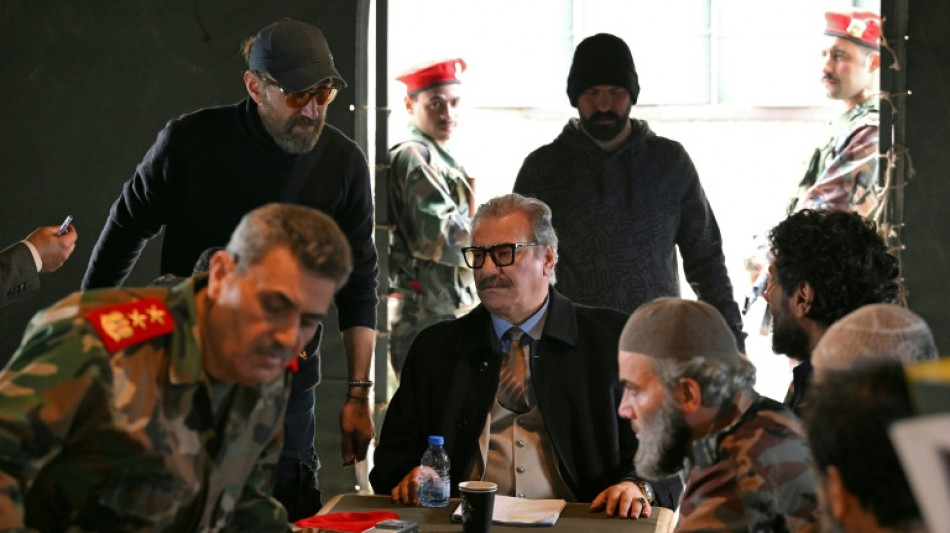
An abandoned soap factory north of the Lebanese capital Beirut has been transformed into a replica of the basements and corridors of Syria's Saydnaya prison, a facility synonymous with horror under Assad, for the series "Going Out to the Well".
Crews were filming the last episodes this week as the Muslim holy month kicked off -- primetime viewing in the Arab world, with channels and outlets furiously competing for eager audiences' attention.
Director Mohammed Lutfi told AFP that "for Syrians, Saydnaya prison is a dark place, full of stories and tales".
The series focuses on the 2008 prison riots in Saydnaya, "when inmates revolted against the soldiers and took control of the prison, and there were negotiations between them and Syrian intelligence services", he said.
The military prison, one of Syria's largest and which also held political prisoners, remains an open wound for thousands of families still looking for traces of their loved ones.
- Tragedy into drama -
The Association of Detainees and Missing Persons of Saydnaya Prison estimates that some 30,000 people were thrown into the facility after the 2011 uprising against Assad began, but only 6,000 came out after he was toppled.
Amnesty International has described the prison outside Damascus, which was notorious for torture and enforced disappearances, as a "human slaughterhouse".
In the opening scene of the series, the main character is seen in a tense exchange with his family before jumping into a deep well.
The symbolic scene in part captures the struggles of the detainees' relatives. Many spent years going from one Assad-era security facility to another in search of their missing family members.
Syrian writer Samer Radwan said on Facebook that he finished writing the series several months before Assad's fall.
Director Lutfi had previously told AFP that challenges including actors' fears of the Assad authorities' reaction had prevented filming until after his ouster.
Since then, productions have jumped on the chance to finally tackle issues related to his family's brutal rule.
Another series titled "Caesar, no time, no place" presents testimonies and experiences based on true stories from inside Syria's prisons during the civil war, which erupted in 2011.
But in a statement this week, the Caesar Families Association strongly rejected "transforming our tragedy into dramatic material to be shown on screen".
"Justice is sought in court, not in film studios," said the association, whose name refers to thousands of images smuggled out of Syria more than a decade ago showing bodies of people tortured and starved to death in the country's prisons.
- Refugees -
Another series, "Governorate 15", sees two Saydnaya inmates, one Lebanese and one Syrian, leave the facility after Assad's fall and return to their families.
Producer Marwan Haddad said that the series tackles the period of "the Syrian presence in Lebanon" through the Lebanese character.
The show also addresses the Syria refugee crisis through the story of the Syrian character's family, who fled to the struggling neighbouring country to escape the civil war.
"For years we said we didn't want Lebanon to be (Syria's) 15th province" and each person fought it in their own way, said Lebanese screenwriter Carine Rizkallah.
Under Assad's father Hafez, Syria's army entered Lebanon in 1976 during the country's civil war and only left in 2005 after dominating all aspects of Lebanese life for almost three decades.
It was also accused of numerous political assassinations.
Lebanese director Samir Habchy said that the actors represent their "own community's problems" in the "Lebanese-Syrian series".
The show could prove controversial because it includes real people who "are still alive and will see themselves" in the episodes, he added.
H.Roth--NZN