The environment, another casualty of war in the Mideast / Photo: - - AFP
From the jet fuel used in bombing raids to acrid smoke from burning oil depots, the conflict in the Middle East is inflicting a significant toll on nature and the climate.
AFP interviewed experts about the environmental cost of war that often goes under the radar:
- Bombers and warships -
US and Israeli aircraft use a considerable amount of fuel reaching the Gulf and flying sorties over Iran, said Benjamin Neimark at the Queen Mary University of London.
Deploying stealth bombers and fighter jets around the clock adds a significant amount of planet-warming greenhouse gas emissions into the atmosphere.
"The US Navy also has a significant fleet which will be operating remotely for some time," Neimark told AFP.
"That is a significant number of US troops that need to be fed, housed, and working around the clock. These floating cities all need energy."
This is provided in part by polluting diesel generators, even if most larger aircraft carriers are nuclear powered, an energy source that produces far less emissions than fossil fuels.
But many experts take into account everything from the manufacture of weapons and explosives to post-war reconstruction efforts when estimating the total environmental impact of conflict.
According to one study published in the peer-reviewed journal One Earth, the Gaza conflict generated some 33 million tonnes of carbon dioxide equivalent -- an amount comparable to 7.6 million gasoline-powered cars, or the annual emissions of a small country like Jordan.
And by one estimate, the war in Ukraine has caused more than 300 million tonnes of additional emissions -- equivalent to France's annual output.
This estimate, by the Initiative on GHG Accounting of War, takes into account military operations and reconstruction efforts, forest fires, and longer flight routes.
- Climate cost -
This conflict is playing out on the Strait of Hormuz, a crucial artery for the passage of oil and gas supplies to global markets dependent on energy from the Gulf.
Ships transporting these highly flammable fuels through the narrow waterway -- along with the region's oil and gas refineries and storage facilities -- were "all a target" in this war, said Neimark.
"Clearly this conflict is different," he said.
"We have already seen a significant amount of refineries targeted. These toxic flames are deadly and have a severe climate cost."
The oil wells set ablaze in Kuwait in the 1990s during the first Gulf War took months to extinguish and released an estimated 130 to 400 million tonnes of CO2 equivalent.
- Ripple effect -
Since erupting on February 28, the conflict has sent oil prices soaring and focused fresh attention on the global transition to cleaner, more climate-friendly forms of energy.
Andreas Rudinger, from the Institute for Sustainable Development and International Relations, said the economic knock-on effects of the war had put policy makers "under pressure to reduce the burden on prices over climate action".
Brussels has faced pressure to relax its emissions trading rules in response to surging energy prices, while other governments have taken steps to help motorists fill up at the pump.
But there's also a "glass half-full perspective", said Rudinger.
"From a purely economic standpoint... rising fossil fuel prices make decarbonization and electrification solutions more attractive," he said.
He pointed to the rise in popularity of heat pumps in the aftermath of Russia's invasion of Ukraine, which caused energy prices in Europe to rise sharply.
In general, the increase in energy costs stemming from the war in the Middle East should temper demand in what economists call price elasticity.
- Pollution risks -
Apart from climate concerns, strikes on energy infrastructure, oil tankers and military targets pollute the surrounding air and water and spread highly toxic chemicals far and wide, experts say.
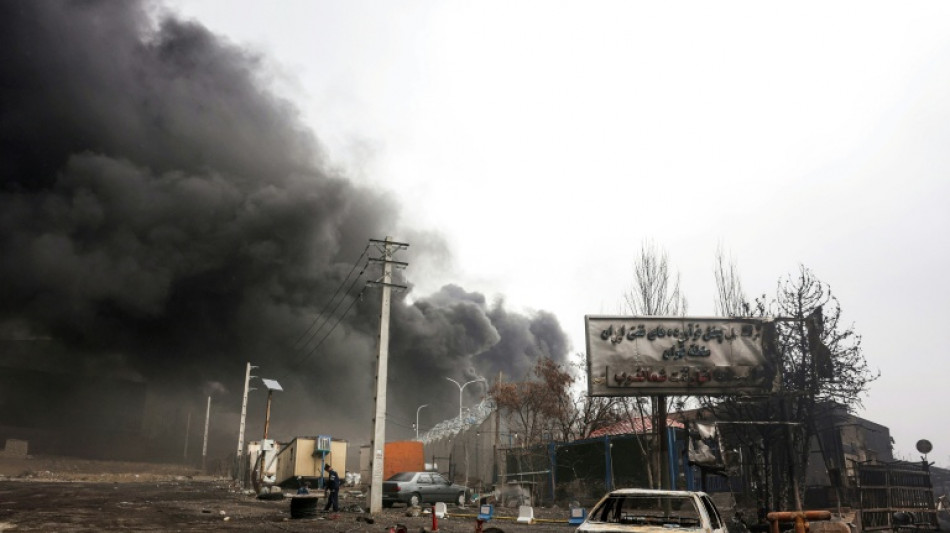
In Tehran, attacks on fuel depots last weekend plunged the capital into darkness as poisonous black clouds rose from burning oil facilities.
Mathilde Jourde, from the Institute for International and Strategic Relations (IRIS), said targeting nuclear, military and energy sites had "extremely polluting" consequences for air, water and soil.
"We're just scratching the surface but can already see that there are hundreds of damaged facilities in Iran and neighbouring countries that pose pollution risks to people and the environment," Doug Weir, director of the Conflict and Environment Observatory (CEOBS), told AFP.
"We have particular concerns around damaged oil infrastructure, military facilities and the sensitive marine environment of the Persian Gulf."
W.Odermatt--NZN