Zürcher Nachrichten - Russian tanker nears Cuba, defying US oil blockade

EUR -
AED 4.177857
AFN 75.655231
ALL 93.77151
AMD 415.873647
AOA 1043.183623
ARS 1703.139744
AUD 1.632144
AWG 2.047688
AZN 1.938444
BAM 1.955206
BBD 2.292004
BDT 140.367353
BHD 0.42917
BIF 3399.667097
BMD 1.137604
BND 1.468954
BOB 12.637161
BRL 5.783017
BSD 1.137954
BTN 109.829631
BWP 15.719224
BYN 3.264008
BYR 22297.045604
BZD 2.288705
CAD 1.60408
CDF 2570.986282
CHF 0.931214
CLF 0.027331
CLP 1075.683181
CNY 7.703975
CNH 7.703527
COP 3641.493624
CRC 517.842667
CUC 1.137604
CUP 30.146516
CVE 110.231509
CZK 24.15874
DJF 202.638433
DKK 7.478957
DOP 66.269866
DZD 151.755893
EGP 58.441244
ERN 17.064066
ETB 183.671796
FJD 2.561093
FKP 0.852678
GBP 0.854089
GEL 2.986257
GGP 0.852678
GHS 13.233979
GIP 0.852678
GMD 84.183128
GNF 9983.966623
GTQ 8.681362
GYD 238.077666
HKD 8.921265
HNL 30.479739
HRK 7.538112
HTG 148.784795
HUF 361.246708
IDR 20388.145475
ILS 3.465542
IMP 0.852678
INR 109.855614
IQD 1490.261721
IRR 1564206.005764
ISK 143.114968
JEP 0.852678
JMD 180.495161
JOD 0.806606
JPY 186.402209
KES 147.365227
KGS 99.483939
KHR 4601.601919
KMF 493.720694
KRW 1660.345386
KWD 0.352749
KYD 0.948312
KZT 541.065611
LAK 25767.171293
LBP 101903.839083
LKR 382.413813
LRD 205.967422
LSL 19.146315
LTL 3.35905
LVL 0.688126
LYD 7.281788
MAD 10.650825
MDL 20.112889
MGA 5042.467973
MKD 61.556298
MMK 2389.236914
MNT 4090.293783
MOP 9.191907
MRU 45.561486
MUR 53.957006
MVR 17.576418
MWK 1976.019179
MXN 19.890107
MYR 4.654399
MZN 72.697161
NAD 19.14631
NGN 1553.403001
NIO 41.877277
NOK 10.89723
NPR 175.72761
NZD 1.971414
OMR 0.437597
PAB 1.137954
PEN 3.870703
PGK 5.090453
PHP 70.173169
PKR 316.095262
PLN 4.3192
PYG 6879.909713
QAR 4.145601
RON 5.218476
RSD 117.354345
RUB 88.93298
RWF 1676.790549
SAR 4.282815
SBD 9.1931
SCR 16.541191
SDG 683.135604
SEK 11.056268
SGD 1.46825
SLE 27.558509
SOS 650.145062
SRD 42.992917
STD 23546.113594
STN 24.492559
SVC 9.956975
SZL 19.146301
THB 38.342998
TJS 10.497611
TMT 3.981615
TND 3.370887
TRY 53.857039
TTD 7.731651
TWD 36.813295
TZS 3004.187253
UAH 50.997906
UGX 4289.696684
USD 1.137604
UYU 45.696116
UZS 13771.81578
VES 843.307715
VND 29941.746954
VUV 134.789885
WST 3.135591
XAF 655.757765
XAG 0.019523
XAU 0.000281
XCD 3.074433
XCG 2.050877
XDR 0.815552
XOF 655.757765
XPF 119.331742
YER 271.375935
ZAR 19.150778
ZMK 10239.808511
ZMW 21.080595
ZWL 366.308142
  • CMSC

    -0.0650

    21.725

    -0.3%

  • CMSD

    -0.0200

    21.98

    -0.09%

  • BTI

    1.1200

    60.96

    +1.84%

  • RIO

    -0.2900

    91.22

    -0.32%

  • GSK

    0.6100

    51.35

    +1.19%

  • RBGPF

    -0.7300

    66

    -1.11%

  • RYCEF

    -0.1900

    18.17

    -1.05%

  • NGG

    -0.0700

    82.3

    -0.09%

  • BCE

    0.0900

    21.3

    +0.42%

  • VOD

    -0.1000

    15.15

    -0.66%

  • AZN

    0.9900

    169.26

    +0.58%

  • BCC

    1.3800

    77.84

    +1.77%

  • JRI

    0.1600

    13.06

    +1.23%

  • BP

    -0.1100

    43.82

    -0.25%

  • RELX

    1.5500

    34.41

    +4.5%

Russian tanker nears Cuba, defying US oil blockade
Russian tanker nears Cuba, defying US oil blockade / Photo: STRINGER - AFP/File

Russian tanker nears Cuba, defying US oil blockade

A Russian oil tanker under US sanctions is scheduled to arrive in Cuba on Monday, challenging a de facto American fuel blockade of the energy-starved island, shipping data shows.

Text size:

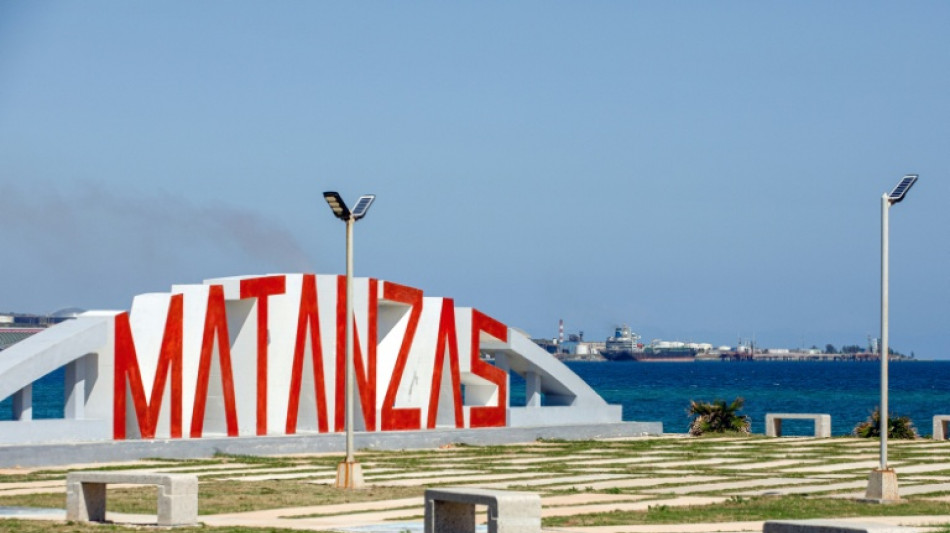
The Anatoly Kolodkin, which is carrying 730,000 barrels of crude, was north of Haiti on Sunday as it headed towards the port of Matanzas in western Cuba, according to maritime analytics firm Kpler.

Cuba lost its main regional ally and oil supplier in January when US forces captured Venezuela's socialist leader Nicolas Maduro.

US President Donald Trump subsequently threatened to impose tariffs on any country sending oil to Cuba and has mused about "taking" the communist-ruled island.

Jorge Pinon, an expert on Cuba's energy sector at the University of Texas at Austin, said he was surprised the United States did not try to intercept the Russian tanker before it got so close to Cuba.

"I think now the chances that the United States will try to stop her have basically disappeared," Pinon told AFP, though he added that it was difficult to assess what the White House might do.

Once the boat enters Cuban waters, he said, it "is almost impossible for the US government to stop it."

- Urgent need: diesel -

The Cuban government says it has not received any oil since January, deepening an energy crisis in the country of 9.6 million people.

President Miguel Diaz-Canel imposed emergency measures to conserve fuel, including strict rationing of gasoline.

Fuel prices have soared, public transport has dwindled and some airlines have suspended flights to Cuba, hitting the country's fragile economy.

Cubans have endured regular outages as its aging power plants struggle to meet demand, with seven nationwide blackouts since 2024, including two this month.

The Anatoly Kolodkin, which is under US sanctions, was loaded with oil in the Russian port of Primorsk on March 8.

It was escorted by a Russian navy ship across the English Channel, but the two vessels split when the tanker entered the Atlantic, according to the British Royal Navy.

Another ship that was reportedly carrying Russian diesel to Cuba, the Hong Kong-flagged Sea Horse, arrived in Venezuela instead earlier this week.

Once the Anatoly Kolodkin's crude arrives in Cuba, it would take about 15-20 days to process the oil and another 5-10 days to deliver its refined products, Pinon said.

"The urgent need today in Cuba is diesel," the former oil executive said.

The Russian shipment could be converted into 250,000 barrels of diesel, enough to cover the country's demand for around 12.5 days, according to Pinon.

Pinon said the government would have to decide whether to use the fuel for backup power generators or for the buses, tractors and trains needed to keep the economy going for two weeks.

"If you are Diaz-Canel or somebody making the decision, you go, 'OK, where where do I go with that diesel'?" he said.

"Do I want to generate more electricity so there are less apagones (blackouts)? Or do I want it put it in the transportation sector?"

N.Fischer--NZN